Blog

  • The Science Behind Sexological Bodywork: How It Rewires Your Brain for Pleasure — Body Compass

    The Science Behind Sexological Bodywork: How It Rewires Your Brain for Pleasure — Body Compass

    BLOG

    The Science Behind Sexological Bodywork: How It Rewires Your Brain for Pleasure — Body Compass

    The Science Behind Sexological Bodywork: How It Rewires Your Brain for Pleasure
    Oct 18
    Written By Nicole card
    Have you ever wondered why it can be so hard to break old habits when it comes to intimacy, or why trauma from years ago still affects your relationship with your body today? The answer lies in your brain—specifically, in how your brain’s pathways are shaped by past experiences, both good and bad.Here’s the exciting part: just as your brain has been wired by past events, it can also be rewired for new experiences, including pleasure. This is where sexological bodywork comes in. By engaging your body in intentional, somatic practices, sexological bodywork taps into the brain’s natural ability to create new neural pathways, transforming how you experience pleasure and intimacy.Let’s dive into the science behind how this works.
    Want to Experience the Magic of Sexological Bodywork for Yourself?You don’t need to wait for a session to feel the power of sexological bodywork. Get my free video series: 3 Best Sexological Bodywork Practices to do at Home where I’ll guide you through the 3 best practices you can try right now to unlock more pleasure and intimacy.
    1. Neuroplasticity: Your Brain’s Ability to Rewire ItselfThe key to understanding how sexological bodywork can change your relationship with pleasure starts with neuroplasticity. Neuroplasticity is the brain’s incredible ability to reorganize itself by forming new neural connections throughout life. Essentially, your brain is adaptable—it can learn new patterns and behaviors, even after trauma or long-standing habits.When it comes to pleasure and intimacy, many of us have deep-seated patterns that influence how we experience (or don’t experience) these things. Whether it’s trauma, stress, shame, or simply never having been shown how to connect with your body in a meaningful way, these patterns get reinforced in your brain’s wiring.The good news? With practices like sexological bodywork, you can retrain your brain. By engaging in somatic practices that combine touch, breathwork, movement, and awareness, you can create new pathways that support a healthier, more fulfilling relationship with pleasure.
    Discover the Magic of Sexological Bodywork YourselfCurious about sexological bodywork but not sure where to start? My free video series: 3 Best Sexological Bodywork Practices to do at Home will show you the most powerful practices you can try right now to reconnect with your body and experience more pleasure.Click below to claim your free video training!
    2. How Somatic Practices Activate the Brain’s Reward SystemPleasure isn’t just something you experience in your body—your brain plays a huge role in how you feel and interpret pleasure. The brain’s reward system, particularly areas like the nucleus accumbens and the ventral tegmental area (VTA), is responsible for creating that feeling of satisfaction or pleasure. When these areas are activated, they release dopamine, often referred to as the “feel-good” neurotransmitter.Sexological bodywork engages this reward system by helping you become more attuned to your body’s sensations in the present moment. Through intentional touch and focused somatic awareness, you begin to notice and amplify pleasurable sensations that may have been previously overlooked or blocked by tension or trauma.As you practice paying attention to these sensations and allowing yourself to experience pleasure fully, your brain starts to form new connections that link intimacy with positive, rewarding feelings. Over time, this rewiring allows you to experience pleasure more deeply and naturally, as your brain becomes conditioned to respond to these new experiences.3. Releasing Trauma from the Body and BrainTrauma, especially sexual trauma, can have long-lasting effects on both the body and the brain. When we experience trauma, the brain’s amygdala—the area responsible for processing fear—can get stuck in a heightened state of alert, leading to patterns of avoidance or dissociation from intimate situations. The brain learns to associate certain triggers with fear or discomfort, even long after the traumatic event is over.Sexological bodywork helps interrupt this cycle by bringing you into a safe, controlled environment where you can re-experience touch, intimacy, and pleasure without fear. Through gentle, client-led touch and somatic exploration, the body learns that it’s safe to feel again. This process not only helps release trauma stored in the body but also rewires the brain to stop associating pleasure with danger or discomfort.The nervous system gradually shifts from a hyper-alert state (often seen in trauma survivors) to one of relaxation and receptivity, allowing the brain to create new, healthier connections with intimacy and pleasure.4. Building New Habits Through Repetition and AwarenessJust like learning a new skill, building a new relationship with pleasure takes time and practice. When you engage in sexological bodywork, you’re not just having one-off experiences—you’re actively creating new habits of awareness, sensation, and emotional response in your body and brain.Each time you participate in a session, your brain strengthens the new neural pathways that are being formed. The more you practice being present with your body, noticing pleasure, and allowing yourself to feel, the more your brain “learns” these new ways of being.Over time, these practices become second nature. You start to break free from old patterns of fear, tension, or shame, and instead, embrace a more open, relaxed, and joyful relationship with intimacy and pleasure.
    Start Unlocking Pleasure in Your Own SpaceWhy wait to experience the benefits of sexological bodywork? Download my free video series and learn 3 amazing practices that will help you reconnect with your body, all from the comfort of your own space.
    5. Integrating Mind, Body, and Brain for Lasting ChangeThe beauty of sexological bodywork lies in its holistic approach—it doesn’t just target one part of you. Instead, it integrates the mind, body, and brain to create lasting change. By combining somatic practices with a deeper awareness of the nervous system and brain, sexological bodywork helps you experience intimacy and pleasure in a whole new way.The shifts that happen in your body are directly linked to the changes happening in your brain. As you release tension, expand your capacity for pleasure, and process difficult emotions, your brain forms new pathways that reinforce these positive experiences. This means that the changes you experience in sexological bodywork aren’t temporary—they’re lasting shifts that transform how you relate to your body and pleasure.The Neuroscience of Pleasure and HealingThe science behind sexological bodywork is rooted in the brain’s incredible ability to change and adapt. Through neuroplasticity, the brain can learn new ways of experiencing pleasure, release trauma, and rewire old patterns that have held you back from fully embracing intimacy. By engaging with somatic practices that focus on body awareness, intentional touch, and emotional exploration, you’re not just working with your body—you’re reshaping your brain for lasting pleasure and healing.Ready to see how sexological bodywork can help you rewire your brain for pleasure? Let’s start the journey together.
    Ready to Rewire Your Brain for Pleasure?If you’re curious about how sexological bodywork can transform your relationship with intimacy and pleasure, why not take the first step? Let’s explore how this powerful practice can help you unlock your body’s potential and rewire your brain for deeper connection and joy.Discover the magic of Sexological Bodywork yourself by downloading my FREE video series: The 3 Best Sexological Bodywork Practices to do at Home.Curious about sexological bodywork but not sure where to start? My free video series will show you 3 powerful practices you can try right now to reconnect with your body and experience more pleasure.
    Nicole card
    Previous
    Previous
    8 Common Misconceptions About Sexological Bodywork
    Next
    Next
    7 ways to prepare for your first tantra retreat

    Nicole Siegel

    Curious if this work is right for you?

    Book a free 30-minute call — no pressure, no commitment.

  • 8 Common Misconceptions About Sexological Bodywork — Body Compass

    8 Common Misconceptions About Sexological Bodywork — Body Compass

    BLOG

    8 Common Misconceptions About Sexological Bodywork — Body Compass

    8 Common Misconceptions About Sexological Bodywork
    Oct 19
    Written By Nicole card
    Let’s face it: when you first hear the term “sexological bodywork,” it’s easy to think, Wait… sex-o-what? It sounds a little complicated, maybe even a bit woo-woo. And sure, it might sound like something out of a hippy retreat, but there’s a lot to this nuanced, internationally board regulated modality. So, let’s clear up some of the biggest misconceptions and show you why sexological bodywork might just be the thing you didn’t even know you needed.1. It’s Just About SexReality: It’s About the Whole Spectrum of Sexual Health and EmbodimentOne of the most common misconceptions is that sexological bodywork is purely focused on sex or improving sexual performance. But the truth is, it’s about so much more. Sexological bodywork looks at the full spectrum of sexual health, embodiment, emotional healing, and deepening your connection with your body.It’s not about “fixing” sexual problems—it’s about learning how to feel pleasure, addressing any trauma that’s been stored in your body, and creating a safe space for erotic exploration. Whether you’re looking to heal or just expand your relationship with pleasure, sexological bodywork provides a holistic approach that’s about your entire self, not just your sexual performance.2. It’s Basically a Massage or Physical TherapyReality: It’s an Intentional Practice Focused on Education and AwarenessWhile sexological bodywork can involve touch, it’s not the same as getting a massage or undergoing physical therapy. Massage is generally about relaxing the muscles, while physical therapy focuses on physical recovery. In contrast, the touch in sexological bodywork is intentional and serves a completely different purpose.It’s designed to educate you about your body, promote awareness, and help you work through any emotional or energetic blocks related to your sexuality. You’re not just lying there while someone works on you; instead, you’re actively involved in learning about your body, your sensations, and your pleasure in real time.
    3. It’s Like Regular Talk TherapyReality: It’s Body-Based Learning Focused on Somatic ExperiencesMany people assume sexological bodywork is similar to traditional talk therapy, but they couldn’t be more different. While there might be some counseling involved, the core of sexological bodywork isn’t about talking—it’s about body-based learning.In talk therapy, the focus is often on processing feelings and emotions through conversation. But in sexological bodywork, we dive into the body. It’s about engaging with somatic experiences and working through the sensations in your body. This approach allows for deeper, embodied healing that goes beyond what words can touch.4. It’s Inappropriate or ExploitativeReality: It’s a Professional, Healing Practice with Strict Ethical GuidelinesBecause sexological bodywork involves intimate touch, some people assume it’s sexual in nature or could be exploitative. However, that couldn’t be further from the truth. Practitioners of sexological bodywork follow strict ethical guidelines to ensure that any touch is non-sexual, consensual, and focused entirely on healing.Each session is client-led, meaning you’re always in control of what happens. Practitioners undergo extensive training to create a safe, professional, and supportive environment where healing—not sexual interaction—is the goal. Boundaries are clear, and your comfort is always the top priority.
    Discover the Magic of Sexological Bodywork YourselfCurious about sexological bodywork but not sure where to start? My free video series: The 3 Best Sexological Bodywork Practices to do at Home will show you the most powerful practices you can try right now to reconnect with your body and experience more pleasure. Sign up to access the series instantly.
    5. It’s Only for People with Sexual DysfunctionReality: It’s for Anyone Wanting to Deepen Their Connection to Their BodySure, sexological bodywork can be incredibly helpful for people dealing with sexual issues like vaginismus or erectile dysfunction. But it’s just as valuable for anyone who wants to deepen their connection to their body, expand their pleasure, or explore their eroticism in a supported, non-judgmental space.You don’t need to have a “problem” to benefit from sexological bodywork. Whether you’re looking to better understand your body, release emotional blocks, or simply learn more about your pleasure, this practice has something to offer everyone.6. It’s a Quick FixReality: Healing Takes Time, Patience, and Ongoing ExplorationThere’s a common belief that a few sessions of sexological bodywork will “fix” whatever sexual issues you’re dealing with, but that’s not how healing works. Like most deep healing practices, sexological bodywork requires time, patience, and ongoing self-exploration.This isn’t a one-and-done experience. It’s a journey of unlearning old patterns, releasing trauma, and developing a deeper understanding of your body and pleasure. You’ll see progress over time, but the work is gradual and layered, with each session offering new insights and growth.7. It’s Not ScientificReality: It’s Grounded in Neuroscience and Somatic EducationBecause sexological bodywork is a relatively new field, some people see it as unscientific or not backed by evidence. However, it’s actually grounded in somatic education, neuroscience, and body-mind integration theories.The practice works with your nervous system and body to help release trauma, improve well-being, and deepen your relationship with your body. The connection between the brain, nervous system, and body is well-documented, and sexological bodywork taps into that science to support deep healing and transformation.8. It’s Just a One-Time FixReality: It’s an Ongoing Journey of Self-Discovery and HealingSome people think sexological bodywork is a quick-fix solution, like you go to one or two sessions and boom—everything’s perfect. But the truth is, real transformation takes time. Sexological bodywork is more like a journey, one that helps you deepen your relationship with your body over time.Each session builds on the last, allowing you to discover new layers of pleasure, release old patterns, and heal at your own pace. It’s about ongoing growth, so you can keep expanding your capacity for joy and intimacy long after the sessions are over.Why You Should Try Sexological BodyworkNow that we’ve cleared up some of the most common misconceptions, here’s the truth: sexological bodywork is an incredible opportunity to learn more about your body, your pleasure, and your emotional landscape. Whether you’re looking to heal from past trauma, deepen your connection to intimacy, or simply explore your body’s potential, this practice offers something truly unique.
    Want to Experience the Magic of Sexological Bodywork for Yourself?You don’t need to wait for a session to feel the power of sexological bodywork. Get my free video series where I’ll guide you through the 3 best practices you can try right now to unlock more pleasure and intimacy.
    Nicole card
    Previous
    Previous
    Sexological Bodyworker’s Favorite Sex-Positive Shows—Grace and Frankie & Celebrating Sexuality in the “Second Spring”
    Next
    Next
    The Science Behind Sexological Bodywork: How It Rewires Your Brain for Pleasure
    Nicole Siegel

    Curious if this work is right for you?

    Book a free 30-minute call — no pressure, no commitment.

  • Sexological Bodyworker’s Favorite Sex-Positive Shows—Grace and Frankie & Celebrating Sexuality in the “Second Spring” — Body Compass

    Sexological Bodyworker’s Favorite Sex-Positive Shows—Grace and Frankie & Celebrating Sexuality in the “Second Spring” — Body Compass

    BLOG

    Sexological Bodyworker’s Favorite Sex-Positive Shows—Grace and Frankie & Celebrating Sexuality in the “Second Spring” — Body Compass

    Sexological Bodyworker’s Favorite Sex-Positive Shows—Grace and Frankie & Celebrating Sexuality in the “Second Spring”
    Oct 21
    Written By Nicole card
    This blog contains light spoilers for Grace and Frankie but avoids revealing key plot points. The focus is on the themes of sexual empowerment and vitality, so feel free to read without worry!
    If you haven’t seen Grace and Frankie, what the HELL are you waiting for? This hilarious, heartwarming show isn’t just about two women navigating life after their husbands leave them for each other—it’s also a celebration of sexual empowerment in later life. One of the best parts of the show? The unapologetic, sex-positive energy the two main characters, Grace and Frankie, bring, especially when it comes to women over 50 (and beyond).From creating vibrators for older women to tossing around the idea of easy-open condoms (because, let’s be real, hand dexterity isn’t what it used to be), Grace and Frankie dares to go where few TV shows do—by normalizing the sexual desires and experiences of women post-menopause. And it’s about time!
    But beyond the laughs and witty banter, the show taps into something deeper: the idea that menopause isn’t the end of sexual vitality—it’s the beginning of a new chapter. In traditional Chinese medicine, this phase of life is known as the Second Spring, and it’s about so much more than hot flashes and hormone replacement therapy. Let’s explore how Grace and Frankie beautifully embody this concept and how we, as women, can embrace it.
    What is the “Second Spring”?
    In traditional Chinese medicine (TCM), menopause is often referred to as the “Second Spring.” While Western perspectives often focus on menopause as a time of decline, TCM offers a different take—seeing it as a time of rebirth, where women become more discerning about their desires, including their sexual desires.During this phase, women are believed to enter a new kind of sexual peak—one that’s not driven by reproductive urges but by a deeper connection to their bodies, pleasure, and desires. It’s a time to embrace who we are without societal pressures and to enjoy sex on our own terms. And doesn’t that sound a lot like Grace and Frankie’s later-in-life sexual exploration?Spring is often associated with the maiden years—our “first peak” of sexual energy—but in the Second Spring, we have the experience, wisdom, and confidence to explore sexuality with greater awareness. The best part? It’s not about what we’re “supposed” to do, but what we want.
    Step Into Your Second Spring with ConfidenceMenopause is a time of transformation and renewal. Through the Pleasure Immersion Program, you’ll embark on a deeply personalized journey to reconnect with your body, rediscover your desires, and cultivate a new sense of intimacy and pleasure. This immersive experience is designed to help you embrace your body’s wisdom and fully awaken your sensual self.
    Grace and Frankie: Owning Sexuality in the Second Spring
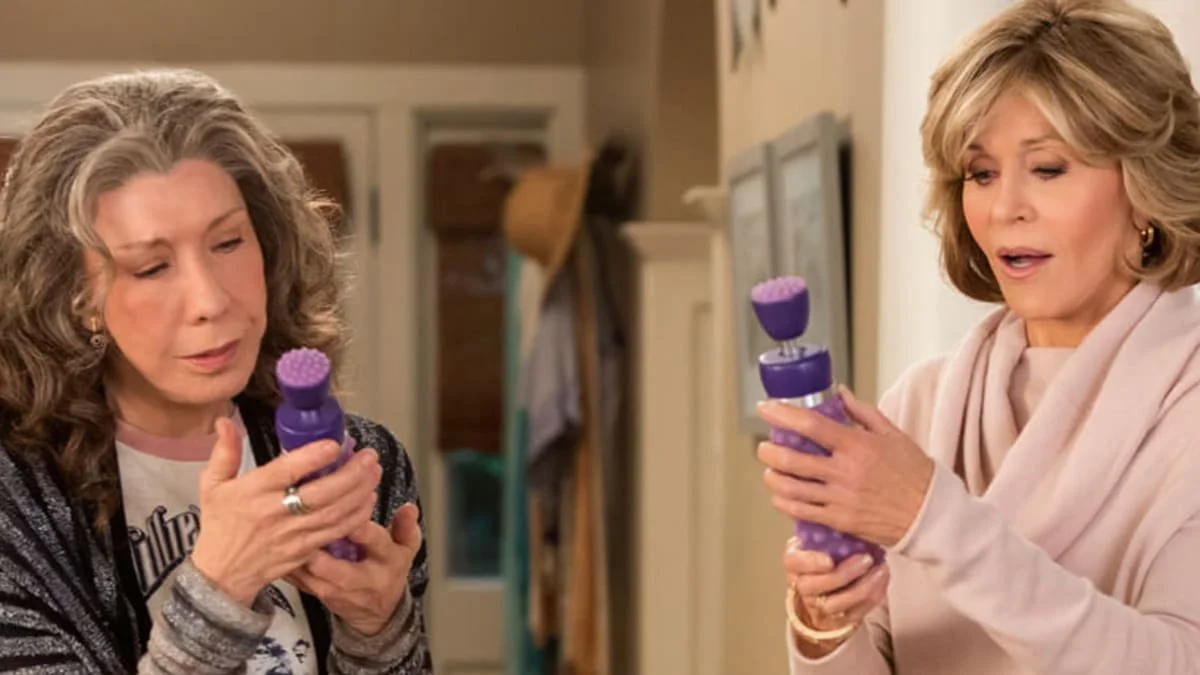
    One of the best things about Grace and Frankie is how it shows older women owning their sexuality. Grace (played by Jane Fonda) and Frankie (played by Lily Tomlin) take matters into their own hands (literally, sometimes!) to explore their desires and support other women in doing the same.
    Vibrators for Older Women: One of the standout storylines is when they create a line of vibrators designed specifically for older women—because the traditional market wasn’t cutting it. A vibrator that caters to women’s changing needs? Yes, please! They break down taboos around pleasure for women past a certain age and, in doing so, challenge the narrative that older women’s desires fade.Easy-Open Condoms: The show even touches on the practicalities of sex in later life with their playful idea for easy-open condoms. It’s lighthearted but significant, reminding us that sexual needs change—and that’s okay.Horny at Any Age: In the later seasons, Grace and Frankie don’t shy away from discussing how horny they are, even in their 70s and 80s. It’s refreshing and empowering, because it shows that sexual desire doesn’t have an expiration date.
    Herbs & Self-Pleasure Practices to Embrace Your “Grace and Frankie” Energy
    If you’re ready to embrace your own Second Spring and channel your inner Grace or Frankie, here are some recommendations to help you fully own your pleasure:Herbs for Vitality & Sexual EnergyCertain herbs are known in traditional Chinese medicine and Western herbalism to boost vitality and support sexual energy in later life. Try incorporating these into your routine:Dong Quai: Often called the “female ginseng,” this herb helps support hormonal balance and blood flow, which can boost libido and energy.Maca Root: A great addition to smoothies or tea, maca is known for enhancing stamina, mood, and sexual function.Tribulus: Used to enhance libido and improve sexual function, this herb is perfect for anyone wanting to feel more connected to their sexual energy.Self-Pleasure PracticesFrankie wouldn’t wait for someone else to light her fire, and neither should you! Here are some self-pleasure practices to help you connect with your desires:Self-Massage with a Yoni Wand: Incorporating a yoni wand into your self-care routine can help you reconnect with your body and pleasure in a mindful, exploratory way. Focus on what feels good and take your time—there’s no rush.Breathwork & Sensual Movement: Try adding breathwork to your self-pleasure practice. Deep, intentional breathing paired with slow, sensual movement can amplify your experience, making you feel more in tune with your body.Explore Your Own Vibrators: Just like Grace and Frankie, find a vibrator that works for your body and changing needs. Whether it’s something gentler or designed for deeper sensations, take the time to explore what gives you pleasure.
    Your Sexual Awakening Starts HereMenopause is the perfect time to rediscover your body and desires. The Pleasure Immersion Program offers a deeply personalized journey to help you reconnect with your pleasure, create new sexual habits, and embrace your body like never before.Learn more about the Intimate Essence Immersion Program
    Menopause as a Sexual AwakeningGrace and Frankie teach us that menopause isn’t the end of sexuality—it’s the start of a new chapter. The “Second Spring” gives us the opportunity to enjoy sex in a way that’s more intentional, more discerning, and entirely on our own terms. Whether it’s through vibrators, open conversations, or unapologetically embracing your horniness, this phase of life is full of sexual vitality.So, why not take a page from Grace and Frankie? Embrace your Second Spring, connect with your desires, and explore pleasure without any of society’s outdated rules. ⭐⭐⭐⭐⭐⭐⭐⭐⭐⭐⭐⭐⭐Bloopers from this blog⭐⭐⭐⭐⭐⭐⭐⭐⭐⭐⭐⭐⭐If you needed any more proof that we live in an ageist society, look no further than my hilarious (and slightly frustrating) attempt to create some pretty and empowering images for this blog with my friend, chatgpt! Between asking for a mystical, sensual older woman and getting more “youthful lingerie model” than “Grace and Frankie goddess,” there were some moments that gave me quite the laugh. Here are some of the funniest bloopers from my back-and-forth miscommunications in an attempt to create something visually stunning for you all to enjoy (and not cannabis-centric!! chatgpt what happened to you?!!!). Because, hey, even in the digital age, things don’t always go as planned!
    “please make her actually older than 80”
    “remove the cannabis leaves”
    something actually usable
    “the only thing older than 40 is her white hair”
    “her body is too young”
    “her boobs are too perky for her age”
    “why is she in a suit?”
    “please make her a little more sensual”
    Embrace the Sexual Awakening You DeserveYour second spring is the perfect time to rediscover your pleasure and step fully into your sensual power. The Pleasure Immersion Program offers a comprehensive, personalized journey to help you cultivate deeper intimacy with yourself and others. Whether you’re reconnecting with your body or reigniting your desires, this program is designed to guide you every step of the way.Start Your Journey Today
    **The images used in this blog are for illustrative purposes only and are not affiliated with or endorsed by Grace and Frankie or its creators. All rights to the characters, names, and media belong to their respective copyright holders.
    Nicole card
    Previous
    Previous
    7 reasons why Sexological Bodywork Is the Missing Link to Sexual Healing
    Next
    Next
    8 Common Misconceptions About Sexological Bodywork
    “how to embrace sexuality after menopause,” “Grace and Frankie vibrators for older women,” or “best self-care practices for older women.”
    How Grace and Frankie Challenge Society's View on Older Women's Sexuality
    Menopause as a Sexual Awakening: What You Can Learn from Traditional Chinese Medicine
    Herbs and Self-Care Practices for Embracing Your Sexual Vitality
    Discover how Grace and Frankie inspire a sexual awakening during menopause and learn how to embrace your second spring with herbs, self-pleasure, and empowerment.
    something actually usable
    Nicole Siegel

    Curious if this work is right for you?

    Book a free 30-minute call — no pressure, no commitment.

  • 7 reasons why Sexological Bodywork Is the Missing Link to Sexual Healing — Body Compass

    7 reasons why Sexological Bodywork Is the Missing Link to Sexual Healing — Body Compass

    BLOG

    7 reasons why Sexological Bodywork Is the Missing Link to Sexual Healing — Body Compass

    7 reasons why Sexological Bodywork Is the Missing Link to Sexual Healing
    Oct 22
    Written By Nicole card
    When it comes to healing our relationship with sex, intimacy, and our bodies, the solutions out there can feel… incomplete. Maybe you’ve tried talk therapy, read the books, watched the videos, but something is still missing. That’s because most approaches stop short of fully engaging with the body. Enter: sexological bodywork—the missing piece for so many people on their journey to sexual healing.Let’s dive into why sexological bodywork offers what other methods don’t and why it’s often the game-changer people need.1. Talk Therapy Is Only Part of the StoryDon’t get me wrong—talk therapy can be amazing. It’s a great place to start unpacking our emotional baggage, trauma, and beliefs around sex. But there’s a key element that it often overlooks: the body. You can talk about your feelings for hours, but until you feel through them, your nervous system is still carrying that weight.Sexological bodywork bridges this gap. It’s not just about what you think—it’s about what your body has stored, how it’s reacted, and how you can reconnect with your pleasure, desire, and eroticism on a somatic level. Sexual healing is as much about the body as it is about the mind, and that’s why body-based therapy is crucial.
    Our Signature Video Series​Take your first gentle step—explore simple, supportive practices that help you feel more connected to your body and your sexuality, from the comfort of your own bed.Send me the free trainingWe respect your privacy. Unsubscribe at anytime.
    2. Why Reading About Sex Isn’t the Same as Being ShownWe’ve all seen the sex advice: “Explore your body. Communicate with your partner. Try new things!” But if you’ve ever felt like that advice was a bit… vague, you’re not alone. Reading about sex or hearing advice can only take you so far. Sex is complex, intimate, and often sacred, so of course we need some guidance to fully embrace and understand it.Sexological bodywork offers a place where you’re not just given vague suggestions—you’re actually shown how to connect with your body, how to access pleasure, and how to explore your eroticism in real time. It’s the difference between hearing about a delicious recipe and actually being walked through the steps by someone who knows the process inside and out.3. Pelvic floor Therapy Doesn’t Address It AllPelvic therapy is incredible for dealing with physical issues like pain or pelvic floor dysfunction. But here’s the thing: it’s not enough to focus only on the physical. Our bodies, especially our pelvises, carry emotional and psychological weight, too. Plus, pelvic therapy often doesn’t account for the complexities of scar tissue or the emotional processing that needs to happen alongside physical healing.Sexological bodywork fills that gap, offering both somatic and emotional processing. It’s not just about physical recovery—it’s about helping you navigate the emotions, trauma, and intimate connections that come with healing. Plus, sexological bodyworkers understand the nuances of scar tissue, helping you release tension in ways that other modalities often miss.4. We’re Like Chiropractors for Your Nervous System (“Vagina-practors,” If You Will)Ever heard someone call a sexological bodyworker a “vagina-practor”? It’s because, much like a chiropractor tunes up your spine, we give your nervous system a much-needed tune-up—specifically around your intimacy, your erogenous zones, and your genitals.Your nervous system is deeply involved in your sexual experience, and over time, it can get stuck in patterns of stress, fear, or shutdown. Through sexological bodywork, we help your nervous system find its way back to balance, allowing you to experience your body’s full pleasure potential. Think of it as a reset for your erotic system.
    5. A Space to Explore Pleasure Without Partner ExpectationsOne of the most liberating things about sexological bodywork is that it offers you a space to explore your own eroticism outside of a partner dynamic. This is huge. So often, we’re concerned about whether our partner is enjoying themselves, if they’re getting bored, or if we’re doing something “wrong.” That pressure can make it nearly impossible to truly focus on your own experience.In sexological bodywork, it’s all about you. There’s no need to perform or worry about anyone else. You can fully immerse yourself in your own pleasure and sensations, giving you the freedom to explore and understand your body on your own terms.6. Non-Medical, Non-Judgmental Instructional TouchThis isn’t like going to a doctor who’s treating your body like a “problem to solve.” In sexological bodywork, we offer instructional, educational touch that’s completely non-medical and non-judgmental. It’s about supporting you in learning more about your body’s pleasure pathways, without the clinical coldness of a medical setting.Here, touch is loving, sacred, and purely educational. You get to experience the healing power of touch in a way that’s focused on teaching you about your body, not fixing it.7. A Sacred Space for Deep Erotic LearningSexological bodywork is truly a magical space where you can finally learn about your eroticism. Think about all the things you’ve been too afraid to ask, or the questions you never had anyone to ask. Here, you can ask them all. It’s a sacred, intimate space where your body, your curiosity, and your pleasure are the priority.But it doesn’t stop there—you’re not just given vague advice about “exploring your body.” You’re shown how to connect with it, guided through real experiences of what pleasure and intimacy can feel like, and supported in navigating any difficult emotions that come up along the way. Healing isn’t always easy, and sometimes exploring our intimacy can be activating or even scary—but sexological bodywork provides a safe, compassionate space to process those emotions and move toward healing.Sexological bodywork: The Missing Piece to Your Sexual Healing JourneySexological bodywork is often the missing link for people who’ve tried talk therapy, read the books, and still feel like something is holding them back. It offers a sacred, body-based approach to sexual healing that helps you reconnect with your pleasure, explore your eroticism, and work through emotional and physical blocks in a safe, supportive environment. Whether you’re healing from trauma, navigating intimacy challenges, or simply wanting to understand your body more deeply, sexological bodywork provides the transformative experience that’s so often missing from traditional therapies.Ready to explore what sexological bodywork can do for you? Begin your journey with my free video training series: The 3 Best Sexological Bodywork Practices to Improve Sex with Yourself and Others.
    Nicole card
    Previous
    Previous
    sex bod’s favorite media- SFSX (Safe Sex) comic and Why Sex-Positive Media Matters
    Next
    Next
    Sexological Bodyworker’s Favorite Sex-Positive Shows—Grace and Frankie & Celebrating Sexuality in the “Second Spring”
    Nicole Siegel

    Curious if this work is right for you?

    Book a free 30-minute call — no pressure, no commitment.

  • sex bod’s favorite media- SFSX (Safe Sex) comic and Why Sex-Positive Media Matters — Body Compass

    sex bod’s favorite media- SFSX (Safe Sex) comic and Why Sex-Positive Media Matters — Body Compass

    BLOG

    sex bod’s favorite media- SFSX (Safe Sex) comic and Why Sex-Positive Media Matters — Body Compass

    sex bod’s favorite media- SFSX (Safe Sex) comic and Why Sex-Positive Media Matters
    Oct 24
    Written By Nicole card
    Spoiler Disclaimer: This blog contains light spoilers for SFSX (Safe Sex) but avoids revealing major plot points. The focus is on the themes of the comic, so you can enjoy reading without worrying about ruining the story!
    If you haven’t picked up a copy of SFSX (Safe Sex), the comic by Tina Horn, now’s the time to dive in. It’s not just a sexy, dystopian adventure—it’s a thought-provoking exploration of sexual freedom, censorship, and the importance of community. And more importantly, it’s exactly the kind of sex-positive media we should all be exposing ourselves to.In a world where sexuality is still heavily policed and misunderstood, media like SFSX helps normalize conversations around sex, pleasure, and bodily autonomy. But what’s even more powerful is how SFSX shows us what happens when sex is celebrated in a community context—when our desires are not hidden away but embraced, shared, and amplified. So, why is exposing ourselves to sex-positive media so crucial? Let’s talk about it.
    Why We Need to Get Used to SexualityIt’s no secret that society has a complex relationship with sex. We’re bombarded with conflicting messages—sex is everywhere, yet talking openly about it is still taboo. Enter sex-positive media like SFSX, which pushes us to rethink these limitations. When we regularly expose ourselves to different ways of expressing and experiencing sexuality, it becomes easier to break down those barriers and embrace our own desires.In SFSX, characters live in a world where pleasure is criminalized, and they risk everything to create a community that celebrates sexuality. By getting used to seeing sex depicted in diverse, creative, and inclusive ways, we begin to realize that there isn’t a “right” or “wrong” way to express our sexuality. It’s about embracing what feels good and authentic to us. When we normalize these ideas through media, it has a ripple effect on how we live and how we relate to others.Exploring Different Versions of SexualityOne of the things that makes SFSX stand out is its exploration of different kinds of sexuality. The comic doesn’t shy away from showing kink, polyamory, LGBTQIA+ relationships, and other expressions of desire. It’s a world where sexuality is as varied and unique as the individuals themselves. And that’s why it’s so important to expose ourselves to sex-positive media—it challenges the one-size-fits-all narrative about sex and shows us just how expansive and beautiful it can be.When we see different versions of sexuality celebrated in media, it opens up possibilities for our own lives. We can start to question what we’ve been taught about sex and begin to explore what truly excites and fulfills us. It’s about expanding our horizons and understanding that pleasure looks different for everyone—and that’s okay. In fact, it’s something to celebrate.
    Want to experience the kind of sex-positive community that celebrates your pleasure and supports your journey, just like in SFSX? Join the Body Practice Tribe! This is your space to connect with others who believe in amplifying pleasure and embracing sexuality in a judgment-free, empowering environment.
    The Power of Sex-Positive CommunityAt the heart of SFSX is the idea of community. The characters create underground spaces where people can come together, share their desires, and experience pleasure without shame. It’s a reminder that sex doesn’t have to be a private, hidden thing—it can be something celebrated in a communal setting.In a sex-positive community, your pleasure is not just accepted, but amplified. Being around others who are unapologetically embracing their sexuality can be transformative. It creates a space where you can explore your own desires without judgment and where you can connect with others who celebrate your pleasure as much as their own.
    Tired of living in a world where pleasure feels restricted or hidden? In the Body Practice Tribe, we create a supportive space for you to explore your desires and connect with like-minded individuals. Together, we celebrate your unique sexuality and lift each other up.
    Changing Your Life Through Sex-Positive MediaAt the end of the day, consuming sex-positive media isn’t just about entertainment—it’s about changing the way we live. When we regularly expose ourselves to stories, art, and conversations that normalize pleasure, we start to see ourselves and our desires differently. We become more comfortable with who we are, and we begin to seek out spaces—both physical and digital—where we can fully express ourselves.
    Inspired by the idea of community-driven pleasure like the one in SFSX? It’s time to take action. In the Body Practice Tribe, we amplify each other’s pleasure through regular practices, group coaching, and a thriving, sex-positive community.
    Safe Sex isn’t just a comic about a dystopian future—it’s a roadmap for how we can create better, more inclusive, and more pleasurable spaces in our own lives. It’s a reminder that sex doesn’t have to be something we do in isolation—it can be part of a vibrant, supportive community that lifts us up and celebrates our pleasure.Embrace the Power of Sex-Positive MediaSo, why is it important to expose yourself to sex-positive media like SFSX? Because it helps normalize what society often tries to suppress. It gives us permission to explore and express our sexuality in new ways.It shows us the power of community and reminds us that pleasure is meant to be celebrated, not hidden away.By embracing sex-positive media, we can change not only our perceptions of sex but how we live our lives. It’s time to immerse ourselves in stories that challenge the status quo and create spaces where our pleasure is amplified and celebrated. SFSX is just the beginning—let’s keep seeking out the stories that transform us.
    Ready to experience your own sexual transformation in a community that celebrates every aspect of your pleasure? The Body Practice Tribe offers a safe, empowering space to explore your desires and embrace your full sexual potential.
    **The images used in this blog are for illustrative purposes only and are intended to capture the themes of empowerment, sexuality, and community explored in the content. These images are not official representations of SFSX or any other media referenced, and all rights to the original characters, stories, and concepts belong to their respective creators. All images from SFSX belong to SFSX.
    Nicole card
    Previous
    Previous
    4 signs sex positive community might be calling you 📢
    Next
    Next
    7 reasons why Sexological Bodywork Is the Missing Link to Sexual Healing
    sex-positive media, sex-positive community, sexual empowerment, SFSX comic review, Safe Sex comic, Tina Horn SFSX, importance of sex-positive media, sex-positive representation, sexual freedom in comics
    , sex in community context, sexual autonomy, exploring sexuality in comics, sex-positive dystopian stories, LGBTQ+ sexuality in comics, sex-positive storytelling, celebrating sexuality, sexual freedom,
    pleasure-positive communities, sex-positive spaces, empowering sexual expression, safe spaces for sexuality, diverse sexuality in media, community-driven sexuality, sexual liberation in comics, SFSX sex-positive themes
    Nicole Siegel

    Curious if this work is right for you?

    Book a free 30-minute call — no pressure, no commitment.
  • 4 signs sex positive community might be calling you 📢 — Body Compass

    4 signs sex positive community might be calling you 📢 — Body Compass

    BLOG

    4 signs sex positive community might be calling you 📢 — Body Compass

    4 signs sex positive community might be calling you 📢
    Oct 29
    Written By Nicole card
    Ever get that itch—no, not that kind of itch—the one that makes you want to strip down and bask in the glory of your own body, not just in your bedroom, but in a group setting? You might be hearing the sweet, seductive call of a sex-positive community. Here are four signs that it might be time to find your people and let your wild side out!
    1. You’re Itching to Get Naked—LiterallyYou find yourself daydreaming about getting naked in front of others, whether it’s at a nude beach, a forest retreat, or even a cuddle party. The idea of being bare (in every sense of the word) just feels so… natural. Being naked in nature or among like-minded people suddenly seems like the most freeing and empowering thing you could do. It’s not about shocking anyone or making a statement—it’s about connecting to your body in a way that feels joyful, free, and authentically you.2. Why Don’t Your Friendships Include Cuddling?You’re starting to feel like something’s missing in your friendships—something warm, fuzzy, and physical. It’s not that your friends aren’t great, but why don’t your hangouts include some snuggles, nuzzles, or gentle touch? You’re convinced that human beings are wired for affection beyond just romantic or sexual relationships, and the idea of cuddling with friends sounds like the kind of intimacy that makes the soul sing. You’re craving that kind of connection, and it’s starting to feel like that’s exactly how humans should be showing love.3. Why Is Pleasure a Private Affair?Self-pleasure? Check. Self-massage? Check. Masturbation? Double-check. But why are all these activities happening in isolation, behind closed doors? You’re beginning to wonder why something so natural and pleasurable is kept under wraps. It’s not like there’s anything shameful about it! You’re starting to think that maybe, just maybe, there’s a world where these things could be shared or experienced with others in a respectful, supportive space. You want to strip away the stigma and embrace pleasure openly—not just privately.4. You Want People to Celebrate Your Body’s AwesomenessYour body is a work of art, and it’s high time others noticed. You’re feeling the urge to be in a space where your body—and all bodies—are celebrated for their beauty, power, and capability. You want to be around people who don’t just accept your body but cheer for it, admire it, and share in the joy of what it can do. Whether it’s through movement, dance, or simply basking in your own skin, you’re ready for others to celebrate how freakin’ awesome you and your body truly are.Time to Answer the Call?If these signs are resonating with you, it might be time to explore a sex-positive community. A space where you can be free, connect with others through intimacy, and celebrate pleasure without shame or secrecy. Your body, your desires, and your connection to others deserve to be amplified, not hidden away. So, what are you waiting for? Time to find your people and get out there!
    Ready to Find Your People?If you’re feeling the call to embrace your body, your pleasure, and a community that celebrates it all, the Body Practice Tribe is waiting for you! Join us for regular gatherings, guided practices, and a supportive, sex-positive space where your desires are honored and your body is celebrated. It’s time to connect with like-minded souls and amplify your pleasure.Join the Tribe Today!
    Nicole card
    Previous
    Previous
    Sex Education in historically feminist spirituality
    Next
    Next
    sex bod’s favorite media- SFSX (Safe Sex) comic and Why Sex-Positive Media Matters
    Nicole Siegel

    Curious if this work is right for you?

    Book a free 30-minute call — no pressure, no commitment.

  • Sex Education in historically feminist spirituality — Body Compass

    Sex Education in historically feminist spirituality — Body Compass

    BLOG

    Sex Education in historically feminist spirituality — Body Compass

    Sex Education in historically feminist spirituality
    Dec 12
    Written By Nicole card
    Why Does Sex Still Feel So Shameful… Even When You “Know Better”?You know how this goes. You’ve read the books. Maybe you’ve done the workshops. You intellectually believe that pleasure is natural. That your body isn’t wrong.And yet… when it comes time to actually receive touch, to fully feel your own desire, to sink into sex without checking out or getting stuck in your head—something’s still tight, hesitant, blocked.Maybe it feels like your body is holding onto a story you can’t quite put into words, a story older than you, older than your parents, older than modern sex education itself.This blog is about that story. And how feminist spirituality—particularly the spirituality of ancient goddess cultures—can help untangle it.Once Upon a Time, Before Sex Was a SinLet’s rewind. Way, way back—before our grandmothers’ grandmothers, before biblical commandments and medieval purity culture.There was a time when sex was not dirty. Not taboo. Not something to hide behind closed doors and blush about afterward.In many ancient cultures—Sumer, Canaan, Anatolia—sexuality wasn’t separate from spirituality. It was integrated. Sacred. Even taught as part of growing up.In temple communities, young people didn’t get their “talk” from embarrassed parents or outdated textbooks. Instead, they learned from priestesses—elders who understood sexuality as part of the rhythms of life itself.These weren’t lessons laced with shame. They didn’t teach you to delay or repress your desire until marriage or to fear your own body.They taught that your desire was a bridge to the divine.The Body as Holy, Sex as CeremonyImagine coming of age in a world where your first sexual education came not from awkward peers but from wise women who honored your body as sacred from the start.The act of sex itself was considered an enactment of life-giving forces—a celebration of creation, not a moral test.When you learned about sex, you weren’t just learning about anatomy or contraception. You were learning about your connection to nature, cycles, fertility, pleasure, partnership, and power.The temples were not just places of worship—they were schools for embodied living.How We Lost This Wisdom—and Why It MattersThen came a profound cultural shift.As patriarchal religions took root, the temples of the goddess were destroyed or converted. The priestesses lost their authority and were recast as prostitutes—demonized instead of revered.Sex itself was pulled out of the spiritual domain and recast as something suspect, sinful, shameful. And that’s when the story we still carry today took hold: That our bodies are dangerous. That our desires need control. That pleasure must be earned—or denied.Even if we don’t believe that story anymore in our heads, many of us still feel its grip in our bodies.That shame you feel during intimacy? That tendency to dissociate or disconnect? That’s not just yours. It’s inherited.What Feminist Spirituality Offers NowBut here’s the beautiful thing: feminist spirituality invites us to remember what we once knew.To imagine an erotic education that teaches:Pleasure as sacred, not sinfulConsent as mutual honoring, not gatekeepingBodies as sites of wisdom, not battlegrounds for controlIt offers a path to recover what was lost—not by replicating ancient rituals exactly, but by integrating their spirit into our modern lives.A Different Kind of Sex Ed Starts HereSo if you find yourself struggling with sex—not because you lack information, but because something deeper feels disconnected—know this:You’re not broken. You’re carrying cultural scars.And you can begin again, with a different framework: A spirituality that teaches your body is not a problem to be solved but a miracle to be honored. A spirituality where sex isn’t an obligation or a performance—but a sacred dance between you and life itself.✨ This is exactly the journey we walk together in my work—and it’s why I created The Goddess Solution, a seminar on reclaiming pleasure and rewriting the story of your sexuality.You don’t need more guilt. You need a new myth—a true one. And you already carry it in your bones.
    Nicole card
    Previous
    Previous
    What a feminist spirituality can do for your sex life
    Next
    Next
    4 signs sex positive community might be calling you 📢
    Nicole Siegel

    Curious if this work is right for you?

    Book a free 30-minute call — no pressure, no commitment.

  • What a feminist spirituality can do for your sex life — Body Compass

    What a feminist spirituality can do for your sex life — Body Compass

    BLOG

    What a feminist spirituality can do for your sex life — Body Compass

    What a feminist spirituality can do for your sex life
    Dec 12
    Written By Nicole card
    What a Feminist Spirituality Can Do for Your Sex LifeGiving up the belief that we are the original sinners—and reclaiming your body as sacred terrainLet me tell you a story.Once upon a time—not so long ago, really—many of us were raised under a worldview that whispered (or shouted) that our bodies were dangerous.If you grew up anywhere touched by Christianity—and that’s most of the West—there’s a good chance you inherited this peculiar little narrative: that woman, through Eve, was the original sinner. The first transgressor. The first one to disobey, to taste desire, to act on curiosity.This wasn’t just an innocent myth. This story justified centuries of control over women’s bodies, sexualities, and freedoms. And it lingers. In how we feel about our hunger. Our thighs. Our orgasms. Our nakedness.It tells us: you’re too much, too needy, too sexual. Or not enough, not pure, not spiritual enough.🔹But here’s the twist you might not know: Long before Eve bit that symbolic apple, long before sin and shame were invented as tools of control… there were goddesses.Archaeological evidence tells us that from the Neolithic era (roughly 10,000 years ago) onward, many ancient cultures revered the feminine as sacred. Think of the Venus figurines—those voluptuous statuettes carved 30,000 years ago, with pendulous breasts, wide hips, and round bellies—not because they represented “sin” but because they symbolized life itself.In Sumer, Inanna was celebrated as a goddess of erotic power, fertility, and sovereignty. She wasn’t punished for her desire—she was desire, and her myths honored her sexual agency.In ancient Egypt, Isis embodied magic, motherhood, and sexuality. She was depicted breastfeeding her child with no shame whatsoever—because the erotic and the maternal were not split.Even in ancient Greece, before patriarchal myths took over, Aphrodite wasn’t just a sex symbol. She was an embodiment of beauty and sexual autonomy.🔹So what happened?Well, as patriarchal monotheism rose, particularly Christianity, a new moral framework emerged. Women’s bodies—once sacred—became seen as sinful, leaky, dangerous. In medieval theology, menstruation was seen as “proof” of women’s inferiority. Theologians like Tertullian wrote that women were “the devil’s gateway,” forever marked by Eve’s disobedience.By the time we reach the witch trials in Europe, these ideas culminated in real violence: women burned for their sexuality, independence, or simply for embodying the rhythms of nature.This is not ancient history. It’s the cultural water many of us still swim in today.🔹And so it’s no wonder that so many people feel disconnected from their own bodies during sex.How can we truly open to pleasure, presence, and embodiment when we are carrying the residue of thousands of years of stories telling us that our bodies are shameful, that our desire makes us dangerous, that surrendering to sensation makes us untrustworthy?Here’s where feminist spirituality comes in—not as a “new religion,” but as a reclamation. A remembering.When we practice feminist spirituality, we give ourselves permission to recover an older truth: That our bodies were never wrong. That eroticism and holiness are not opposites. That desire itself is sacred.🔹Imagine what shifts when we stop thinking of ourselves as “original sinners” and start thinking of ourselves as original givers of life.When we see our bleeding as cyclical power—not pollution. When we embrace our sexuality as an elemental force—not something to be tucked away or sanitized.This doesn’t just affect how we think—it changes how we feel during sex:We stop dissociating when we’re touched.We start listening to what our bodies want and need, moment to moment.We release the performance trap and lean into curiosity.We let pleasure become more complex, more textured, more real.🔹So, here’s your gentle reminder, dear reader:You are not here to atone for Eve’s mistake. You are not a sinner for wanting, for aching, for hungering, for orgasming.Your body is not wrong. It’s a living, breathing altar. It’s the same body that our ancestors once honored in the form of Venus figurines, the same body that ancient priestesses adorned with oils, fabrics, and flowers, the same body that was once seen as a doorway between earth and the divine.🔹💫 If this resonates, this is exactly the journey we take together in The Goddess Solution. It’s time to remember: Pleasure is not a sin—it’s a form of reverence.
    Nicole card
    Previous
    Previous
    Navigating Postpartum Sex Pain: Rediscovering Your Body and Intimacy
    Next
    Next
    Sex Education in historically feminist spirituality
    Nicole Siegel

    Curious if this work is right for you?

    Book a free 30-minute call — no pressure, no commitment.

  • Navigating Postpartum Sex Pain: Rediscovering Your Body and Intimacy — Body Compass

    Navigating Postpartum Sex Pain: Rediscovering Your Body and Intimacy — Body Compass

    BLOG

    Navigating Postpartum Sex Pain: Rediscovering Your Body and Intimacy — Body Compass

    Navigating Postpartum Sex Pain: Rediscovering Your Body and Intimacy
    Feb 13
    Written By Nicole card
    She gets up, already drained at the thought of the day ahead—another round of household duties, another list of things that never seems to end. The frustration begins before she’s even left the bedroom, eyes falling on her husband, who hasn’t thought to clean up the living room or even tackle the laundry that’s been piling up. Why do I have to remind him to do these things?She rolls out of bed and immediately starts preparing breakfast for everyone else. Her own stomach churns, but she doesn’t have time for herself. When she finally grabs a quick cup of coffee, she hurries back to the bedroom to throw on clothes before the inevitable “honey…” or “mom…” pulls her back to the chaos.In the mirror, she doesn’t linger long. Her postpartum body feels like a stranger’s, marked by the weight she hasn’t yet lost and the stretch marks that no cream has managed to fade. She pulls on a pantyliner, just in case—her prolapsed bladder still isn’t what it used to be. She glances at the dark corner of her closet where her pre-baby clothes sit, mocking her. Those form-fitting jeans and confidence-boosting dresses used to make her feel sexy, desirable, youthful. She used to feel alive in them, but now they are just a reminder of the woman she once was.She sighs. She pulls on another loose-fitting blouse, her trusty high-waisted jeans that do their best to “shape” her, but all she can see are the bulges. The day passes by in a blur—meetings, more duties, the constant need to keep moving, keep handling things. By the time she pulls into the driveway at home, she remembers, with a sinking feeling, that there are no leftovers for dinner. Another task.As she walks through the door, her husband emerges from his home office and grabs her from behind. His hands feel like weight on her skin, and she tightens instinctively. She forces a smile, bracing herself, her body stiffening under his touch. She wants to be alone, to relax, to have even just one moment where no one is reaching for her, touching her. Her body feels foreign—gross, unwanted, tired.She pulls away with an excuse—“I’ve got to start dinner”—and finds herself in the kitchen, overwhelmed by the mental load of what’s next on her list, dreading the inevitable look she’ll get from him later. That look that says, “Can we be intimate tonight?” But she already knows the answer is no. She just doesn’t have it in her, not again tonight. And the guilt gnaws at her because she’s not the woman she used to be. She doesn’t even know what happened to her sex drive—it’s like she can’t even remember the last time she wanted it.
    Postpartum Sex Pain: You’re Not AloneThis story might feel all too familiar to many new mothers. The exhaustion, the endless demands, the mental load—and on top of all that, the postpartum sex pain and disconnection from your own body. For many women, the postpartum period can bring a loss of desire, discomfort, and even a deep sense of apathy toward sex.You’re not imagining it. After giving birth, it’s common to experience discomfort during sex. Whether it’s vaginal dryness, scarring from tearing, or the emotional weight of your new role, postpartum sex can feel overwhelming. Even though you might feel distant from the idea of sex now, you can start to rebuild that connection with your body slowly, without guilt.Navigating Postpartum Sex PositionsIt’s not just pain that makes postpartum sex difficult—it’s also about finding ways to feel comfortable again. Some postpartum sex positions can help ease the pressure and give you more control over how much discomfort you experience. Side-lying or being on top allows you to move at your own pace, minimizing the pressure on your still-healing body. But even if you’re not ready for sex, that’s okay. Healing takes time, and your comfort is the most important thing.
    Start Your Healing JourneyIf you’re struggling with postpartum sex positions or dealing with postpartum sex pain, know that you’re not alone. Healing your relationship with your body takes time, and you deserve to give yourself that time—without guilt, without shame.Ready to begin? Schedule a 30 minute clarity call with Nicole here.
    Nicole card
    Previous
    Previous
    What’s Your Erotic Survival Pattern?(And Why It’s Not Your Fault You Shut Down During Sex)
    Next
    Next
    What a feminist spirituality can do for your sex life
    Nicole Siegel

    Curious if this work is right for you?

    Book a free 30-minute call — no pressure, no commitment.

  • What’s Your Erotic Survival Pattern?(And Why It’s Not Your Fault You Shut Down During Sex) — Body Compass

    What’s Your Erotic Survival Pattern?(And Why It’s Not Your Fault You Shut Down During Sex) — Body Compass

    BLOG

    What’s Your Erotic Survival Pattern?(And Why It’s Not Your Fault You Shut Down During Sex) — Body Compass

    What’s Your Erotic Survival Pattern?(And Why It’s Not Your Fault You Shut Down During Sex)
    Jun 6
    Written By Nicole card
    TL;DR:Your Erotic Survival Pattern is the hidden script your body wrote to protect you in unsafe, uncomfortable, or simply overstimulating erotic moments. But now? That script might be blocking your deepest turn-on. It’s time to decode it.🧠 A Surprising Truth from the World of Somatic Sex EducationHere’s something most people don’t realize:Many of the things that keep you from feeling sexually alive—like going numb during sex, feeling “too much,” or performing pleasure instead of experiencing it—aren’t signs of dysfunction. They’re signs of a nervous system doing exactly what it was trained to do.In Sexological Bodywork, we work with the body as it is. We don’t treat “sexual symptoms” as flaws to fix. We trace them back to their origin. Most of the time, that origin is survival.Your Erotic Survival Pattern is the blueprint your body created when sex, touch, intimacy, attention—or even just being looked at—felt overwhelming or unsafe.💡 What Is an Erotic Survival Pattern?It’s not a personality quiz or a sexy archetype for funsies. It’s a coping mechanism encoded in your soma—your living, sensing body.Examples include:Freezing during sex, even with someone you loveAutomatically performing (moaning, arching, etc.) without really feelingGoing numb or spacing out when you receive pleasureFeeling panic when things slow down or get intimateBecoming hypersexual as a way to avoid vulnerabilityEach of these responses might seem contradictory—but they all have one thing in common: 👉 They helped you get through something.In the field of somatic psychology, these are called protective adaptations. And in the realm of sexuality, they become Erotic Survival Patterns—the ways your body learned to keep you safe, connected, or even invisible when safety, consent, or control were lacking.🧬 How the Body Learns These PatternsFrom a biological standpoint, these responses are tied to your autonomic nervous system—specifically the polyvagal system.According to Dr. Stephen Porges’ Polyvagal Theory, our nervous system responds to perceived threat through a sequence:Social engagement (connection, negotiation)Mobilization (fight or flight)Immobilization (freeze, fawn, dissociate)When social connection doesn’t work—and fight or flight aren’t available (especially for children or those in vulnerable situations)—the body opts for shutdown.If this happened to you during formative sexual experiences, your erotic wiring may have “learned” that:Slowing down = dangerReceiving = riskySpeaking up = punishedOrgasms = performing, not feelingThese truths are held not just in your brain, but in your fascia, breath, pelvic floor, and arousal pathways.😬 “But That Was Years Ago…”Here’s the kicker: your rational brain might know you’re safe now. But your body doesn’t work on logic. It works on pattern recognition.According to trauma researcher Dr. Bessel van der Kolk (The Body Keeps the Score), traumatic or overwhelming experiences are not just stored as memories. They’re stored as somatic imprints—in muscle tension, breath patterns, sensory associations.So you can go to therapy for years (and it might help!) but still:Freeze up the second someone touches your bellyGo totally blank when someone asks what you wantOr feel deep shame for wanting sex in the first placeThis isn’t a mindset issue. It’s a bodyset issue. That’s where somatic tools come in.🧘‍♀️ The Sexological Bodywork ParadigmSexological Bodywork is a professional modality that works directly with breath, touch, sound, movement, and attention to bring awareness and healing to your erotic system.Unlike talk therapy, Sexological Bodywork:Engages the nervous system and genital reflex loopsUses guided somatic education to map pleasure, trauma, and desireHelps you rebuild your connection to your body through choice, slowness, and consentWhen I work with clients, we’re not just “talking about” their Erotic Survival Pattern. We’re noticing it in real-time—how it shows up in the body, breath, and behavior.And then? We help the body find new options that aren’t just about surviving—but about thriving in erotic connection.🧪 Take the Erotic Survival Pattern Quiz
    This quiz is designed to help you:Identify your pattern (with cheeky, accurate names)Understand how and why your body developed itBegin imagining what’s possible when the pattern isn’t in charge It’s short. It’s punchy. And it’s eerily accurate.👉 [Take the Quiz Now]You’ll get immediate insight into your Erotic Survival Pattern—and suggestions for what to explore next.🌀 Examples of Patterns You Might Meet in the QuizThe Ice Queen/King: Calm, composed, and totally disembodied during sex. This pattern learned that staying cool = staying safe.The Performer: Gets gold stars for “hot sex” but hasn’t had a real orgasm in years. This one learned that pleasure = approval.The Ghost: Disappears emotionally or physically once intimacy begins. Boundaries were never modeled, so absence became the only boundary.The Pleaser: Reads the room like a psychic. Their pleasure is completely others-oriented. Their own desire? TBD.These aren’t pathology—they’re poetry written by a body trying to survive.🎯 Why This Matters (And Why Now)Understanding your Erotic Survival Pattern is more than self-awareness. It’s liberation.Because once you can name the pattern, you can:Choose differently (instead of reacting reflexively)Feel more (instead of going numb)Explore safely (instead of reliving the past)And maybe most importantly—you stop thinking you’re broken.🛑 Before You Go…If you’ve ever thought:“Why can’t I just relax during sex?”“Why do I check out when someone touches me?”“Why do I crave connection but run from it?”Then you’re not alone. And you’re not crazy. Your Erotic Survival Pattern might just be ready to evolve.👉 [Take the Quiz Now] Meet your pattern. Name it. Work with it. Because survival got you here—but thriving is where we’re going next.
    Nicole card
    Previous
    Previous
    Why You Go Numb During Sex (And How to Get Your Sensation Back)
    Next
    Next
    Navigating Postpartum Sex Pain: Rediscovering Your Body and Intimacy
    Nicole Siegel

    Curious if this work is right for you?

    Book a free 30-minute call — no pressure, no commitment.