Blog

  • Can a Relationship Be Fixed After Cheating? The Real, Bodily, Feminist, Messy Truth — Body Compass

    Can a Relationship Be Fixed After Cheating? The Real, Bodily, Feminist, Messy Truth — Body Compass

    BLOG

    Can a Relationship Be Fixed After Cheating? The Real, Bodily, Feminist, Messy Truth — Body Compass

    Can a Relationship Be Fixed After Cheating? The Real, Bodily, Feminist, Messy Truth
    Aug 21
    Written By Nicole card
    If you’ve found your way here, you might want to give this gentle meditation a try: Returning to the Body After Betrayal. Save this for later 🫶. Now let’s get into it.
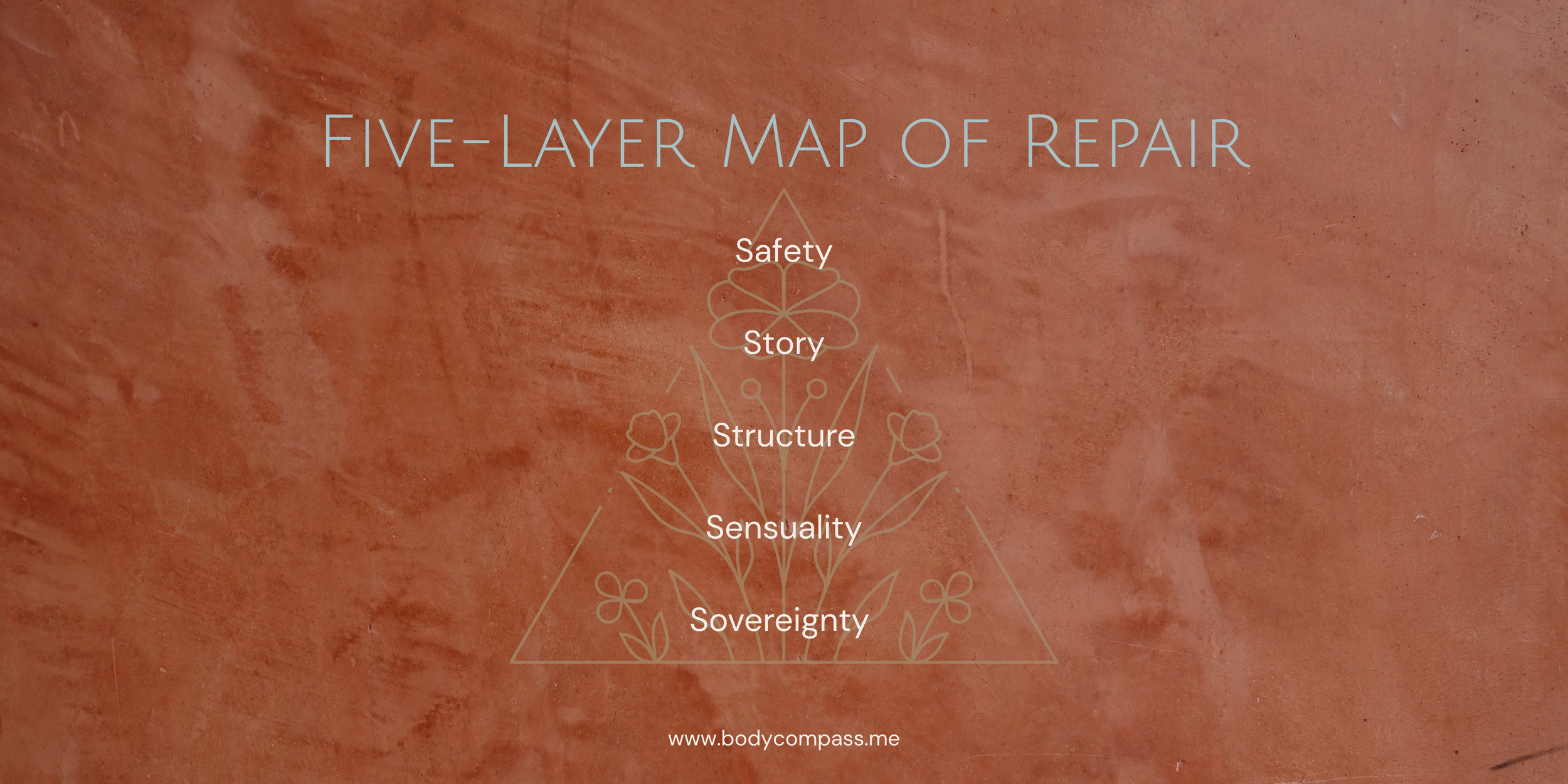
    First, let’s name the hurricane.It’s 2:14 a.m. Your heart is doing that hummingbird thing in your throat. Your stomach won’t unclench. You’ve reread the texts. You’ve imagined every angle of the lie, every room, every laugh that wasn’t for you. Your skin can’t decide if it wants to jump out of itself or crawl back into a shell.(side note: if the betrayal happened a little while ago, and the wound feels more healed, or at least a little older, this article might be a better fit for you)And it’s not just hurt. It’s social panic: What will people think? It’s the feminist in you railing, Am I a bad feminist if I stay? It’s anger at a culture that hands us Disney scripts and porn choreography but no manual on how two nervous systems actually love each other long-term. It’s the quiet shame of the truth you’ve never said out loud: sex never felt fully effortless between you, not really, and nobody taught you why.You’re not broken. You’re not naïve. You’re not weak. You are a human with a body that’s trying to make sense of danger and belonging at the same time.Let’s ask the questions you came for — and answer them with both science and soul:Can a relationship be fixed after cheating?Can relationship work without trust?Can relationship survive cheating?Can relationship work without intimacy?Can relationship breaks work?Short answers (we’ll unpack each thoroughly):Yes, a relationship can be fixed after cheating — if you rebuild safety, story, structure, sensuality, and sovereignty (I’ll map these below).A relationship can function temporarily with low trust, but it cannot thrive without rebuilding it.Many relationships survive infidelity; the ones that heal don’t go “back to normal,” they build a new normal.A relationship cannot work without intimacy for long; but intimacy is learnable and rebuildable.Breaks can work — with clear rules, time limits, and actual work (not avoidance).What You’re Feeling Is Not “Drama” — It’s Your Nervous SystemCheating is not just a moral failure; it’s a safety failure. Your amygdala heard “threat” and slammed the red button. That’s why you’re cycling between:Hypervigilance: checking phones, scanning tone of voice, clocking every late meeting.Numbness: your body shuts down during hugs or sex, because “don’t open the door — it’s not safe.”Rage + grief swirl: crying in the shower, then dead calm at brunch.Social terror: If I stay, do I betray my politics? If I leave, do I betray my history?None of that is irrational. It’s physiology + meaning + culture colliding.The Five-Layer Map of Repair (or Decision)
    If you decide to explore staying — or to decide well about leaving — use this layered map.Safety — regulate bodies before negotiating termsStory — find the why without excusing the whatStructure — create guardrails that make trust testableSensuality — rebuild intimacy as a skill, not a vibeSovereignty — make a values-aligned decision to stay, leave, or pauseWe’ll go deep on each.
    1) SAFETY: Stabilize First, Talk SecondWhen your body’s in alarm, “productive conversation” is fantasy. Create safety you can feel.Cheating isn’t just a betrayal of promises; it’s a betrayal of the body’s expectation of safety. You thought you knew where the ground was. Now every step feels like it could cave in.When people ask, “Can a relationship work without trust?” — what they’re really asking is: Can my body stop scanning for danger long enough to rest in love again?The truth: no healing can happen until your nervous system feels some degree of stability. Without it, every “serious talk” turns into accusation, withdrawal, or numb shutdown. Your body doesn’t hear words when it’s braced for impact.What that actually looks like in real life:You startle when their phone buzzes.Your heart spikes when they’re 20 minutes late.You flinch at casual touches because your system links touch = threat.You can’t eat, can’t sleep, can’t focus — because your biology has decided “constant vigilance” is the safest choice.This isn’t overreaction. This is survival instinct.So the first stage is not forgiveness, not communication, not sex. It’s stabilization.Immediate triage to reestablish safety (first 2–4 weeks):Stop the bleeding. If there’s any ongoing contact with the other person, healing cannot start. This is non-negotiable. No “we’re just friends.” No “we’ll taper off.” A clean, verifiable cutoff.Transparency windows. Instead of compulsive phone-checking 24/7, agree on proactive daily updates. For example: “Here’s my schedule today, here’s when I’ll be home, here’s any changes I’ll text immediately.” This prevents your nervous system from chasing reassurance like a drug.Contain the blast radius. Choose only a very small circle of confidantes. If you tell everyone — your mom, your boss, your group chat — you’ll drown in advice and judgment. If you tell no one, you’ll drown in isolation. Pick 1–3 safe people.Body reset before hard conversations. Before every “state of the union” talk, sit together and regulate:Feet flat.5 slow exhales longer than inhales.Name 3 things you see in the room. This tells your body: We’re safe enough to have this conversation without exploding.Micro-consistency. If the partner says, “I’ll be home at 7,” they must be home at 7. Every kept promise is a brick laid in the foundation of repair. Every missed promise is another crack.Safety scripts (use verbatim if helpful):“I’m willing to talk when my body feels steadier. Let’s pause for 15 minutes; I’ll text when I’m ready.”“I need proactive clarity today: where you’ll be, when you’ll be home, and any changes. Please send it by 9 a.m.”“I want to talk about this, but my body feels too activated right now. Let’s pause and try again in 30 minutes.”“I don’t want to feel like a detective. Can you proactively send me your schedule for the day so I don’t spiral?”“I’m not asking for perfection. I’m asking for consistency.”Important note! If there’s abuse, coercion, or ongoing deception: your safety plan is exit-focused. You don’t need permission to leave danger.If Safety Doesn’t ReturnIf you’ve done the work above for 60–90 days and still feel constantly unsafe, it’s not your fault — it’s data. It may mean your partner isn’t doing the work, or your body knows this relationship can’t provide what you need. Either way, it’s clarity, and clarity is better than purgatory.But what if he is doing the work? What if you start to notice little signs that things are shifting?Instead of you having to dig for the truth, he offers it before you ask.When you get triggered, he doesn’t get defensive — he breathes, listens, and stays.He shows up consistently when he says he will, closing loops that used to be left hanging.He can admit the full harm without minimizing or trying to rush you into “getting over it.”He starts leaning into intimacy slowly — not demanding sex as proof of forgiveness, but respecting your body’s pace.Those aren’t grand gestures. They’re bricks. And brick by brick, they build something new.If you notice those shifts, it’s worth paying attention. It means repair is possible. It means your body might eventually exhale.And here’s the tender truth: even if your partner shows up beautifully, it won’t magically teach you how to feel safe in your own body, or how to sync your rhythms so intimacy feels nourishing again. That’s the part no one ever gave us a manual for.That’s why I created Reset Your Erotic Rhythm. Not as a “get over cheating” crash course, but as the deeper education we should have all been handed years ago — how to rebuild intimacy as a skill, how to work with your nervous system instead of against it, how to move from mismatch into connection.So if you’re starting to see green shoots of change, and you want to water them with real tools instead of crossing your fingers, Reset Your Erotic Rhythm will walk you step by step through the practices that make intimacy actually sustainable.Because surviving is one thing. Syncing is another.
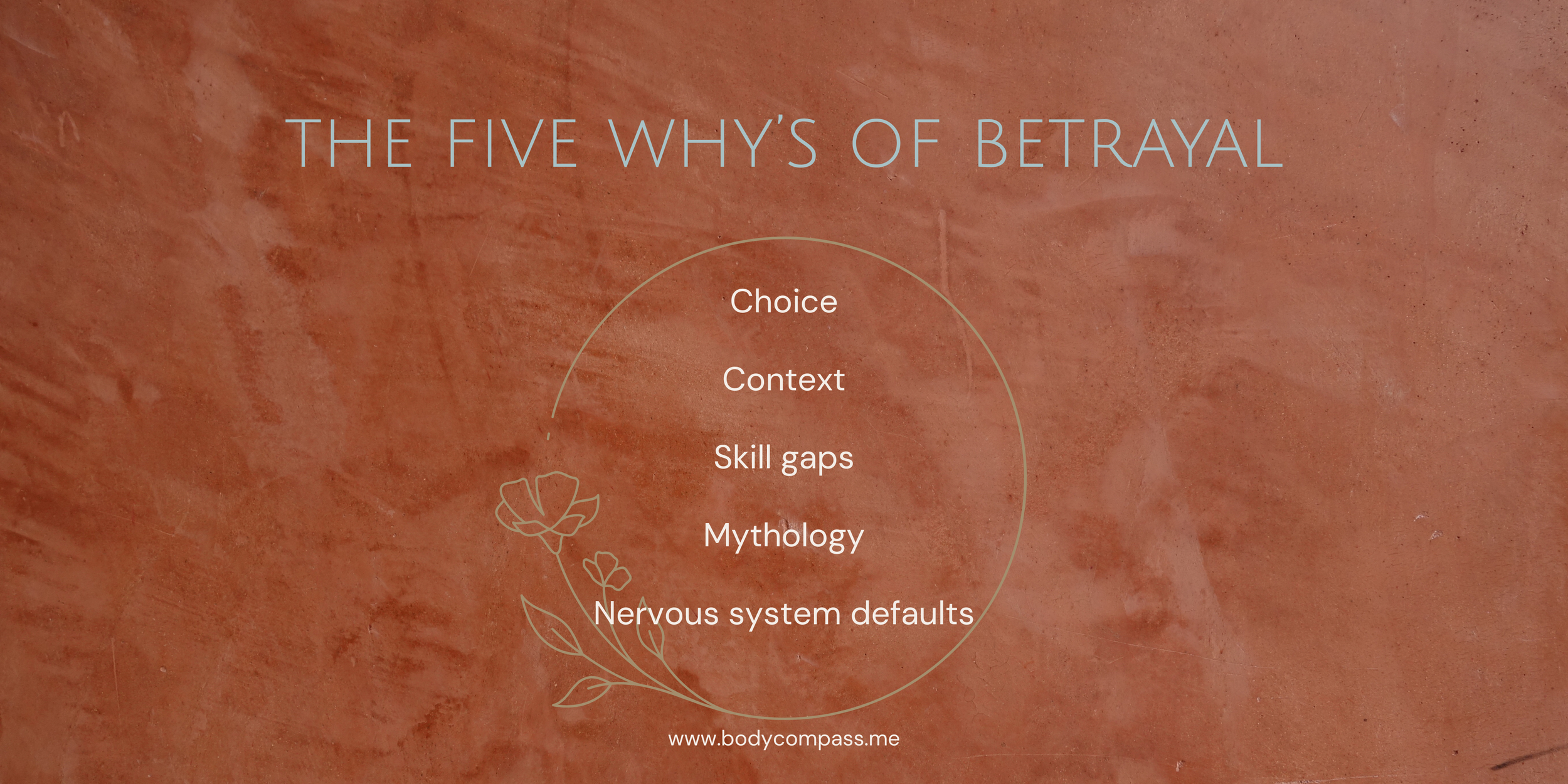
    2) STORY: Make Meaning Without Minimizing“Why did this happen?” is not one question; it’s five:ChoiceContextSkill gapsMythologyNervous system defaults(we’ll get deep into the Five Why’s in a bit)Once the shock fades into daily life, the next tidal wave hits: trying to make sense of it. Your brain won’t stop looping:Why did this happen?Am I not enough?Was everything a lie?Does this mean he doesn’t love me?Does love even exist, or have we all just been winging it with no manual?And if you’re anything like the women I’ve worked with, the confusion doesn’t stop there. You’re also fighting the invisible voices of culture and community:The friend who says, “once a cheater, always a cheater.”The parent who says, “don’t throw away your marriage over one mistake.”The feminist voice inside you asking, “am I betraying my politics if I stay?”The shame voice whispering, “maybe you weren’t sexy enough.”And the rage voice screaming, “why the hell did no one teach us how to do relationships before we were already drowning in them?”Cheating doesn’t just crack your relationship; it cracks your mythology. It forces you to look at the stories you inherited about love, sex, and gender — most of which were incomplete at best, destructive at worst.Five Angles of “Why” (Without Excusing the What)When I sit with couples, I don’t ask “why did this happen?” as one giant, impossible question. I break it down into five angles:Choice. Why did this person make this specific choice, with this person, at this time? This is accountability — full stop.Context. What was happening in the relationship? Were you already disconnected? Was conflict swept under rugs? Was stress so high you were running on fumes? Context isn’t blame or excuse — but it is data.Skill gaps. What did neither of you know how to do? Maybe you never learned how to fight clean, how to repair after rupture, how to express desire without shame. Most of us didn’t.Mythology. What cultural scripts were at play? That “real men need variety.” That “good women don’t initiate sex.” That “if you’re soulmates, it should all be effortless.” These myths set us up for failure long before betrayal.Nervous system defaults. Does one of you pursue while the other withdraws? Does one freeze under stress while the other demands closeness? These patterns become the silent third partner in every relationship.Looking at all five doesn’t erase responsibility. It gives you a map.Why This Step Is HardBecause “why” always brushes against your own rawest insecurities. You’ll ask: if I were more beautiful, more fun, more confident, would this have happened?Let me be clear: no. Infidelity is about their choices and both of your missing tools — not your worth.The other reason this stage is so painful? Because you’re not just grieving the betrayal. You’re grieving the story you thought you were living. It’s like the whole mythology of your love — the fairy tale, the “we’re not like other couples,” the “this is forever” — suddenly split open. And now you’re standing in the rubble, trying to decide which pieces are real and which were fantasy all along.
    The real way to resetHere’s the thing: finding the “why” isn’t about building a courtroom case. It’s about noticing the rhythms that were already offbeat before the rupture:Maybe conflict was always swept under the rug until it exploded.Maybe sex felt more like a performance than a playground.Maybe one of you always pressed the gas while the other slammed the brakes.Maybe you were living inside cultural scripts — “real intimacy is effortless,” “men always want more than women,” “if it’s love, it shouldn’t be this hard.”Cheating didn’t invent those rhythms. It just turned up the volume so you couldn’t ignore them anymore.And this is where Reset Your Erotic Rhythm comes in. Not as a band-aid for the betrayal itself, but as a deeper recalibration. It’s about learning how intimacy actually works — how to sync nervous systems, how to pace desire, how to create safety that makes eroticism possible.Because whether you stay or go, the work is the same: you deserve to live in a relationship where the rhythm feels like yours, not like you’re stumbling to someone else’s beat.
    3) STRUCTURE: rebuilding trust with real scaffoldingCan a relationship work without trust? Not for long. But here’s the secret: you don’t sit around waiting for trust to magically grow back like a cut on your hand. You engineer it back in — with structure.Think of structure like scaffolding on a cracked building. It doesn’t erase the damage, but it keeps the walls from collapsing while you repair from the inside. Without it, you’re just hoping the house won’t fall in the next storm.When betrayal shatters trust, you can’t rebuild it with words alone. Trust doesn’t return because someone swears they’ll “never do it again.” It comes back when your nervous system notices, over and over: what you say matches what you do.The question is, how do you create that reliability in the messy middle — when the promises feel fragile and the ground still trembles?You build scaffolding. Not surveillance. Not punishment. Scaffolding.Think of it as temporary rituals that help you both feel held while you learn how to stand on your own again.The Myth of the Grand Gesture When betrayal happens, the movies tell us trust comes back through sweeping apologies, passionate sex, or tearful vows. In reality? Trust rebuilds on boring bricks of consistency. Show up exactly when you said you would. Call when you said you’d call. Follow through on the small promises until your nervous system stops flinching.Big speeches inspire for a night. Micro-consistency heals for a lifetime.Can relationship work without trust? Not sustainably. But you don’t rely on trust while it’s missing — you engineer it back in.Scaffolding in PracticeThe Weekly State of Us. A sacred check-in that isn’t about bills or logistics, but about tending the relationship itself. Share appreciations. Speak what’s tender. Name what needs repair. Make one fun plan. When everything feels shaky, this ritual gives your connection a rhythm again.Clarity gestures. Instead of secrecy, offer proactive transparency. A text when you’re running late. A heads-up before a stressful week. Sharing the why behind your withdrawal before your partner has to ask. These small offerings tell the body, “I am not hiding.”Repair rules. Every couple fights. The difference is whether you can return to each other. Create agreements that make repair possible: no name-calling, no stacking every past wound into the current fight, and always circling back within 24 hours.Signals and resets. Choose a word, a gesture, or a phrase that means: “Pause, we’re spiraling.” When used, both stop, breathe, and then re-engage. This isn’t about avoiding conflict; it’s about protecting the repair process.Why This Works At first, these rituals may feel mechanical. But repetition is the nervous system’s love language. When your partner shows up in the small ways, exactly as promised, your body slowly starts to unclench.This is how trust is rebuilt: not in a grand declaration, but in micro-consistencies that accumulate until safety feels possible again.Micro-consistency = the medicine:Show up exactly when you say you will.Say the hard thing first.Close loops (if you promise an email by Tuesday, send it Tuesday). Trust rebuilds on these bricks, not grand speeches.
    4) SENSUALITY: Rebuilding Intimacy Like Adults Who Were Never TaughtCan relationship work without intimacy? Not for long. But intimacy is not a “chemistry gift”; it is a skill stack most of us were never taught.Infidelity doesn’t just cut the thread of trust; it tangles intimacy into knots. Suddenly a kiss feels loaded, a touch feels suspicious, and sex — the place you once sought closeness — now carries the weight of betrayal.This is the paradox: intimacy is essential, but it cannot be rushed. And here’s the truth no one tells us — intimacy isn’t a spark you’re either blessed with or doomed without. It’s a set of skills, patterns, and nervous system rhythms that most of us never learned.Why Intimacy May Have Felt Fragile Even Before the BetrayalInherited scripts. Centuries of gender roles told us what “good sex” looks like: men always want it, women should provide it, and if you love each other it should be effortless. These scripts make true intimacy impossible — long before anyone cheats.Performance pressure. For many, sex has meant performing a role: hot but not too much, submissive but not passive, available but not needy. Performance replaces presence, and the body notices.Nervous system mismatch. Some bodies crave intensity to feel alive; others crave tenderness to feel safe. Without shared language, those differences become distance.Shame fog. Religion, family, and culture often taught us that desire itself is dangerous. That fog doesn’t lift just because you marry or fall in love.The hardest truth to swallow about a betrayal like cheating is that the incident itself didn’t invent these fragilities. It simply turned the volume up until you couldn’t ignore them anymore. <3Why This Phase Feels So Tender After betrayal, your body may feel like both a battlefield and a stranger. One part of you wants to reconnect, another recoils at the thought. Your partner’s touch might stir arousal one moment and grief the next.This isn’t dysfunction — it’s your nervous system doing its job. The body will not open where it doesn’t feel safe. That’s not brokenness; that’s wisdom.The Slow Rebuild: Rituals of Erotic Safety Rather than trying to “get back” to how things were, think of this as creating a new erotic language together. Intimacy becomes something you build deliberately, step by step.Weeks 1–2: Touch without agenda. Clothes on, 15 minutes at a time. Explore each other’s hands, arms, hair — map what feels green (yes), yellow (maybe), red (no). This is less about pleasure than about retraining safety.Weeks 3–6: Breath and micro-yeses. Introduce language like “softer,” “more,” “pause.” Feedback becomes a gift, not a critique. You are teaching each other how to listen at the body level.Weeks 7–10: Expand the menu. Build a shared “Intimacy Menu.” Maybe that’s showering together, kissing in new ways, mutual massage, or exploring fantasy through conversation. Keep most familiar, add a little new. This prevents overwhelm while opening possibility.Weeks 11–13: Sexual re-entry — only when both can say, “My body feels safe and curious.” Not when pressured. Not when guilty. Only when curiosity outweighs fear.Two Anchors That Shift EverythingAftercare as the new normal. Ten minutes after every intimate encounter: hold each other, drink water, name one thing you loved and one thing you’d shift. This makes intimacy feel like a safe loop instead of a cliff.The Reset Word. Choose a word that means, “pause, reset, no story.” When spoken, you both stop, breathe, and decide whether to continue or to cuddle and stop. This word protects curiosity from collapsing into pressure.Why This Is Revolutionary Because most of us were taught that intimacy should be spontaneous, effortless, and fueled by mystery. The truth is: safety, clarity, and slow pacing are what make erotic play sustainable.Betrayal doesn’t erase your capacity for intimacy. It invites you to rebuild it — this time, with skills and rituals instead of scripts and luck.
    5) SOVEREIGNTY: Stay, Leave, or Pause — Decide Like a Grown-Up With ValuesYou asked, can relationship survive cheating? It can. But survival isn’t the goal; alignment is.Infidelity raises the question no one ever wants to face: Do I stay, or do I go?But here’s the hard truth: survival isn’t the goal. Alignment is. That’s what you are really longing for—too feel aligned in your own skin.You’re not choosing between “weak if I stay” or “strong if I leave.” You’re choosing between versions of yourself — which path lets you live truer to your values, your body, your future?When you discover infidelity, the hurt is sharp and obvious: the broken promise, the lies, the rupture of safety. But there’s another layer underneath, and it’s why the pain cuts so deep.Cheating doesn’t only break trust in this relationship. It cracks open the whole set of stories you’ve been taught about what love is supposed to mean.Stories like:If you’re soulmates, intimacy should be effortless.If you do everything “right,” love will protect you from betrayal.Monogamy is natural, obvious, and universal — no need to talk about it.A good partner should “complete” you, so needing more must mean you’re failing.None of us invented those stories. We inherited them. From patriarchy. From religion. From centuries where marriage was about property and lineage, not passion or freedom. We grafted the language of love onto an institution that was never built for love in the first place.So of course this feels unbearable. You’re not just grieving your partner’s choices — you’re grieving the collapse of a mythology that was supposed to keep you safe.And Here’s the Relief: If the mythology was broken all along, then this moment doesn’t mean you are broken. It means you’re awake. You are seeing the cracks clearly, maybe for the first time. And from that clarity, you get to decide what kind of love you will build now.Choosing With Sovereignty Staying is not weakness. Leaving is not strength. Feminism doesn’t demand one, family doesn’t demand the other. Sovereignty means you choose the path that keeps you in alignment with your own values and integrity.Ask yourself:Do I respect myself in this process?Is there accountability, or just excuses?What kind of relationship do I actually want to model for myself, my kids, my community?What agreements do I want to create — consciously this time, not just inherited?The Larger Invitation Whether you stay, leave, or pause, the betrayal is an invitation to step outside the old scripts. To stop outsourcing your story to culture, family, or history. To write a version of love that is alive, intentional, and actually worthy of you.
    The Politics Layer: Feminist, Angry, and Still Free to ChooseOne of the loudest questions that comes up after betrayal isn’t just personal — it’s political.You might hear the feminist voice inside you whispering: If I stay, am I betraying my politics? Or you might hear the opposite: If I leave, am I proving the old stereotype that women can’t hold families together?Here’s the thing: feminism is not a purity test. It doesn’t require one “correct” choice. Feminism is the belief that your autonomy matters — that you get to decide what story your body and your life will live, while naming the larger systems that shape the playing field.So yes, you can be a feminist and stay. You can be a feminist and leave. You can be furious at patriarchy and still grieve the loss of your partner. You can hold them accountable and still honor the broken cultural scripts you both inherited. You can demand better sex, more transparency, deeper love — because your pleasure and your dignity are human rights.What you don’t owe anyone is justification.If friends, family, or coworkers press for details, you can hold your ground with grace:“Thanks for caring. We’re working through this with support. I’m not discussing details right now.”“My politics include my autonomy. I’ll let you know what I decide when I decide it.”The point isn’t whether you stay or go. The point is that you choose from sovereignty, not from shame or external pressure. That’s the most feminist move of all.
    About Breaks: Can Relationship Breaks Work? Yes — If You Don’t Use Them as Disappearing Acts(Check out my blog specifically on relationship breaks if this is something you are considering.)Sometimes the choice between staying and leaving feels impossible. Your nervous system is in overdrive, your heart is in shreds, and the thought of deciding forever today feels like too much. This is where a break can be a wise in-between.But not all breaks are created equal. A break can be a container for clarity — or it can be a disappearing act that deepens the wound. The difference lies in how intentional you make it.Breaks that support repair have structure:Time-bound. Not “let’s see what happens.” A clear horizon — 14 to 30 days, with a re-evaluation set before you even begin.Purposeful. Each partner knows what their assignment is. Therapy, journaling, somatic practice, accountability work. The break isn’t about escape — it’s about growth.Boundaried. No secret third-party contact. No fuzzy “maybe dating” unless it’s explicitly agreed. No late-night love-bomb texts that stir hope without clarity. Contact is logistics-only, once a week.Breaks that harm look different:Fuzzy timelines.Fuzzy contact.Secret texting or lingering affairs.Using the break as a weapon: a test, a punishment, a silent treatment.When you come back together, the re-entry matters: Sit down and share:What I learned.What I practiced or changed.What I need now.What I’m offering to the relationship.Do I want to continue?A break done well is not avoidance. It’s a pause that creates enough space for nervous systems to calm, for grief to metabolize, and for both of you to return with clearer eyes.(Check out my blog specifically on relationship breaks if this is something you are considering.)How to Know If You’re Actually Moving Forward (30 / 60 / 90 Days)When trust has been broken, it’s easy to feel lost in the fog. Are we healing, or just circling the same wound? Is this heading somewhere, or are we stuck in purgatory?Progress in repair doesn’t always look dramatic. It often shows up in small shifts — the body softening a little, the conversations looping a little less, the silence feeling less sharp. That’s why it helps to mark time in seasons, not minutes.At around 30 days, you might notice:No-contact with the affair partner has been upheld.Defensiveness is softening — conversations don’t spiral quite as fast.Daily life feels steadier: sleeping, eating, moving.You’ve managed at least one “State of Us” check-in, even if messy.At around 60 days, progress deepens:The endless interrogation loops are fewer.Your partner offers clarity before you demand it.Some forms of non-sexual touch feel good again — a hug, a hand squeeze.An accountability letter (naming the harm and the commitments going forward) exists and is referenced, not forgotten.At around 90 days, foundations begin to show:The “scaffolding” of transparency can be reduced without panic spikes.An Intimacy Menu (a living list of ways to connect) is in place.Conflicts repair within a day instead of lingering for weeks.A decision point has arrived: commit to a deeper 6–12 month rebuild, or choose an exit with clarity.And if these shifts aren’t happening? That doesn’t mean you’ve failed. It means the current scaffolding isn’t enough. Maybe you need more support. Maybe you need different support. Or maybe the bravest move is admitting this relationship cannot be rebuilt in a way that honors you.And if these shifts are happening? That means your nervous systems are beginning to find each other again. The scaffolding is holding. Trust is becoming testable. And this is where the real work begins — not just surviving the betrayal, but learning how to create an intimacy that actually feels alive.That’s the heart of Reset Your Erotic Rhythm. Not a quick fix for cheating (there really are not quick fixes for relationships <3), but a deeper retraining in how bodies sync, how desire grows, and how safety makes room for erotic play. Because once the cracks are visible, you have a rare chance: not to patch the old story, but to build a new one that feels more like yours.And here’s something most people won’t say out loud: affairs often happen because one partner’s erotic development has outpaced the other’s. Not in worth, not in love — but in capacity, in tools, in awareness. Reset Your Erotic Rhythm is built for that exact gap. It teaches you how to bridge the mismatch, so intimacy isn’t one of you dragging the other forward or shrinking yourself down to fit. It’s about learning the skills, together, that no one ever taught us — so the relationship you rebuild doesn’t just survive, it grows into something far more erotic, sovereign, and true.Red Flags vs. Green Flags in RepairRed flags: ongoing lies, blame-shifting (“If you’d just…”), secrecy framed as “privacy,” contempt, unwillingness to end the other relationship, weaponized therapy (“my therapist says you’re the problem”).Green flags: proactive transparency, specific amends, consistency over performance, curiosity about your inner world, willingness to learn erotic skills (not just demand a quick sexual reunion).
    A Note on Kids & Community (if that’s you)When betrayal happens, it can feel like the whole world is watching — your children, your family, your friend group, your community. The truth is, they don’t need the details. What they need is the felt sense that their world is still safe.For children, that safety comes through predictability and warmth. Keep routines steady: bedtime, meals, school drop-offs. Protect them from adult conflict. And if separation becomes the path, sit together and offer a joint message that emphasizes care, stability, and ongoing involvement.For your wider community, remember: you don’t owe anyone your private story. What matters is that you and your partner choose how to represent yourselves with integrity — not from shame, not from gossip, but from clarity about what you’re building next.What all of This Really MeansLife and betrayal is nuanced. You can be shattered and strong. You can be furious and loving. You can ache for the partner who hurt you and still demand something better for yourself. All of that can be true at once.So, can a relationship be fixed after cheating? Yes — but only if you rebuild, not rewind.Because cheating didn’t create every problem in your relationship. It only ripped the cover off what was already fragile — the lack of safety, the mismatched intimacy, the absence of a shared erotic rhythm. It exposed the places where inherited scripts, nervous system defaults, and cultural myths were already pulling you offbeat.The truth is, no one teaches us how to sync our bodies, our desires, or our intimacy with another human being. We inherit scripts instead of skills. We perform “forever” without learning how to repair the daily ruptures that make forever possible.That’s the work of Reset Your Erotic Rhythm. Not a patch for betrayal, not crisis management, but a new language of intimacy — one that lets you create safety without losing erotic charge, clarity without control, and play without shame. It’s the kind of learning that makes a relationship feel alive, sovereign, and truly yours.
    The Key Questions — AnsweredCan a relationship be fixed after cheating?Yes, when the unfaithful partner ends the other relationship fully, accepts responsibility without defensiveness, participates in testable repair, and both partners address skill gaps (conflict, boundaries, intimacy). It is not fixed by time alone, apologies alone, or sex-as-glue.Can relationship work without trust?Only as a scaffolded transition — using structure while trust is rebuilt. Without that rebuild, you get hypervigilance, control, resentment, and eventual collapse. Trust = reliability + honesty + emotional attunement + sexual integrity, demonstrated repeatedly.Can relationship survive cheating?Yes. Many do. The ones that thrive treat infidelity as a rebuild mandate, not a detour — and they stop trying to resurrect the old relationship. They build a Version 2 with explicit agreements and a new erotic language.Can relationship work without intimacy?No. You can coexist, co-parent, co-manage — but that’s a business partnership, not a romantic one. The good news: intimacy is learnable (see the 90-day plan). Safety first, then curiosity, then pleasure.Can relationship breaks work?Yes, with time limits, purpose, rules, and re-entry structure. Otherwise, a break is just prolonged avoidance.
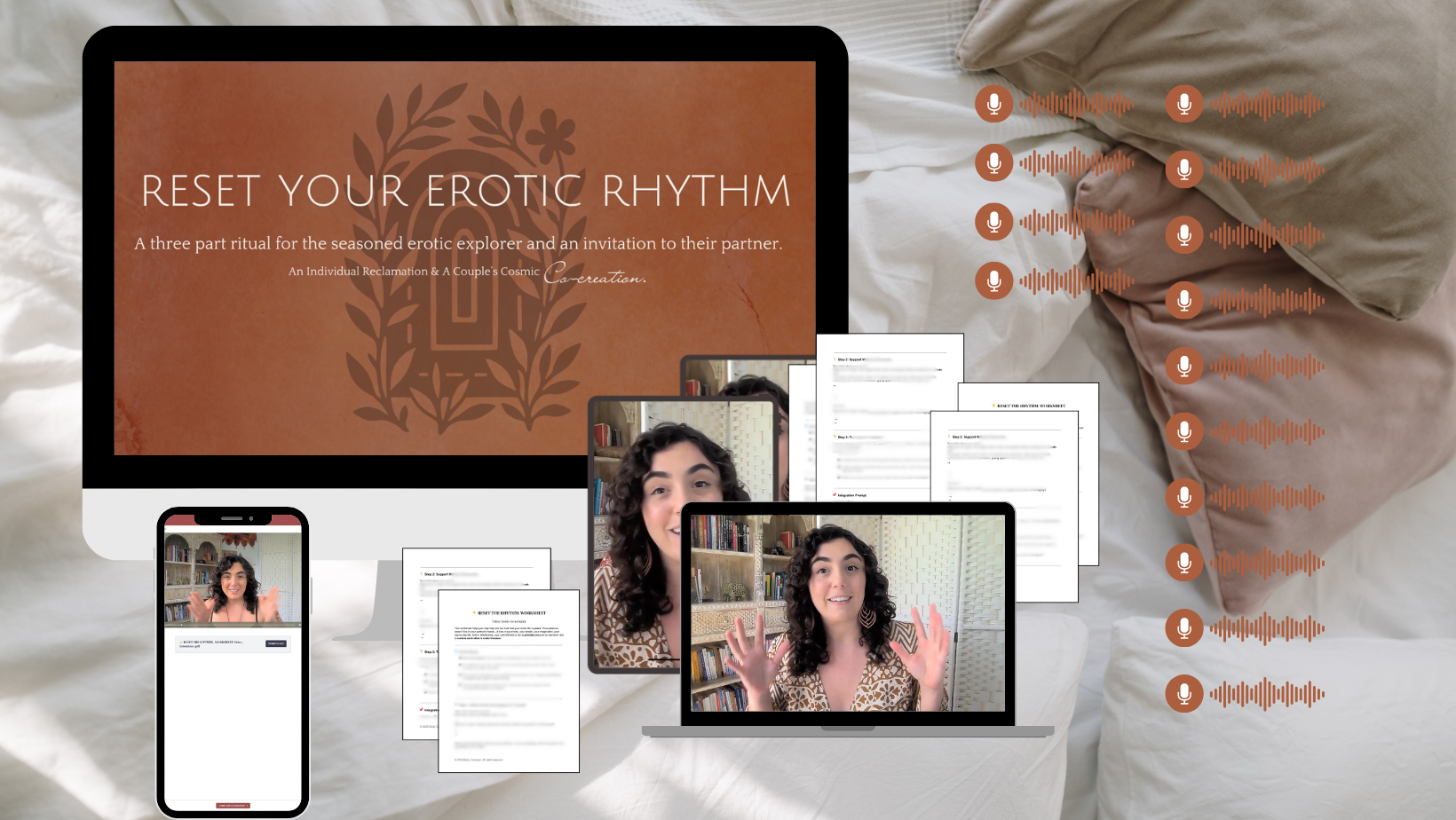
    This exactly why I created Reset Your Erotic Rhythm — my epic couples course designed to help you rebuild intimacy where it was lost.Inside, your partner gets short, straight-to-the-point practices (the things you’ve wished he would understand without you having to explain a hundred times). And you get your own guided path — one that finally takes the weight of emotional and erotic labor off your shoulders, while giving you the tools to ask for what you want and actually have it land.Together, you’ll learn how to:Interrupt the old shutdown–pursuit cycle that keeps you stuck.Rebuild trust in your body’s timing and turn-on, instead of forcing desire.Practice real-world skills for communication, touch, and presence — so intimacy stops feeling like guesswork and starts feeling like connection again.This isn’t theory. It’s not “talk it out and hope for the best.” It’s a self-paced reset for your nervous systems, your sex life, and your relationship — so both of you get to feel met, desired, and safe again.👉 Click here to explore Reset Your Erotic Rhythm — the relationship upgrade that finally sticks.
    Reset Your Erotic Rhythm
    An 8-week live online group program that gives her the space to drop the mother role, gives him the skills to finally show up, and gives you both the partnershipyou’ve always deserved.
    Topics covered:can relationship work without trustcan relationship survive cheatingcan relationship work without intimacycan relationship breaks work
    Nicole card
    Previous
    Previous
    Why Traditional Treatments for Vaginismus Often Fail
    Next
    Next
    SPECIAL ANNOUNCEMENT for the Curious Erotic Explorer

    Nicole Siegel

    Curious if this work is right for you?

    Book a free 30-minute call — no pressure, no commitment.

  • Why Traditional Treatments for Vaginismus Often Fail — Body Compass

    Why Traditional Treatments for Vaginismus Often Fail — Body Compass

    BLOG

    Why Traditional Treatments for Vaginismus Often Fail — Body Compass

    Why Traditional Treatments for Vaginismus Often Fail
    Aug 22
    Written By Nicole card
    If you’ve ever typed “vaginismus treatment” into Google at 2 a.m., exhausted and maybe a little teary, you’re not alone. I see you, love. Most of my clients land in my practice after trying everything from vaginal dilators for vaginismus to numbing creams to the ever-infuriating advice to “just relax.” (As if that’s ever worked.)
    vaginismus really and truly isn’t the end of your story. With the right guidance, your body can relearn safety, trust, and even pleasure.It’s so common for thing like pelvic physical therapy and gynecological interventions to fail. There is a more holistic and whole-person approach to healing the pain that you are in.👉 Click here to book your free consultation with me and take the first gentle step toward healing.Sending love and rest,-Nicole
    Here’s the thing: vaginismus isn’t just tight muscles. It isn’t your body being “broken” or “difficult.” What you’re experiencing is actually a very smart, very protective reflex. Your body is saying “not safe yet.” And that deserves compassion, not force.As a Sexological Bodyworker®, I don’t just look at symptoms—I listen to what your body is trying to tell you. Because the truth is, yes, vaginismus can be cured. But healing doesn’t come from numbing or pushing through. It comes from learning how to treat your body as an ally, building trust, and (dare I say it?) even finding pockets of pleasure along the way.So if you’re wondering what does vaginismus feel like, what causes it, or how long does it take to cure vaginismus—you’re in the right place. Let’s talk about why the standard playbook often fails, and what a more holistic, heart-and-body-centered approach makes possible.
    Up next:
    What Vaginismus Really Feels Like
    What Vaginismus Really Feels LikeFor many of my clients, vaginismus symptoms show up as:The body suddenly “locks up.” You’re aroused, you want to connect — and then it’s like hitting an invisible wall. Your muscles clamp down so fast it feels out of your control.Pain that feels sharp, burning, or tearing. Some describe it like sandpaper, or like their body is bracing against an intruder. It’s not just uncomfortable — it’s alarming.Anticipatory dread. Long before there’s even touch, your body is already tightening, saying, “Nope. Not safe. Not happening.”Emotional fallout. Tears on the bathroom floor, avoiding intimacy because the thought of disappointing your partner again feels unbearable. Wondering, “Am I broken? Will this ever change?”Here’s what I want you to know: you are not broken. Your body is not sabotaging you. Vaginismus is your nervous system doing its absolute best to protect you — even if that protection is showing up at really inconvenient times.Maybe the armor started forming years ago when you were first told that sex would hurt, so you braced yourself every time. Maybe it was the shame of being caught touching yourself as a child and suddenly learning that pleasure was something to hide. Maybe it was a painful medical exam where you felt powerless, your body gripping tight against the speculum.Maybe you had an early sexual experience that felt rushed, disconnected, or violating — not always full-blown trauma, but just enough for your body to learn: opening is not safe. Maybe you’ve spent years marinating in cultural messages: that good girls don’t want sex, that your body exists for someone else’s pleasure, that pain is just the price women pay.Over time, each moment stacks up like bricks in a wall until your body doesn’t even wait for the threat — it armors itself automatically.
    It’s like your nervous system…
    is a guard dog that once saved you from danger.
    It’s like your nervous system is a guard dog that once saved you from danger. But now, even when someone kind and loving comes to the door, the dog is still barking and baring its teeth. Not because you’re weak. Not because you’re broken. But because that guard dog never got the message that it’s safe now.This is why vaginismus feels so overwhelming. Because it’s not just about muscles tightening. It’s your body remembering — every message, every shame, every moment it didn’t feel safe — and doing what it thinks will protect you.And while the medical world often reduces vaginismus to a “tight vagina problem,” as a Sexological Bodyworker® I see it differently. I see a body that’s trying to keep you safe. A body that needs tenderness, curiosity, and pleasure-centered retraining — not force, not shame, and definitely not “just relax.”
    “This is why vaginismus feels so overwhelming. Because it’s not just about muscles tightening. It’s your body remembering — every message, every shame, every moment it didn’t feel safe — and doing what it thinks will protect you.”
    — Nicole
    So if you’ve been wondering what does vaginismus feel like, the answer is: it feels like your body putting up armor. And the beautiful part? Armor can come off — slowly, safely, and on your terms.That “armor” you feel? It didn’t appear out of nowhere. Your body doesn’t just clench or spasm to make your life harder. It does it to protect you.For some, the armor was forged through experiences of trauma — moments when your body learned that intimacy wasn’t safe. For others, it comes from years of silence, shame, or being told that sex should hurt. Even cultural messaging (“good girls don’t feel desire,” “pleasure is dirty,” “your worth is tied to performance”) can layer on like bricks in a wall, teaching your body that opening up is dangerous.So when penetration feels impossible, when your body slams shut — it isn’t sabotage. It’s protection.And while the medical world often reduces vaginismus to a “tight vagina problem,” as a Sexological Bodyworker®, I see it differently. I see a body that’s been trying, fiercely, to protect your tenderest parts. A body that has been carrying the weight of keeping you safe for far too long.What it needs now is not more pressure, more tools, or more “just try harder.” What it needs is to learn that safety and pleasure can coexist. That your body doesn’t have to live in armor forever. That opening isn’t the same as danger.
    “So if you’ve been wondering what does vaginismus feel like, the answer is this: it feels like your body putting on armor. And the deeper truth? Armor can come off”
    — Nicole
    So if you’ve been wondering what does vaginismus feel like, the answer is this: it feels like your body putting on armor. And the deeper truth? Armor can come off. Slowly, gently, on your timeline — until one day, what once felt like a wall can start to feel like an opening.
    Up next:
    How Common Is Vaginismus?
    vaginismus really and truly isn’t the end of your story. So many women allow the pain to persist for years before seeking out a solution.I can assure you, With the right guidance, your body can relearn safety, trust, and even pleasure.It’s so common for thing like pelvic physical therapy and gynecological interventions to fail. There is a more holistic and whole-person approach to healing the pain that you are in.👉 Click here to book your free consultation with me and take the first gentle step toward healing.Sending love and rest,-Nicole
    How Common Is Vaginismus?One of the most painful parts of vaginismus isn’t just the physical symptoms — it’s the silence.So many of my clients whisper it to me like a confession: “I’ve never told anyone this.” Or they lower their voice when they say the word, as if even naming it makes them different, defective, exposed.Here’s the truth: vaginismus is far more common than most people realize. Studies suggest anywhere from 7–17% of women experience vaginismus at some point in their lives. That’s nearly 1 in 10 — and honestly, I believe the number is higher, because so many cases go unreported. People are misdiagnosed, dismissed, or told “it’s just in your head.”Think about it: how many times have you tried to explain the pain, only to be brushed off with advice like “just have a glass of wine and relax”? Or been sent home with a prescription cream, as if your lived experience could be reduced to a tube from the pharmacy? No wonder so many of you keep it quiet.But silence breeds isolation. And isolation breeds shame.You are not alone. You are not the only one who has cried in the bathroom after another painful attempt, or who has avoided intimacy because you couldn’t bear another night of bracing against your own body. You are not the only one who has Googled “how long does it take to cure vaginismus” in the middle of the night, hoping someone, somewhere, could tell you it gets better.
    “But silence breeds isolation. And isolation breeds shame.”
    — Nicole
    As a Sexological Bodyworker®, I want you to know this: vaginismus is common. It is real. And it is curable. Your body is not broken; your body is responding the best way it knows how. And you don’t have to carry the silence anymore.When you realize how many other women and people with vulvas have walked this path, something shifts. You stop asking, “What’s wrong with me?” and start realizing: nothing is wrong with you. What’s wrong is the culture of silence that made you think you were alone.
    Up Next:
    Common Doesn’t Mean Normal: The History of Witches Midwives, and Nurses
    Common Doesn’t Mean NormalAnd here’s something important: just because vaginismus is common, that doesn’t make it normal.We live in a culture where women’s pain is consistently minimized. One study found that women wait on average 16 minutes longer than men in ERs to receive pain medication. Another showed that nearly 50% of women who seek help for sexual pain are told it’s “psychological” or “stress-related” — without a pelvic exam.This isn’t new. For centuries, knowledge of women’s bodies was systematically erased. Midwives and healers who held embodied wisdom were persecuted as “witches.” Later, women were excluded from clinical research altogether — it wasn’t until 1993 that the U.S. NIH mandated women be included in medical trials. Even today, OB/GYNs receive shockingly little training on sexual pain disorders, leaving many doctors unequipped to recognize or treat vaginismus. Nurses and pelvic floor specialists often become the first real sources of support — but many never make it to those referrals.So yes, vaginismus is common. But it’s not normal. It’s a sign of a deeper systemic issue: a medical system that has ignored, silenced, and stigmatized women’s sexual health for generations.Your pain is not “just how it is.” It’s a reflection of a world that has not yet learned how to care for women’s bodies with respect, curiosity, and pleasure at the center.And that’s why this work matters so much. Healing vaginismus isn’t just personal — it’s also a quiet act of rebellion against a system that told you to settle for less.
    Up next:
    Why Pelvic PT Often Fails
    vaginismus really and truly isn’t the end of your story. So many women allow the pain to persist for years before seeking out a solution.I promise, With the right guidance, your body can relearn safety, trust, and even pleasure.It’s so common for thing like pelvic physical therapy and gynecological interventions to fail. There is a more holistic and whole-person approach to healing the pain that you are in.👉 Click here to book your free consultation with me and take the first gentle step toward healing.Sending love and rest,-Nicole
    Why Conventional Treatments Often FailIf you’ve already tried the “standard” treatments for vaginismus, you probably know the drill:Pelvic floor physical therapy. Strengthen, relax, repeat. Helpful, but often delivered like a gym routine for your vagina — without tending to the fear, shame, or trauma living in those muscles.Vaginal dilators for vaginismus. A tidy set of plastic or silicone tubes, lined up from “small” to “large,” handed to you with a “just work your way up.” For some, they help. For many, they feel invasive, mechanical, even retraumatizing. Because how healing is it to shove something into a body that’s screaming “no”?Numbing creams and painkillers. Quick fixes that deaden sensation — but also deaden your body’s communication. They don’t address the root. They just teach you to override it.Here’s the problem: these approaches treat vaginismus as a mechanical error — a faulty muscle, a gate that needs to be forced open. But vaginismus is not just a “tight vagina problem.” It’s a nervous system pattern, a whole-body reflex.
    “Here’s the problem: these approaches treat vaginismus as a mechanical error — a faulty muscle, a gate that needs to be forced open. But vaginismus is not just a “tight vagina problem.” It’s a nervous system pattern, a whole-body reflex.”
    — Nicole
    And when you try to solve a nervous system response with only mechanical tools? The body resists harder.Why This Isn’t Just Personal — It’s SystemicIt’s not your fault that the options feel so limited. This is the story of women’s health, again and again.Historically, women’s bodies were only studied when it came to reproduction. Midwives, doulas, and healers who understood pleasure and pain holistically were pushed aside — branded as “witches,” stripped of authority. By the 19th century, women’s sexual pain was dismissed as “hysteria.” Fast forward to today: most OB/GYN programs still spend less than 2 hours on sexual pain disorders during residency. Let that sink in — less than 2 hours to prepare doctors to respond to something up to 17% of women will face.
    Most OB/GYN programs still spend less than 2 hours on sexual pain disorders during residency. Let that sink in — less than 2 hours to prepare doctors to respond to something up to 17% of women will face.
    So when you’re handed dilators without context, or told to “just relax,” it’s not because you’re a lost cause. It’s because medicine was never built with women’s erotic wellbeing in mind.Your pain isn’t invisible because it’s rare — it’s invisible because the system still doesn’t prioritize it.
    Up next:
    The Missing Ingredient to Healing
    The Missing Ingredient: PleasureWhen conventional treatments fail, it’s often because they overlook the very thing that allows the body to soften: pleasure.Your body doesn’t unclench when it feels invaded, mechanical, or numbed. It unclenches when it feels safe, seen, and even a little bit delighted. Healing vaginismus isn’t about “getting through it.” It’s about retraining the nervous system to pair intimacy with comfort, curiosity, and eventually joy.That’s the work I do as a Sexological Bodyworker®: helping you find your body’s own rhythm of safety and pleasure, so that healing doesn’t feel like pushing against yourself — it feels like coming home.✨ So if dilators, creams, and “just relax” haven’t worked for you, please hear this: it’s not because you’ve failed. It’s because those methods were never designed to honor your body’s full story in the first place.How to Treat Vaginismus at Home (and Beyond)First things first: if you’re struggling with vaginismus, you’ve probably Googled the usual “at-home” fixes — dilators, stretches, pelvic floor exercises, numbing creams. And maybe you’ve tried some of them. Sometimes they help, sometimes they make things worse, but rarely do they feel like the whole answer.That’s because vaginismus isn’t just a muscle problem. It’s a whole-body, nervous-system response. Which means healing it requires more than “insert this, relax that.” It requires an approach that honors your body as a whole, living, breathing being — not just a vagina that won’t cooperate.This is where Sexological Bodywork® comes in.So… what is Sexological Bodywork®?Imagine if there were a professional whose entire training was built around helping you feel safe, connected, and even pleasureful in your own skin — someone who understood that healing sexual pain isn’t just about anatomy, but also about trauma, emotions, nervous system regulation, and joy.That’s what I do as a Sexological Bodyworker®. I don’t diagnose or prescribe. I don’t hand you a medical tool and send you on your way. I teach you how to be with your body differently. How to listen to the signals it’s sending you, how to create new associations of safety and ease, and how to invite pleasure back into places where fear once lived.We work with:Breath, movement, and sound to shift nervous system patterns.Somatic awareness practices so you can actually feel what’s happening in your body instead of shutting it down.Consent and boundaries — practicing your Sacred No — so your body relearns it doesn’t have to override itself.Pleasure mapping — discovering what feels good without goal or performance so intimacy stops being about pain and pressure, and starts being about curiosity and connection.This work is tender, it’s intentional, and it’s unlike anything you’ve ever been offered in a doctor’s office.👉 Click here to book your free Sexological Bodywork® consultation with me and take the first gentle step toward healing.
    Sexological Bodywork® Is a Unicorn for Vaginismus
    Why Sexological Bodywork® Is a Unicorn for VaginismusMost traditional approaches are either mechanical (stretch the muscle, numb the pain) or purely talk-based (therapy). Sexological Bodywork® is the bridge between the two. It’s body-based healing, but with the trauma sensitivity, consent practices, and emotional awareness that make it safe.
    “And here’s the magic: when your body feels truly heard and safe, the armor softens on its own. You don’t have to force it. You don’t have to override it. ”
    — Nicole
    It’s like learning a new language — the language of your body. A language that says: “I hear you. I won’t push you. I trust you to guide me.”And here’s the magic: when your body feels truly heard and safe, the armor softens on its own. You don’t have to force it. You don’t have to override it. Healing vaginismus becomes less about fixing a broken part and more about building trust with yourself again.
    “Healing vaginismus becomes less about fixing a broken part and more about building trust with yourself again.”
    — Nicole
    What You Can Start Practicing at HomeEven if you’re not working directly with a Sexological Bodyworker® yet, you can begin weaving some of these principles into your daily life:Gentle breathwork + body scans. Notice tension without judgment. Just asking, “What’s happening in my body right now?” can begin to rewire awareness.Non-goal-oriented touch. Run your fingers along your arm, your belly, your thigh. Not to “get anywhere,” but to relearn that touch can feel safe, neutral, even good.The Sacred No. Practice saying “no” in everyday life. Cancel a plan when you’re exhausted. Say no to work you don’t have the capacity for. Every boundary you honor tells your body: “See? You’re safe with me.”Pleasure without pressure. This could be as simple as wrapping yourself in a soft blanket, eating something delicious slowly, or swaying to music. The more your body associates sensation with joy instead of fear, the easier it becomes to invite intimacy back in.Gradual exposure, but only with resourcing. If you do experiment with dilators, pair it with nervous system support (breathing, grounding, music, touch you enjoy). Never force. The moment it feels like pressure, pause.
    Myth-Busting: VaginismusMyth: Vaginismus can only be treated with dilators. Truth: Dilators can be a tool, but without nervous system support and consent practices, they often backfire. Healing isn’t about forcing muscles open — it’s about teaching the body safety.Myth: If I just relax or drink wine, the problem will go away. Truth: If it were that simple, you wouldn’t be here. Vaginismus isn’t laziness or nerves; it’s a learned protective reflex. You can’t override it — but you can gently retrain it.Myth: Sex will always hurt for me. I just have to live with it. Truth: No. Pain during penetration is common, but it is not normal. Vaginismus can be cured — but it requires a holistic, pleasure-centered approach.Myth: Talking about my pain in therapy is enough. Truth: Therapy is powerful, but vaginismus is also a body-based condition. Lasting healing happens when talk and bodywork come together.
    Why You Deserve More Than “Just Relax”So many women I work with tell me they wish someone had explained all of this sooner. Instead, they were handed tools with no context, told to “just practice,” and left feeling like failures when it didn’t work.You deserve more. You deserve an approach that sees your body as wise, not defective. That celebrates your capacity for pleasure, not just tolerates your pain.Sexological Bodywork® is that missing piece — the thing that takes vaginismus healing out of the realm of sterile treatment plans and into the realm of real, embodied, sustainable change.Because your body isn’t broken. It’s brilliant. And when you learn how to listen to it with compassion, it has an incredible ability to soften, open, and welcome intimacy on its own terms.✨ So yes, there are things you can practice at home. But know this: you don’t have to do it alone. And when you bring in support from someone who speaks the language of your body, healing stops being a battle… and starts being a reunion.
    Up Next:
    How Long Does It Take to Cure Vaginismus?
    It’s so common for thing like pelvic physical therapy and gynecological interventions to fail. There is a more holistic and whole-person approach to healing the pain that you are in.👉 Click here to book your free consultation with me and take the first gentle step toward healing.Sending love and rest,-Nicole
    How Long Does It Take to Cure Vaginismus?This is the question almost every client whispers to me: “How long until I’m better?”I get it. After months or years of pain, after late-night Googling and trying everything from dilators to numbing creams to “just relax,” you want a finish line. A timeline. A guarantee that one day you’ll finally get to have sex without pain — and maybe even enjoy it.Here’s the most honest answer: it depends.Why There’s No One-Size-Fits-All TimelineSome people notice shifts within weeks once they begin working with their nervous system — learning to regulate, to practice boundaries, to create new associations of safety with touch. For others, especially if there’s trauma history or years of bracing, the process unfolds over months or longer.And that’s not a failure. That’s your body’s pacing.Your nervous system doesn’t move on deadlines. It doesn’t open on command. It heals when it feels safe enough to do so. Which means the question isn’t, “How long will it take to fix me?” but rather, “What do I need to create the conditions for my body to feel safe?”Why the System Makes You Want to RushPart of why we crave a timeline is because the medical system has conditioned us to think of bodies like machines: identify the faulty part, replace it, move on. That’s not how sexuality works.Vaginismus isn’t a broken part — it’s a brilliant protective reflex. And rushing the process often makes your guard dog bark louder.Add to that a culture that treats women’s health as secondary, and it’s no wonder you feel desperate for quick results. Doctors may have dismissed your pain, handed you dilators without support, or implied that if you just tried harder you’d be “normal.” It’s dehumanizing. And it leaves you thinking: If I can’t get better fast, maybe I can’t get better at all.But that’s not true.Healing is Direction, Not DeadlineI want you to picture healing vaginismus less like a race and more like a journey through a landscape. Every step you take — learning to breathe into tension, saying no when you mean no, feeling pleasure without pressure — is progress.Even if you’re not at penetration yet. Even if it takes longer than you hoped. The direction matters more than the speed.Because with the right approach — trauma-informed, pleasure-centered, whole-body — vaginismus is curable. Your body can learn that safety and intimacy go together. It just needs time, compassion, and support.A ReframeInstead of asking: “How long until I can have sex without pain?” Try asking: “How can I create more safety and pleasure in my body today?”When you shift the focus from outcome to process, the healing unfolds more naturally. And ironically? That’s when it often happens faster.✨ So how long does it take to cure vaginismus? As long as your body needs — and not a moment longer. Healing isn’t about waiting for the day penetration “finally works.” It’s about every step you take toward trust, softness, and joy. And that, love, is worth however long it takes.summary: The Limitations of Conventional Vaginismus TreatmentsTraditional medical treatments for vaginismus typically focus on the physical symptoms. Common approaches include:Pelvic Floor Physical Therapy: While often beneficial, this therapy can be overly focused on strengthening and relaxing pelvic muscles without addressing underlying emotional triggers.Dilators: Used to gradually stretch the vaginal muscles, dilators can help some women but may feel invasive or mechanical to others, potentially increasing anxiety and resistance.Numbing Creams and Pain Relievers: These can offer temporary relief but do not address the root causes of vaginismus, leading to a cycle of dependency without real progress.These methods, while effective for some, often overlook the crucial emotional and psychological components of vaginismus. They treat the body as a problem to be fixed rather than a complex system influenced by a spectrum of factors.
    vaginismus really and truly isn’t the end of your story. So many women allow the pain to persist for years before seeking out a solution.I promise, With the right guidance, your body can relearn safety, trust, and even pleasure.It’s so common for thing like pelvic physical therapy and gynecological interventions to fail. There is a more holistic and whole-person approach to healing the pain that you are in.👉 Click here to book your free consultation with me and take the first gentle step toward healing.Sending love and rest,-Nicole
    FAQ: Vaginismus, Healing, and HopeWhat does vaginismus feel like? Vaginismus often feels like your body slamming the door shut, even when you want to be intimate. Many describe it as burning, tearing, or pinching pain during penetration attempts — and sometimes the body locks up before penetration is even possible. Beyond the physical, vaginismus carries emotional weight: dread before intimacy, tears afterward, and the haunting question, “Am I broken?” You’re not. Your body isn’t sabotaging you — it’s protecting you.How common is vaginismus? More common than most people realize. Studies suggest 7–17% of women experience vaginismus at some point. That’s nearly 1 in 10 — and likely undercounted, because so many cases go unreported or misdiagnosed. You’re not alone. And while vaginismus is common, it is not “normal” or something you should just live with.What causes vaginismus? Vaginismus is the body’s protective reflex. It can develop after painful experiences, trauma, or simply the fear of pain. Sometimes cultural shame, negative messages about sex, or even a stressful medical exam can trigger it. Think of it like your nervous system putting up armor to keep you safe — even if the original threat is no longer there.Can vaginismus be cured? Yes. Vaginismus is treatable and curable. The key is addressing both the physical and emotional layers: nervous system safety, consent, pleasure, and body retraining. Quick fixes like numbing creams may mask symptoms, but true healing comes when your body learns that intimacy and safety can coexist.How long does it take to cure vaginismus? It varies. Some people see shifts in weeks; for others it takes months. The timeline depends on your body’s history, the support you receive, and your pace of healing. What matters most isn’t speed — it’s direction. Every step you take toward safety, intimacy, and pleasure is progress.How can I treat vaginismus at home? Start by focusing on safety and sensation, not penetration. Practice gentle breathwork and body scans to notice tension without judgment. Explore non-goal-oriented touch — touch that’s about curiosity, not performance. Practice your “Sacred No” so your body knows it doesn’t have to override itself. If you use dilators, pair them with nervous system support like grounding or music, and never force. The goal is trust, not pressure.✨ Bottom line: vaginismus is real, common, and curable. Your body isn’t broken — it’s wise. And with the right support, it can learn to soften, open, and trust again.
    ✨ If you’re reading this and thinking, “This is me. I need support,” you don’t have to figure it out alone.I offer a free consultation call where we can talk through what you’ve been experiencing, answer your questions, and explore what healing might look like for you. There’s no pressure, no judgment — just a chance to feel seen, heard, and supported.Because vaginismus isn’t the end of your story. With the right guidance, your body can relearn safety, trust, and even pleasure.👉 Click here to book your free consultation and take the first gentle step toward healing.Sending hope and rest-Nicole
    Nicole card
    Previous
    Previous
    🎙️You’re Not Attracted to Masculine Energy—You’re Attracted to Adult Energy
    Next
    Next
    Can a Relationship Be Fixed After Cheating? The Real, Bodily, Feminist, Messy Truth
    vaginismus symptoms vaginal dilators for vaginismus vaginal dilators for vaginismus how long does it take to cure vaginismus
    what causes vaginismus can vaginismus be cured what does vaginismus feel like
    Nicole Siegel

    Curious if this work is right for you?

    Book a free 30-minute call — no pressure, no commitment.

  • 🎙️You’re Not Attracted to Masculine Energy—You’re Attracted to Adult Energy — Body Compass

    🎙️You’re Not Attracted to Masculine Energy—You’re Attracted to Adult Energy — Body Compass

    BLOG

    🎙️You’re Not Attracted to Masculine Energy—You’re Attracted to Adult Energy — Body Compass

    🎙️You’re Not Attracted to Masculine Energy—You’re Attracted to Adult Energy
    Aug 27
    Written By Nicole card
    If you’ve ever said, “I just want a man in his masculine,” this episode is for you—but we’re going deeper. In this juicy solo riff, Nicole unpacks the cultural confusion around “masculine energy” and what we’re really longing for when we use that phrase. Spoiler: it’s not chest-puffing dominance or stoic silence—it’s adult energy.We explore what it means to be met by someone who is emotionally resourced, sensually attuned, and accountable—not performative. Nicole guides you into a deeper understanding of how attraction actually works when we grow up, heal, and reclaim our erotic power.This is a call to move beyond polarity clichés and into erotic maturity.🔥 In This Episode, You’ll Learn:Why “masculine energy” might not be what you’re truly cravingThe difference between adult vs. adolescent energetics in attractionHow unhealed parts mistake structure for safety—and why that mattersWhat real turn-on feels like in your body when you’re not outsourcing your powerHow to recognize and embody adult energy in your own relationships🧠 Key Takeaway:Attraction isn’t about polarity games—it’s about nervous system resonance. The sexiest thing in the world? Someone who knows how to take care of themselves—and can meet you in the truth of your body.🚨🔥 HOTTEST DEAL OF THE SUMMER 🔥🚨Reset Your Erotic Rhythm is at its lowest price EVER—August only! Price doubles in September and ever month until December!😳💦https://www.bodycompass.me/self-paced-course-rese-erotic-rhythmcouples Free Erotic Body Reconnection Kit (Previously 3 Best Sexological Bodywork Practices)The 3 most impactful practices from My Erotic Literacy Vault—field tested in sessions, and personally loved by yours truly—to Melt Freeze, Rebuild Trust, and Restore Erotic Aliveness.Free Download | Created by a Certified Sexological Bodyworker®Download our ultimate FREE erotic symptom decoder: The DSM-XXX🌀 Desire & Somatics Mythos✨ 100+ page reference guide: a RADICAL RECLASSIFICATION of what our culture calls sexual dysfunction—and what your body knows as sacred. 🌿👉 DOWNLOAD HEREDSM-XXX: Desire & Somatics Mythos is our 100+ page reference guide for anyone who’s ever been told their sexuality is dysfunctional—when really, it’s just been misinterpreted.Inside, you’ll find:✦ Reframings of so-called “sexual dysfunctions” like pelvic pain, vaginismus, anorgasmia, through a trauma-informed, pleasure-centered lens✦ Somatic context for things like low libido, pain, dissociation, and numbness✦ Radical translations of what your body might actually be saying when it doesn’t follow the cultural script✦ Alternatives to diagnosis culture that honor nervous system rhythms, safety, and truth over performance👉 DOWNLOAD HERE🔥 Join the pleasure rebellionSacred sex ed, somatic rituals, and a radical return to your body.👉 www.bodycompass.me💌 Stay ConnectedIf this episode made something bloom inside you:Subscribe to The Nature of Pleasure for weekly explorations of embodiment, intimacy, and erotic wisdomLeave a review—it helps us reach more bodies who need thisTag me on Instagram @yourbodyisgreen and share what landed using #NatureOfPleasurePodcasttranscript Okay. Today I wanna talk about something I hear all the time in sessions, in dms, in text to start with, okay, this might sound cliche, but it’s this idea that I just want someone in their masculine energy, or I’m craving a man who can lead, or I need more polarity. Someone strong and decisive and dominant.Like, you know what I’m talking about. And listen, I get it. That language is everywhere right now, but I want to lovingly rip that wide open today because here’s the real talk. You’re not actually turned on by masculine energy. You are turned on by adult energy. Yep. I said it. The sexiest thing about someone isn’t their manliness or their yang vibes or their beard to shirt ratio, it’s that they can hold their own emotional reality and not crumble when you set a boundary.And maybe just maybe do their own damn laundry. So this episode is for you if you are over-functioning in your relationship, but blaming your libido. You’re dating people who seem masculine but leave you feeling drained, confused, or like their mom. And you find yourself saying, why don’t I want them?They’re everything I ask for. Or you’ve never actually felt safe enough in partnership to to full, to be fully turned on. And you’re starting to wonder why. This is also for you if you’ve been scrolling through Instagram and TikTok, TikTok and seeing endless feminine energy coaches telling you to sit back, surrender, and let the masculine take the lead, and you’ve tried that and it felt kind of dead inside because here’s what I’ve seen over and over again in my practice.What most of us are actually craving isn’t polarity. It’s co-regulation, not fantasy leadership, but real emotional maturity. Not gender performance, but presence. Adult energy is what makes you soften. It’s what makes your nervous system go, oh, I can let go here. I can relax. It’s what turns the theoretical turn on and into actual body desire.So in today’s episodes, we’re going, today’s episode, we’re going to myth bust. The masculine and feminine obsession, we’re going to explore why your body shuts down when you’re parenting your partner, and why emotional labor. Labor is such a turnoff and why no matter how hot they are on paper, your arousal knows the difference between someone who’s posturing.In someone who’s present, and most importantly, we are going to walk you back to the most important compass of all your body’s truth, because she’s not confused. She’s just waiting to be met by another adult. So let’s get into it.So let’s talk about what’s actually going on when we are talking about feminine and masculine energy and not being turned on by a guy that is too quote feminine. Okay. Taking care of someone and managing their emotional world, reminding them to book a dentist appointment or clean their toenails or notice your body language, that’s not sexy, that’s parental and erotic.Self is not here to babysit. She’s here to bloom. Erotic self is brilliant. She’s not confused, she’s not wrong. She’s just tired of being a therapist. A calendar, a coping mechanism, and. Let’s get something really, really clear here. You are not turned on by masculine energy. You are turned on by adult energy.So let’s break that down because masculine energy is often this weird soup of like vague traits like dominance and decisiveness and confidence, but also stoicism and aloofness and maybe, maybe even mystery or detachment. And so many women are told you just need a man with more masculine energy. Like that’s gonna solve anything, but no one tells you this.What your nervous system is actually craving is co-regulation. What turns you on is not a vibe, it’s not a beard or a deep voice or a decisive dinner order. What turns you on is someone who feels safe enough to surrender with. And safety doesn’t come from intensity, it comes from maturity. Adult energy says, I’ve got me.I’m doing my work. I know how to name my feelings without exploding or disappearing. Adult energy is someone who can hold a boundary without punishing you for having one adult energy is erotic because it makes you feel like you can let go, and that’s what opens the door to desire because here’s a fact.Arri arousal requires downregulation. Your brain literally has to turn off the parts responsible for vigilance and micromanaging in order to light up the arousal centers. You can’t be turned on and emotionally over functioning. The brain will not let it happen, and it’s not a mindset issue. It’s neuroscience.So let me take you into a client story. Let’s call her Naomi. So Naomi came to me thinking she had a libido issue. She and her husband hadn’t had sex in months. She said she just wasn’t feeling it anymore. And the more we talked, the clearer it became that she wasn’t dried up. She was depleted every single thing in her life.She was carrying the social calendar, the kids’ emotions, the finances, the therapy speak. He was nice, but he was also passive. He waited for her to initiate every repair, every deep top talk, every sexy moment. She wasn’t turned off. She was actually tapped out because she had no one to fall into, no full grownup to lean on, and her body was doing exactly what it needed to survive it shut down, protected the system.Don’t get naked next to someone you don’t trust to hold the container, and so I want you to really hear this. There is nothing wrong with you if your desire disappears when you’re in a caretaking role, that’s actually your body working perfectly. But we’ve been sold this fantasy or of polarity, this idea that feminine means surrender and masculine means taking control.And I get it. I, it can feel good when someone leads, but that has to come from a place of, of sovereignty, not performance. If someone can’t hold their grief or regulate their own fear or carry their part of the relational load, then what you’re surrendering into isn’t safety. It’s a sinkhole, and the body knows.The body always knows. So let’s do a little reframe. What if you’ve never been too picky or too complicated, or too cold or too sensitive? What if your body has just been waiting for someone who meets you as a peer, not a savior, not a student, a partner? Because adult energy is someone who’s done the shadow work and still chooses to show up.Adult energy says, I can be your lover and your coil. I know how to hold complexity, and I wanna create a relationship where we both rise. Let me tell you something. It is magnetic when someone brings adult eroticism to the table, you don’t have to fake desire, you don’t have to script. Your sex life desire just happens because your bodily, your body finally feels like it has permission to feel again.And let me be super clear about something that often gets lost in this conversation. Adult energy is not gendered. It isn’t about. Men need to man up, or women want men to be dominant. Again, it’s way deeper and way more liberating actually than that adult energy is available to anyone who’s willing to mature emotionally to take responsibility for their impact and meet another person.And mutuality. I’ve had clients who identify as women, non-binary men, all of them whom are carrying, all of whom are carrying the emotional weight of their partnerships. Who come into session whispering some version of, I just wish they’d do their work, or, I feel I want to feel held for once, or I want to be the one who gets to fall apart.Sometimes you wanna know what a real, what real erotic polarity looks like. It’s not gender performance, it’s energetic, reciprocity. It’s in knowing that when your needs, your grief, your bigness comes forward, there’s someone across from you who doesn’t shut down or disappear. It’s someone who can hold the weight of being with you.Not fixing, not fleeing, but being with, and guess what? I’ve also worked with men who are completely turned off in their partnerships because they’re the only ones showing up with emotional maturity. They’re constantly translating their partner’s behavior, guessing their needs, absorbing unspoken resentment, and then being told they’re not man enough.That kind of pressure shuts men down too. Desire disappears when we’re stuck in relational roles instead of connection. This is why the masculine energy trope can become such a trap because it flattens attraction into a two dimensional performance of roles. Rather than a living, breathing, mature dynamic that two people co-create adult energy says, I know myself, I honor myself and I can meet you as an equal, not as a fantasy or a fixer.So if you’ve ever thought, maybe I’m just not into men anymore, or maybe I need someone more feminine, or maybe something is wrong with me because I don’t feel turned on the way I used to, I’m gonna invite you to just pause and. Allow for the possibility that maybe it’s not about gender, it’s not about feminine masculine energy, it’s not about energy at all.Maybe just it’s just about their development. So let’s pause and take a breath because this part is so often misunderstood. If your turnon has dried up in the presence of someone who checks all the gender boxes, it’s not because you are confused. It’s because we’ve been taught to associate gender performance with erotic fulfillment when what we’re really craving is something far more profound.Adult energy is not gendered. You are attracted to men or women or masculine or fenner feminine energy. You are not attracted to men or women or masculine or feminine energy. In this simplified TikTok coach sense, you are drawn body and soul to the presence of someone who knows how to self-regulate someone who doesn’t collapse into you when things get hard, or someone who doesn’t vanish when you express a boundary or someone who doesn’t weaponize their confusion or incompetence to keep you doing the emotional labor of the relationship.That’s adult energy and it doesn’t belong to a gender. It belongs to the part of us that has done our work.So let’s talk about how gender scripts are actually a really big block to our desire. We’ve inherited these rigid, shallow scripts about attraction. If he’s decisive, dominant, and takes charge, she’ll be turned on. Or if she’s soft, surrendered and stays in her feminine, sex will flow. These ideas are crumbs from a banquet.We were weren’t meant.These ideas strip us of our actual desires and complexity, and instead ask us to perform identities that look sexy from the outside, but feel dead inside. I’ve had women clients who have said he did everything right. He made the plans, he paid, he opened the door, and I felt nothing.Because when we’re performing gender roles, we’re often suppressing what’s real and the erotic lives in what’s real. So lemme tell you about another client and we’ll call her Tasha. Tasha spent years dating men. She thought she would be attracted to masculine, confident, dominant. But she’d leave every encounter feeling exhausted and disconnected and vaguely ashamed like she was performing.Enthusiasm when her body was actually really numb. And when we unpacked it, what she realized was that she didn’t want someone who took control. She wanted someone who took responsibility. She needed someone who could say, I hear you. Let’s repair that. That makes sense to me. Who could take ownership when they messed up and who could show their fear and still choose to stay in connection?And when she finally dated someone who brought that kind of presence, who wasn’t trying to lead or dominate, but just be grown, her body responded like a flower turning towards the sun. And all of you will hear me use this metaphor a million times. But we have this natural, organic, and innate tendency to turn towards that which nourishes us, which is exactly what our eroticism in is.It’s exactly what our turn on is. And as she was relating to this actual adult, her body turned towards it. And it wasn’t about polarity play. It was just about developmental safety, the kind that comes from maturity and attunement and embodiment. So let’s go a little deeper into this and talk about the nervous system.Your nervous system does not care about gender stereotypes. It’s not sitting there thinking, Hmm, I really. Feeling some alpha male energy today, your nervous system. What it’s actually doing is scanning every moment for cues of safety or threat. And every time someone ignores your boundary or makes you feel unseen, or puts you in a parent role or expects you, expects you to emotionally over-function, it logs that as a threat queue and arousal shuts down in response.So if your body goes quiet in the bedroom, if you can’t find your turn on, no matter how masculine or feminine the other person seems, or if they don’t seem masculine enough or feminine enough to you, I wanna break the myth that what your body is actually doing is protecting you from unregulated energy.So we can’t talk about this false polarity issue without talking about the people pleaser. Or the fixer archetype. Um, if you’re someone who’s always been the caretaker or the empath, the one who understands what everyone else is feeling before they’ve even said a word, or if you’re the strong one or the stable one, or the emotionally intelligent one.This next part is for you because I, here’s the pattern I see over and over again in my clients, especially those raised as, uh, girls and socialized to be likable, kind, and accommodating. They are the partners. Everyone leans on. And they’re the ones who are quietly starving for more turn on, and they love really deeply and they give generously and they’re healing savvy, and they’re good in a crisis and will hold space for you with an open heart and calm voice while inside they’re screaming for someone to finally see them.So. This is the myth of the high capacity woman. We’re taught that being deeply resourced, emotionally literate, and self-aware means we should be able to handle more, that we can carry their trauma plus our own, that we can be the partner and the therapist, and the regulator and the initiator. And when we finally collapse under all that invisible labor, we blame ourselves for having a low libido instead of naming.What’s actually true is that we’re turned off because we’re over-functioning. That we’re depleted, not disinterested, that we’re exhausted and not broken. Because the hard truth is that you’ve spend your, spent your life playing the fixer, and if your sense of worth has been built around being needed instead of being met, your erotic body may have never learned what it feels like to be received.I had a client like this once who was like a total powerhouse. She was a therapist, a parent, an organizer, and in her relationship she always dated deep feelers like artists, healers, sensitive people who described. Uh, she described it as like beautifully wounded, and without even realizing it, she became their emotional mother.She validated their pain and coached them through their shame, translated their non-communication into gentle nudges towards growth.But in the bedroom, she was totally, she was completely tense and totally checked out.Because her nervous system was screaming, there’s no room here for me to unravel. And there was no one holding her.Because when you’re, when you’re always giving, always translating, always adjusting, your body doesn’t have the capacity to enter the slow, luxurious, layered territory of desire because arousal can’t live in hypervigilance.And I know when we hear this, we might think like. What’s wrong with helping? What’s wrong with loving people through their pain? And there’s nothing wrong with that. But when erotic energy becomes fused with the need to be needed when arousal is tied to performing emotional labor, and when your role in the relationship is to be the soothing presence, who always makes things okay, there’s no space left for separateness, for tension for the unknown, um, for being mesh messy and selfish and wild.The moment your partner collapses into their own chaos, you go into therapist mode. The erotic channel completely shuts off because it’s not a dance anymore. You’re not two independent nervous systems dancing together. It’s more like a rescue mission, and your body can tell the difference.And this whole dynamic is what I call the compounding cost of emotional labor. I. And it lives in your muscles and your jaw and your size.It’s the emotional labor debt, and it’s one of the top reasons why your erotic system might be shutting down, not out of dysfunction, and not because there’s not enough masculine energy in the room, but it’s just your body saying no to the dynamic that’s happening. Emotional labor isn’t just comforting someone when they’re sad.It’s the hundreds of micro calculations your body makes each day to keep things running relationally, emotionally, logistically, it’s like noticing your partners in a mood and softening your tone preemptively, or remembering your mom’s birthday, but forgetting your own pleasure. Practice is asking what’s wrong for the fifth time this week?Because you can feel the tension in the air. And being the one to suggest couples therapy again or holding back your truth because you don’t wanna make it worse.And things add up, not just emotionally but somatically because your nervous system doesn’t separate relationship effort from stress. It feels the accumulation and senses the imbalance, and eventually says, I’m not safe enough to relax here.And that’s what we’re often talking about when we have the urge to lean on these masculine and feminine tropes, that desire can’t bloom in deficit. Desire is an overflow state. It emerges when your body feels resourced and relaxed and received. But if you are in emotional debt and you’ve been paying and paying with no return, your body goes into scarcity mode.It tightens, it guards, and it says, we don’t have the energy for turn on or in survival.If you keep giving and giving and giving attention, empathy, self-regulation, and every time your partner doesn’t notice and doesn’t reciprocate, it doesn’t take initiative. Another IOU gets stamped into your system. Not a conscious one, not one. You’re even necessarily tracking, but your body remembers.Your body stores every imbalance and every moment you felt invisible. Every time you carried more than your share. And the erotic is not interested in being generous when there’s a pile of unpaid intimacy bills.And what it feels like in the body when you’re carrying this emotional labor debt is. Things like a tightening in your chest when they reach for you, or a quiet dread at the idea of intimacy. Maybe an extreme heaviness in your body, or a sense of guilt for not wanting to have set sex like a, a curling inward, a fantasy of being alone and kind of pushing people away and finding more space.And none of that means you don’t love them. It just means your body doesn’t trust the current dynamicand your bo, your erotic body, will never give you consistent turn on in a space that it doesn’t trust. So what do we do with all this? We stop pretending emotional labor is invisible. We name the IOUs, we track the imbalance. Not to shame anyone, but to restore an equilibrium and to notice where there is work still to be done in creating a completely interdependent partnership.We. We reclaim a vision of intimacy where you don’t have to trade your turn on for peace, where you don’t have to parent your partner to have connection, and where love doesn’t cost you your pleasure. Because when emotional labor is mutual, when you’re both tracking and tending, both initiating and owning desire returns because the system finally has room to breathe.So if you’re sitting there wondering, why do I feel so tired, so touched out, so unavailable for sex. Maybe it’s not your libido that’s low. Maybe it’s not the masculine and feminine polarity issue. Maybe it’s your emotional account that is overdrawn.So this leads me into this next little bit that I wanted to cover today, which is weaponized incompetence. And the erotic dead zone of this like perpetual boy energy that we see, and many of us have experienced this and can’t really name it something that kills desire, not with,not even necessarily with a lack of attraction or chemistry, but with immaturity. With vacancy with Boy energy,and this can look like I didn’t know you wanted help, or you’re just better at it than I am, or just tell me what to do, or I was waiting for you to take the lead or you didn’t ask. This is weaponize incompetence. And it’s not malicious. It’s probably not even conscious, but that doesn’t make it have any smaller of an effect on your eroticism.It has a huge effectbecause what’s actually happening is that your partner is outsourcing emotional responsibility to you while you are expected to stay calm, sexy, and available. And your erotic body basically says, I’m not your mother, and it will not stay turned on. When she’s asked to carry the role of teacher or planner, emotional translator, sensual muse, all at once, she’ll not, she will not offer her softness when she’s being treated like a living alarm clock, and she won’t drip with desire when she’s fielding yet another.What’s the plan for tonight or she? You know, won’t hand over her pleasure to someone who refuses to grow up, because the erotic body needs reciprocity and that like perpetual boy energy. It doesn’t give it weights to be led.Andthis dynamic is especially tricky when the partner is genuinely well intentioned. They’re not yelling, they’re not cheating, they’re not. Stonewalling. They’re just letting you do all the emotional work, likely because they don’t know how to do it quite yet, and that kind of passivity creates an invisible drain.You start to resent them, but you feel guilty about it because they’re such a good guy, and you start to fantasize about being alone and you’re second guessing your standards. You start to go quiet in your pleasure.And you start to kind of gaslight yourself into thinking that it’s not a valid feeling to have for your libido to start crashing. Because on paper the relationship is good. ’cause he’s, he’s a good guy. And you’re not recognizing that you’re carrying someone else’s share of the emotional and erotic labor in your partnership and your body’s just done with it.So what does erotic maturity look like instead? What it can look like is things like, I noticed some distance between us. Can we talk about it? Or, I’ve been thinking about ways to deepen our sex life. Here’s something I’d love to try, or I looked into that couple’s retreat, wanna go?Or you don’t have to lead. Every time I’ve got this, it’s initiative, it’s ownership, it’s showing up before being asked, and it doesn’t mean being perfect. It just means being presentand so that there’s a somatic toll.On carrying that load for somebody else.And it leads to your turn on going flat.And this isn’t an issue of polarity. It might just be the unpaid labor of being partnered. With someone who can’t quite regulate themselves yet, can’t quite lead themselves yet.And can’t meet you yet. So if right now you’re sitting in a place of realization where you are.Coming to the truth that you’ve never been fully met or fully safely seen, or been erotically received without effort or performance.I just want you to know that your desire hasn’t actually gone anywhere. It’s just waiting for the kind of presence that doesn’t make you shrink, or the kind of maturity that makes surrender feel like relief and not risk.She’s just waiting for congruence.So let’s go into a bit of visioning of what could actually be happening when adult energy meets adult energy. When two people show up as grown and regulated and self-responsible humans when no one is outsourcing their emotional work, when no one is waiting to be told what to do. And when no one is performing or pretending or placating, that’s when something truly erotic opens something that doesn’t have to be manufactured.Something that’s inherent in the space between two whole people who are actually there. And that is erotic reciprocity. And it isn’t about keeping score, it’s not tit for tat sex scheduling or trading orgasms like commodities. It’s when both people show up with the intention to give and receive, and when both partners are equally invested in creating a space where desire can bloom and when arousal isn’t someone’s job, it’s the result of presence.And it sounds like, I wanna know what turns you on, not just so I can perform it, but because your pleasure matters to me and it looks like I’ve been thinking about something I’d love to explore with you. Do you wanna play with that together? Let’s co-create this. Let’s let it be different this time.That’s adult eroticism. It’s not about dominance or surrender. It’s not about polarity charts. It’s not about endlessly healing or fixing. It’s just about this simple act of co-creation, and that’s actually what makes it so hot.It makes it possible to navigate conflict without power struggles. To name a need without fear of punishment or collapse to explore edges because you trust the container of your relationship. It means sex that isn’t about roles, but about the bond and the shared presence between the two of you.Adult energy is what allows your erotic body to risk, again, because the risks are met with care and clarity and co-regulation. And this kind of dynamic isn’t some cosmic accident. It’s not reserved for the lucky or the highly evolved. It’s available to anyone willing to take radical responsibility for their own aliveness.It comes from knowing your nervous system, from honoring your boundaries, from doing the work, not not just to be desirable, but to be available for intimacy. And once you’ve experienced that kind of erotic safety, that kind of mutuality, you’ll never settle, settle for anything you less. You won’t settle for a performance of masculine or feminine energy or pseudo spiritual bypassing again because you felt the difference and you know what your erotic self is capable of when she’s no longer hiding.When she’s no longer holding the whole relationship alone.So after all this, here’s the most radical and most ancient truth I want to leave you with. Your body has never been confused. She’s never been longing for.Simplify gender-based dynamic.She’s been leading you to exactly what nourishes you. And it’s not about being dominant or submissive or a set of rules. It’s about coming back to your internal orientation and internal organizing system, the one you were born with, the one that knows on a cellular level, cellular level, what feels safe, what feels delicious, and what feels like home when we spend years overriding the body’s signals.I’m trying to stay attractive, agreeable, wanted, spiritual, whatever mask we’ve had to wear to survive that compass doesn’t stop working. It just starts whispering instead of shouting until you remember how to listen.And so all those moments where your body said, I don’t wanna be touched right now, or I feel like I’m managing this entire relationship, or I’m not turned on and I don’t know why, or something about this dynamic just feels off. That’s your compass. Guiding you towards real intimacy.And when you begin to live by that compass, something major shifts, you stop outsourcing your turn on to other people’s behavior and you stop trying to manufacture desire in places where. Your body feels disrespected. You start noticing what actually makes you melt and what makes you laugh. Mid kiss, what makes you wanna stay.When you learn how to be in right relationship with the signals your body has been sending you all along, that’s when you access this beautiful, amazing co-creation that we’re all really longing for in our partnerships. So if this episode lit something up in you, if your compass is vibrating with recognition, it’s not an accident.It’s just a call to come home to the version of you who never had to ask if she was broken, who knew how to feel, who knew what she was being drawn to, how to trust the yes and know how to honor the no who never once mistook emotional labor for love. Because the body’s compass just doesn’t lie.So let her lead because she’s not lost. She’s waiting for you to follow.
    Nicole card
    Previous
    Previous
    🎙️Announcement!! Last Chance to Get In Before the Price Doubles
    Next
    Next
    Why Traditional Treatments for Vaginismus Often Fail
    Nicole Siegel

    Curious if this work is right for you?

    Book a free 30-minute call — no pressure, no commitment.

  • 🎙️Announcement!! Last Chance to Get In Before the Price Doubles — Body Compass

    🎙️Announcement!! Last Chance to Get In Before the Price Doubles — Body Compass

    BLOG

    🎙️Announcement!! Last Chance to Get In Before the Price Doubles — Body Compass

    🎙️Announcement!! Last Chance to Get In Before the Price Doubles
    Aug 28
    Written By Nicole card
    The Erotic Teacher Trap is real, babe—and you’ve been carrying it long enough.If you’ve been secretly managing your partner’s erotic evolution, teaching mid-foreplay, or wondering why your sex life feels more like a syllabus than a symphony… this one’s for you.In this episode, I’m sharing a very special and time-sensitive invitation: My signature course Reset Your Erotic Rhythm is open— And the price DOUBLES this Monday.You’ll hear: – Why this course isn’t just another “learn your turn-on” workbook – How the three portals (for you, for them, and for both of you) guide you out of the Erotic Teacher Trap – What it looks like to stop managing sex and start melting into it – And why right now—before the next price jump—is the moment to join🚨🔥 HOTTEST DEAL OF THE SUMMER 🔥🚨Reset Your Erotic Rhythm is at its lowest price EVER—August only! Price doubles in September and ever month until December!😳💦🌐 Join the course now:→https://www.bodycompass.me/self-paced-course-rese-erotic-rhythmcouples
    Nicole card
    Previous
    Previous
    🎙️Healing Your Sex Life Isn’t About Getting Hornier
    Next
    Next
    🎙️You’re Not Attracted to Masculine Energy—You’re Attracted to Adult Energy
    Nicole Siegel

    Curious if this work is right for you?

    Book a free 30-minute call — no pressure, no commitment.

  • 🎙️Healing Your Sex Life Isn’t About Getting Hornier — Body Compass

    🎙️Healing Your Sex Life Isn’t About Getting Hornier — Body Compass

    BLOG

    🎙️Healing Your Sex Life Isn’t About Getting Hornier — Body Compass

    🎙️Healing Your Sex Life Isn’t About Getting Hornier
    Podcast
    Sep 3
    Written By Nicole card
    Let’s clear something up: healing your sex life isn’t about getting hornier, discovering the right kink, or finally finding the perfect toy. It’s about expanding your capacity—your body’s actual ability to stay present with sensation.In this episode, we dismantle the myth that erotic healing is about chasing more stimulation. Instead, I’ll show you how real transformation happens when you become intimately okay with what’s happening in your body right now—even when it’s not sexy, convenient, or pleasurable. Especially then.If you’ve ever struggled with numbness, disconnection, or difficulty reaching orgasm—this conversation will open up an entirely new way of seeing your body, your emotions, and your erotic aliveness.🌀 In This Episode, We Explore:Why getting turned on isn’t about “wanting it more”—it’s about feeling moreWhat the “window of tolerance” is and how it shapes your sexual experiencesWhy your ability to feel pleasure is capped by your ability to feel everything elseHow dissociation from emotion also means dissociation from turn-onWhat happened when one client screamed at a malfunctioning appliance—and how that led to more arousalWhy nervous system healing isn’t cognitive—it’s about the actual sensations in your skin, belly, throat, and chestThe quiet magic that unfolds when your body is allowed to process, express, and expand🚨🔥 HOTTEST DEAL OF THE SUMMER 🔥🚨Reset Your Erotic Rhythm is at its lowest price EVER—September only! Price doubles in October and every month until December!😳💦https://www.bodycompass.me/self-paced-course-rese-erotic-rhythmcouples Free Erotic Body Reconnection Kit (Previously 3 Best Sexological Bodywork Practices)The 3 most impactful practices from My Erotic Literacy Vault—field tested in sessions, and personally loved by yours truly—to Melt Freeze, Rebuild Trust, and Restore Erotic Aliveness.Free Download | Created by a Certified Sexological Bodyworker®✨ Free Download: Download our ultimate FREE erotic symptom decoder: The DSM-XXX🌀 Desire & Somatics Mythos✨ 100+ page reference guide: a RADICAL RECLASSIFICATION of what our culture calls sexual dysfunction—and what your body knows as sacred. 🌿👉 DOWNLOAD HEREDSM-XXX: Desire & Somatics Mythos is our 100+ page reference guide for anyone who’s ever been told their sexuality is dysfunctional—when really, it’s just been misinterpreted.Inside, you’ll find:✦ Reframings of so-called “sexual dysfunctions” like pelvic pain, vaginismus, anorgasmia, through a trauma-informed, pleasure-centered lens✦ Somatic context for things like low libido, pain, dissociation, and numbness✦ Radical translations of what your body might actually be saying when it doesn’t follow the cultural script✦ Alternatives to diagnosis culture that honor nervous system rhythms, safety, and truth over performance👉 DOWNLOAD HERE🔥 Join the pleasure rebellionSacred sex ed, somatic rituals, and a radical return to your body.👉 www.bodycompass.me💌 Stay ConnectedIf this episode opened something inside you:Subscribe to The Nature of Pleasure for weekly invitations back to your bodyLeave a review—your words help others find this medicineTag me on Instagram @yourbodyisgreen and share your favorite quote or shift using #NatureOfPleasurePodcastYou don’t need to get hornier. You just need space to feel what’s already there. And when your body finally feels safe enough to feel it all— That’s when the real pleasure begins.🌀💋🌿
    Full Transcript Here:    Healing your relationship with sex isn’t actually about getting cornier, it’s about becoming intimately okay. With every single sensation and emotion that you are experiencing right now. Uh, a little wisdom nugget that I share with my clients that often, um, really floors them is that your. Capacity for being with pain is probably going to mirror your capacity for being with pleasure.Meaning that both of those things have a limit. They have a roof. There’s a, there is a limit to the capacity that you have for really experiencing, um, both the pleasure and the pain of your life. And so if you are. Someone that tends right now tends to have this chronic nervous system response of disassociating from your emotions.Whether it’s sadness, happiness, whatever that is actually going to limit, it’s going to. Um, you are likely also someone that shies away from pleasure too. This little nugget is something that I often go into when I have people coming in to see me that are having trouble orgasming. And the reason why is because if the reason why is that if you,if we’re, if we think about your window of tolerance. Which is a phrase that, um, Daniel Siegel, um, coined, and he’s a neuropsychiatrist and has a bunch of really awesome books out there. Um, if we think about your window of tolerance, which is, which is essentially the. Amount of stimulation that your system can process and metabolize at any given time before you go into collapse or overwhelm or disassociation.And we all have this window where we can really be in our experience before our system kind of freaks out. So that window of tolerance, let’s, let’s say it’s like a, if we were to create a metaphor for it, let’s say it’s like a salad bowl, if pleasure and orgasm. Necessitate more sensation than you can hold in that salad bowl.Then the work that we need to do is actually to very gently and slowly stretch that container so that it can be bigger and it can eventually include pleasure in orgasm and the way that we can do that. Is by creating doable experiences for you to really feel the sensations of your life and not move away from them.Everything, the fear, the sadness, the pleasure, the happiness, the grief. Yeah, and really feeling them in your body, not as a cognitive exercise, but really letting you feel the sensations of all those things. The tightening of the throat, the rumbling in the belly, the tingling in the hands, everything. So as we create experiences where you can sit with your emotions more and more, and more, that’s when you can actually heal your relationship with sex.Sex is an intensely intimate experience, and so the depth of sensation is going to go so far, far, far down. And so when we tone our systems to be more and more okay with what is happening right now, that’s when we can heal more and more our relationship with. Sex, which is why I say that healing a relationship with sex is not actually about getting hornier or fighting, finding the right stimulation or anything like that.It is about becoming intimately okay. With everything that you are experiencing right now in this very moment. I had a client once that, um, had a pretty. Robust like history of, um, body trauma. And so he had learned, and so they had learned to disassociate from their experience and also to not report it, so to not be telling others how they felt.Um, and. Not to be too self-indulgent with sharing their experience of their life. And so when they would come into session and I would ask, what’s going on in your body right now? Um, this was a, a journey for them to, to feel like it was safe to, to talk about their experience. And so as they had more and more.Examples of being able to do that in session where they were really going deep into how they were feeling right? Then they started to desham this part of themselves and really feel more and more free to, to come into community and come into intimacy with sharing what they were experiencing at the moment.And then this very interesting thing happened, um, when they, in between sessions, um. They were home and they were doing one of their household chores, and one of the appliances started acting up and they were actually able to experience the rage of fighting with this stupid little, you know, LED screen.And they allowed themselves to vocalize it. So there was kind of like a, a scream or a grunt or mo uh, vocalization. And that was an incredibly transformative moment for them because they were feeling the depth of their lives. They were feeling the sensations as they were coming up. And as this was happening in the two weeks between our sessions, they were starting to notice that their, um, their arousal was increasing and that they were.Having more and more fantasies about becoming intimate with their partner. And so this is something that I see over and over again with my clients is thatnot only this piece about being intimately okay with your reality, but also that. Our, our systems are this very logical, um, our bodies are, are this very logical self-organizing system that will regulate itself and is very hungry for new experiences. When you get a little bit of novelty into the system, you, you experience safety in a situation that you’ve never felt safe in before.Your body can start to make different decisions given the same old circumstances. So it’s not like this. This client decided that they were going to feel something about this household appliance. They just found that they were able to do that and they were, they also started to just find that they were able to, um.They just, they, they found, they, they were just naturally orienting more and more towards their eroticism and their pleasure because the body is magic. It’s complete magic. All we have to do is, um, let it do its thing and create space for it to wiggle through all of the processing it needs to, to get back into that.
    PodcastDivine FeminineGoddess WorshipInannaIshtarLilith
    Nicole card
    Previous
    Previous
    when to walk away from a sexless marriage
    Next
    Next
    🎙️Announcement!! Last Chance to Get In Before the Price Doubles
    Nicole Siegel

    Curious if this work is right for you?

    Book a free 30-minute call — no pressure, no commitment.

  • when to walk away from a sexless marriage — Body Compass

    when to walk away from a sexless marriage — Body Compass

    BLOG

    when to walk away from a sexless marriage — Body Compass

    when to walk away from a sexless marriage
    Sep 9
    Written By Nicole card
    You never thought you two would end up here.You swore you’d be different—different than your parents, different than those friends who roll their eyes at each other across the dinner table, different than the couples you quietly pitied for sleeping in separate rooms. And yet… here you are. Living in what feels like the private hell of a sexless marriage.It’s not just about the lack of sex. It’s the long stretch of silence between you, the way laughter has slipped out of your home, the way you pass each other like coworkers who share bills instead of lovers who share a bed. It’s lying awake wondering…how long will a man stay in a sexless marriage? Why would a woman give up on intimacy? It’s searching late at night: my sexless marriage is killing me—what now?If you’re here, it probably already feels like survival mode. Maybe you’re the hubby, carrying the invisible weight of rejection, wondering if this is just your life now. Maybe you’re the wifey, body and desire rearranged by stress, kids, or menopause, feeling guilty for wanting space yet secretly aching for closeness. Maybe you’re both quietly thinking: how did we lose us?Here’s what we are going to talk about super honestly: What is considered a sexless marriage (and why the definition actually completely misses the real point).The effect on husbands and wives (yes, both).How menopause can complicate intimacy but doesn’t have to end it.Why people stay, even when they’re hurting.How to survive when it feels unbearable—and how to move beyond survival.Practical ways to rebuild intimacy, even after years of distance.And before you lose hope, here’s the truth: this (really and truly) doesn’t have to be the end of your story.
    💔 If you’re wondering whether this relationship still has a future… you’re not broken for asking. When intimacy fades, it’s impossible to tell if you’re in a temporary season — or standing at a real ending.This oracle-style quiz won’t give you a shallow yes/no. It reveals what season your relationship is actually in — and what that means for whether it can be revived… or lovingly released.👉Take the quiz here
    Will My Relationship Last💔? 🔮Relationship Ecosystem Oracle Quiz🔮
    Relationships aren’t crystal balls🔮. They’re gardens🌱.
    What Is Considered a Sexless Marriage?Technically, researchers define a sexless marriage as one where a couple has sex fewer than 10 times per year. Less than once a month. A number you can count on both hands.But here’s the thing: your body doesn’t care about technicalities.You don’t need a researcher to tell you you’re in a sexless marriage. You know it because you feel it—every time you reach for your partner and they roll away, every time you start to undress and realize you’re doing it with the lights off so you don’t have to face rejection.For some couples, once-a-month sex might feel fine. For others, even twice a week still feels empty if the sex is rushed, obligatory, or disconnected. That’s why the “under 10 times a year” rule misses the point.A sexless marriage isn’t just about how often. It’s about the absence of intimacy, curiosity, and safety. It’s when your nervous system starts bracing every time you climb into bed. It’s when touch feels foreign instead of familiar. It’s when silence takes up more space between you than laughter.
    “A sexless marriage isn’t just about how often. It’s about the absence of intimacy, curiosity, and safety. ”
    — Nicole
    Signs you may be in a sexless marriage—even if you technically “have sex”You avoid each other’s bodies more than you seek them out.The idea of initiating feels terrifying, because rejection feels inevitable.You go to bed at different times on purpose.You can’t remember the last time you kissed without it feeling like a formality.You’re googling things like “sexless marriage separate bedrooms” or “how to deal with a sexless marriage as a woman.”If you see yourself in this list, it’s not just in your head. Your body knows. Your nervous system is keeping score. And that’s why sexlessness hurts so much—it isn’t just about not having orgasms. It’s about your sense of being loved, chosen, and wanted.Why this matters for your relationshipThe longer a marriage goes without intimacy, the harder it is to restart—not because you’re broken, but because your nervous system literally learns to associate your partner with distance instead of closeness. The bed becomes a place of bracing, not melting.That’s why “just do it” doesn’t work. Desire doesn’t come back through force. It comes back through retraining safety and rebuilding rhythm.And that’s exactly what I teach inside Reset Your Erotic Rhythm (RYER): how to move step by step from numbness and rejection into a new script of safety, touch, and intimacy that your bodies can actually trust.
    Will My Relationship Last💔?
    🔮Relationship Ecosystem Oracle Quiz🔮
    You don’t need another article telling you to “communicate better.” You need clarity.This quiz helps you understand whether your relationship is: • depleted and withering • dormant but not dead • quietly reawakening • or still capable of real intimacyNo shame. No pressure. Just an honest read on where you actually are — so you can stop guessing.👉 Get My Relationship Reading
    The Sexless Marriage Effect on HimWhen sex goes missing from a marriage, he might not talk about it—but he feels it everywhere.He feels it in his chest when he rolls over and sees your back instead of your face. He feels it in his gut when another week passes without touch. He feels it in his head when the thoughts start whispering: Am I unattractive? Am I failing as a man? Does she even want me anymore?For men, sex is often tied (unfairly, but powerfully) to identity. Culture teaches him that being desired = being worthy. So when sex disappears, it’s not just about missing pleasure. It’s about questioning his very role in the relationship.The invisible toll on himSelf-esteem drops. Studies show men in sexless marriages report higher rates of depression, anxiety, and loneliness.Stress rises. Lack of intimacy spikes cortisol, which over time can contribute to high blood pressure, sleep issues, even heart problems.Temptation grows. Not because he’s a villain, but because the human body craves touch. When it’s not available at home, the urge to look elsewhere can feel overwhelming.Friendship erodes. Without sex, many men also stop sharing emotionally—because rejection in the bedroom bleeds into withdrawal in every room.And yet… he often suffers in silence. Because saying “I need sex” risks sounding shallow or selfish. So he shuts down. Or overcompensates by pouring himself into work, kids, or hobbies. Meanwhile, the gap between you grows.Why this matters for both of youThe sexless marriage effect on him doesn’t just impact him. It impacts the whole relationship. When he feels unwanted, he stops reaching. When he stops reaching, you feel abandoned. And round and round the cycle goes.That’s why blaming him—or blaming yourself—doesn’t work. What works is creating a new rhythm together where his need for touch and your need for safety can finally meet instead of clash.
    The Sexless Marriage Effect on HerIf he feels rejection in a sexless marriage, she often feels invisible.For her, the effect isn’t always about missing intercourse—it’s about missing the warmth of being seen. The spontaneous kiss in the kitchen. The hand sliding across her lower back. The simple reassurance of being chosen. When that goes missing, she doesn’t just feel untouched—she feels forgotten.The invisible toll on herBody confidence crumbles. She starts wondering, Am I still desirable? Has my body changed too much? Am I “too much” or “not enough”?Resentment builds. Without intimacy, the chores and responsibilities feel heavier. She starts to think: Why should I give more of myself when I’m already giving everything?Desire shuts down. When rejection becomes the pattern, her nervous system learns that it’s safer to stop wanting altogether. She convinces herself, I don’t even need sex. But the ache is still there—just buried.Loneliness deepens. She may have friends, kids, colleagues—but none of that replaces the intimacy of being fully known by her partner.For many women, the sexless marriage effect is a silent grief. She wants to want. She misses the closeness. But the pressure of “fixing it” only pushes her further away. Especially if her body has changed after childbirth, stress, or menopause, she may feel like the problem is her alone.And yet—here’s the twist almost no one talks about: sometimes, even though she aches for intimacy, there’s also a strange relief in not being expected to perform. She is carrying the weight of kids, work, aging parents, friendships, household logistics, the thousand invisible responsibilities women are trained to juggle. In that context, a sexless marriage can feel like one less demand on her already exhausted body. Not because she doesn’t want desire, but because desire feels like another task on a to-do list that never ends.Of course, that “relief” is bittersweet. Because while she gets a temporary break from pressure, she also loses the nourishment of closeness, the spark of being wanted, and the joy of being touched without expectation.And let’s be honest: culture hasn’t done her any favors here. She’s been taught since girlhood that her worth is tied to how she looks and how well she pleases others. Magazines, TV shows, and even her own family may have drilled in the idea that she should always be “sexy but not too much,” available but not needy, effortlessly beautiful but never aging. So when desire disappears, she doesn’t just grieve the loss of intimacy—she feels like she’s failed at being a “real woman.”This shame stacks on top of everything else she’s already carrying: the job deadlines, the unpaid emotional labor, the caregiving, the body changes that nobody prepared her for. No wonder her nervous system says, please, no more pressure.Here’s the heartbreaking cycle:The more she feels she “should” want sex, the more it shuts her down.The more she shuts down, the more he feels rejected.The more he pursues out of fear, the more pressured she feels.And around and around it spins.But here’s the truth she needs to hear: her body is not broken. She isn’t failing. The conditions around her—pressure, shame, depletion—would flatten anyone’s desire. And with the right support, those conditions can shift.Why this matters for both of youWhen she feels unseen, she withdraws. When she withdraws, he feels rejected. And suddenly, you’re not lovers anymore—you’re co-parents, co-managers, roommates.But here’s the reframe: intimacy isn’t lost forever. Her body isn’t broken. Desire can return when safety, curiosity, and genuine care return first.
    Menopause and Sexless MarriageIf there’s one stage of life that magnifies everything we’ve just talked about, it’s menopause.Hot flashes, night sweats, insomnia, vaginal dryness, weight shifts, brain fog—the list of symptoms is long, and every single one of them can chip away at a woman’s sense of ease in her body. Add in the pressure to stay forever youthful and “sexy,” and suddenly menopause doesn’t just feel like a medical stage—it feels like a cultural exile.How menopause impacts intimacyPhysical changes. Lower estrogen levels can mean dryness, pain with penetration, or less natural arousal. That doesn’t mean her body is done with pleasure—it just means her body needs different kinds of touch and care.Hormonal shifts. Desire often changes shape. For some women, it wanes. For others, it intensifies but feels harder to express because of shame.Identity shake-up. Culture frames menopause as “the end of youth.” That messaging makes many women shrink back, feeling invisible at the exact time they most need to feel seen.So when sex stops, it’s not just about her hormones—it’s about the story her body and society are both telling her: You’re not desirable anymore.The double-bind of menopause in marriageFor her, menopause can feel like one more thing she’s failing at. For him, it can feel like she’s pulling away on purpose. Both end up hurt, but neither is at fault. It’s biology, yes—but also culture, stress, and silence.Here’s the radical reframe: menopause doesn’t have to mean the end of sex. It can actually be the beginning of a new kind of intimacy—slower, deeper, more creative. When old scripts stop working, couples have a rare opportunity to re-learn each other’s bodies from scratch.Most people only know the doom-story of menopause: the “dried-up” wife, the frustrated husband, the slow fade into separate bedrooms. But here’s what almost nobody tells you—menopause is not a decline. It’s an initiation.When hormones shift, the body stops playing by the patriarchal rulebook. Desire doesn’t vanish; it just refuses to show up in the ways society has scripted. Penetration on demand? Maybe not. Passion that springs up in the middle of chaos? Unlikely. But pleasure that blooms from safety, slowness, and presence? That’s the gift of this stage.
    “Menopause is not a decline. It’s an initiation. When hormones shift, the body stops playing by the patriarchal rulebook. ”
    — Nicole
    Think about it: for decades, women’s erotic lives are often shaped by fertility—sex tied to pregnancy, contraception, cycles. Menopause is freedom from all of that. It’s a portal into sex that isn’t about duty, reproduction, or performance. It’s about sensation. It’s about discovery. It’s about learning what turns you on now, not what worked twenty years ago.And here’s the really radical part: menopause can burn away all the scripts that were never hers in the first place. The “good wife” script. The “always available” script. The “don’t be too much” script. When those dissolve, what’s left is raw truth: what her body actually wants.Yes, there might be dryness. Yes, there might be pain. But there are also new pathways of arousal—through touch, breath, sound, creativity, fantasy, curiosity. There are whole landscapes of intimacy that only open when the pressure of old roles finally dies.So instead of asking, “How do we get back to how it was?” menopause invites the better question: “How do we create something truer, wilder, and more sustainable now?”
    the “My Sexless Marriage Is Killing Me” momentIf you’ve ever whispered those words to yourself in the dark—“my sexless marriage is killing me”—you’re not being dramatic. Your body knows the truth long before your brain does.Because this isn’t just about missing sex. This is about the way loneliness eats at your nervous system. The way constant rejection rewires your brain to expect abandonment. The way your chest feels like it’s carrying a stone, night after night, as you roll over and stare at the wall.How sexlessness shows up in the bodyNumbness. Your body starts to shut down sensation, because feeling rejected every time you reach out is too painful.Anxiety. Your nervous system goes on high alert—heart racing when you think about bringing it up, stomach twisting when you hear them walking down the hall.Depression. When intimacy disappears, joy disappears with it. The spark that once colored your days turns gray.Physical health issues. Studies show long-term loneliness is as damaging as smoking 15 cigarettes a day. That’s what your body is up against when intimacy vanishes.How it corrodes the relationshipSexlessness isn’t neutral. It’s not just the “absence of sex.” It’s the presence of silence, resentment, and distance. Over time, the marriage itself starts to feel like a slow leak—draining energy, draining confidence, draining hope.That’s why so many people say they feel like they’re dying inside. Because in some ways, they are: parts of them that longed for touch, connection, laughter, aliveness are withering from neglect.But here’s the hope: what has been shut down can be reawakened. The nervous system can be rewired. Desire can be rebuilt. Not through force or pressure—but through new rhythms of safety, communication, and pleasure.
    Will My Relationship Last💔?
    🔮Relationship Ecosystem Oracle Quiz🔮
    ⏳ Staying too long hurts. Leaving too soon can haunt you. The hardest part is not knowing which one you’re doing.This relationship oracle helps you see whether your connection is asking for deeper tending — or whether the soil itself is no longer viable.It’s not predictive. It’s orienting.👉 Take the Quiz & Get My Relationship Reading
    why stay in a sexless marriage? (and when to leavE)Why Would a Man Stay in a Sexless Marriage?From the outside, it’s easy to assume: If he’s that miserable, why doesn’t he just leave? But the truth is rarely that simple.Men stay in sexless marriages for reasons that go far beyond sex:Family. He wants to be there for his kids, even if intimacy is gone.Finances. Divorce is expensive, and the thought of starting over is overwhelming.Loyalty. He still loves her. Even if he feels unwanted, he can’t imagine life without her.Hope. He believes it will get better—next month, next year, after the stress dies down.And here’s the piece people rarely name: for many men, leaving feels like failure. Society conditions him to “provide, protect, and persevere.” Walking away feels like breaking that vow, even when he’s suffering.But here’s the nuance: it’s not really about the sex itself. It’s about what sex represents to him. For many men, sex is shorthand for being desired, respected, admired, or seen. When that meaning is intact—when she laughs at his jokes, when she tells him she appreciates him, when they still share tenderness—he may stay for years without regular sex, because those deeper needs are still being met.
    “But here’s the nuance: it’s not really about the sex itself. It’s about what sex represents to him. ”
    — Nicole
    On the other hand, when sexlessness combines with emotional silence, ridicule, or neglect, he’s not just starved for sex—he’s starved for significance. And that’s when staying becomes a slow erosion of dignity.Another truth? Sometimes he stays because he has nowhere safe to name the pain. Our culture doesn’t make room for men to talk about loneliness without being called weak or needy. So he holds it inside, convincing himself that staying and enduring is what a “good man” does. But silently enduring isn’t the same as truly living.That’s why the real question isn’t “Why would he stay?” but “How can they stay in a way that feels alive?”Staying with resentment is slow death. Staying with new agreements, safety, and skills can be rebirth. The difference comes down to whether the couple is willing to rewrite what intimacy looks like, instead of clinging to a script that’s already collapsed.And the answer comes from learning new tools—safety, emotional maturity, erotic skills—that keep him in the marriage without killing him in the process. Why Would a Woman Stay in a Sexless Marriage?For her, the reasons are just as layered. And often, even more invisible.Women stay in sexless marriages because:Security. Shared finances, housing, and stability matter, especially if kids are involved.Fear. Leaving risks judgment, shame, or being labeled as the one who “gave up.”Love. She may still deeply care for her partner, even if intimacy has gone missing.Conditioning. Many women were raised to endure, to put everyone else first, to accept scraps of affection as “good enough.”Relief. As we explored earlier, sometimes not having sex feels easier than facing pressure to perform.But here’s the nuance: it’s not just about missing sex—it’s about what sex represents to her. For many women, sex is tangled up with identity, self-worth, and freedom. When it disappears, she might feel invisible, undesired, or broken. But at the same time, not being asked for sex can feel like a twisted relief—one less demand in a life already overloaded with caregiving, labor, and cultural expectations.This is the paradox: she wants to want, but she also longs for a place in her marriage where she doesn’t have to perform. Staying in a sexless marriage sometimes gives her that—space to breathe, space to not be touched when she’s exhausted, space to belong without obligation. But that “relief” is double-edged. Because while it lifts one pressure, it also robs her of nourishment—the warmth of being desired, the joy of playful intimacy, the softness of being held without an agenda.And culture whispers in her ear: a good woman endures, a good wife makes do. So she convinces herself that staying and accepting is noble. That sacrificing her own erotic aliveness is the price of love, stability, or motherhood.The cost? Loneliness that gnaws at her, resentment that leaks into daily interactions, and a body that slowly shuts down its capacity for pleasure—because what the body doesn’t practice, it forgets.But here’s the reframe: staying doesn’t have to mean settling. When couples name what sex actually represents to each of them—safety, belonging, affirmation, play—they can begin to build intimacy in ways that honor both partners. Staying can then become a conscious choice, rooted in new agreements and new rhythms, instead of a silent prison of self-abandonment.How Long Will a Man Stay in a Sexless Marriage?The honest answer isn’t measured in months—it’s measured in conditions. Most men stay as long as three pillars hold:Hope: He believes the bond can change, not by force, but through shared effort.Access: Even if sex is rare, there’s still warmth—affection, humor, tenderness, small yeses that signal “we’re in this together.”Dignity: He can name his needs without being mocked, parented, or punished. He can say, “This matters to me,” and still feel like a good man staying.But here’s the nuance most people miss: it’s not really about the sex itself. It’s about what sex represents.For him, sex may represent being desired, respected, seen, or chosen. If that deeper need is still being met in other ways—touch, laughter, admiration, emotional intimacy—he may stay for a long time even without intercourse. If those needs are absent, no number of “duty sex” encounters will keep him.That’s why the question isn’t “how long will he stay without sex?” The better question is: “How long will he stay without the closeness and affirmation he needs to feel alive?”
    How to Survive a Sexless Marriage(Without abandoning yourself—or each other.)“Survival” shouldn’t mean white-knuckling. It means stopping the harm, naming reality, and rebuilding conditions where intimacy could return.Step one: Get honest about what sex means to youBecause here’s the thing—this isn’t just about how much sex you’re having. You could check the box twice a week and still feel empty if sex has become mechanical or disconnected. And you could have little or no sex yet still feel cherished if intimacy shows up in other ways that matter.So the survival question isn’t “how do we increase sex?” It’s:When I say I want sex, what am I really hungry for—pleasure, validation, closeness, play, reassurance?When I avoid sex, what am I really protecting—my body, my time, my safety, my freedom from pressure?If intercourse was off the table, what would intimacy look like for us?Without these answers, survival feels like waiting. With these answers, survival becomes creative—finding other ways to feed what sex represents while you work on rebuilding safety and desire.Step two: Stop the harmEnd the pressure economy. No more tests, ultimatums, or “you owe me.” Pressure is a desire killer.Name the pain without accusations. “I miss you. I feel alone in our bed,” lands better than, “You never want me.”Address medical factors. Pain, dryness, meds, hormones—none are “mind over matter.” Treat the body like an ally.Step three: Build intimacy beyond the actCreate a no-pressure menu: kisses, massages, naked cuddling, rituals of laughter, shared secrets in the dark. These aren’t substitutes for sex; they’re bridges to what sex symbolizes—closeness, reassurance, belonging.Step four: Reimagine survival as renewalSurvival doesn’t mean accepting numbness. It means shifting from sex-as-metric to sex-as-expression. When couples stop measuring success by frequency and start asking “what are we really trying to give and receive here?”—that’s when intimacy begins to re-root.
    How to Fix a Sexless MarriageLet’s get this straight: fixing a sexless marriage isn’t about hitting a number. You could have sex three times a week and still feel empty if it’s disconnected. You could have sex once a month and feel deeply satisfied if it’s nourishing, chosen, and real.So the fix is never just “more sex.” It’s about re-patterning what sex represents and creating conditions where intimacy feels alive again.First: Dismantle the old scriptThe cultural script says: frequency = health. That’s a lie. Instead, ask: What does sex mean to me? What does it mean to you?If for him it means being wanted, how else can that need be met?If for her it means pressure and depletion, how can safety return first?If for both it means closeness, what forms of closeness feel doable now?When you take sex off the pedestal, intimacy has space to breathe again.second: Rebuild conditions, not calendarsThe question isn’t “how often can we?” It’s:Do we feel safe? (If no, start here.)Do we feel seen? (Eye contact, appreciation, laughter count.)Do we feel choice? (Intimacy offered, not demanded.)Fixing comes from stacking these conditions until desire has room to return on its own.third: Start small—rituals, not pressureFixing a sexless marriage isn’t a grand gesture; it’s dozens of tiny experiments:Light a candle before bed and share one thing you appreciated today.Trade a 10-minute massage with no expectation of “what’s next.”Try a kiss that lasts longer than 10 seconds. Let it end there.Small rituals repair trust. Trust reopens bodies.fourth: Redefine intimacy for this stage of lifeBodies change—through childbirth, stress, menopause, illness. So must the definition of sex. Maybe fixing looks like exploring oral, mutual touch, toys, fantasy, or simply naked closeness. Maybe fixing looks like less penetration and more pleasure. Maybe fixing looks like saying: this is what works for us now, and being proud of it.lastly: Get support with the skills you were never taughtHere’s the truth: most of us didn’t grow up learning how to regulate our nervous systems, communicate about desire, or explore pleasure beyond the basics. A sexless marriage isn’t a failure—it’s a signal that you’ve hit the edge of what your old skills can carry.
    Sexless Marriage, Separate Bedrooms: Help or Harm?For many couples, the phrase “sexless marriage, separate bedrooms” sounds like the final nail in the coffin. A quiet admission: we don’t even try anymore.But separate bedrooms aren’t automatically the death of intimacy. Sometimes they’re survival.Sleep matters. If one of you snores, tosses, or keeps late-night screens glowing, separate rooms can preserve sanity. Exhaustion is one of the biggest libido-killers—better rest can actually help intimacy.Pressure release. When the marital bed has become a site of rejection or anxiety, a separate room can reset the nervous system. It says: you don’t have to brace tonight.A chance to choose again. Instead of obligatory closeness every night, separate rooms create intentionality. You choose to enter each other’s space instead of just defaulting to it.But here’s the danger: separate bedrooms without rituals of reconnection become drift. You stop seeing each other half-dressed. You stop sharing pillow talk. The daily micro-intimacies disappear, and the distance hardens.The key is to use separate bedrooms as a tool, not a verdict.Create a nightly ritual: a hug, three slow breaths, a whispered goodnight before parting.Keep one night a week as “merge night”—where you intentionally share a bed, nap together, or start with cuddling even if you part later.Add a morning ritual: coffee together, an intentional touch, a moment of humor before the day begins.Separate bedrooms can be a bridge to intimacy—but only if you choose to keep crossing that bridge.trust me, a “sexless marriage” is anything but an endingA sexless marriage doesn’t mean a loveless marriage. It doesn’t mean you’ve failed. It means the old script stopped working. And that’s an invitation—to slow down, to listen, to rewrite what intimacy looks like now.Yes, even if you’re in separate bedrooms. Yes, even if you’ve been starving for years. Yes, even if you’ve said to yourself, my sexless marriage is killing me.Because intimacy isn’t a number. It’s a rhythm. And you can learn a new one—together.
    Your body already knows more than your mind can articulate. The tightness. The numbness. The longing. The grief.This quiz translates those signals into language — showing you what season your relationship is living in right now, and what your body has been trying to tell you.👉 Get My Relationship Reading/Take the Quiz Here
    Will My Relationship Last💔?
    🔮Relationship Ecosystem Oracle Quiz🔮
    Nicole card
    Previous
    Previous
    🎙️The Ecological Collapse of Your Pleasure—and How to Rebuild It (Trophic Cascades- The Somatic Magic Hidden in Nature’s Most Powerful Chain Reaction)
    Next
    Next
    🎙️Healing Your Sex Life Isn’t About Getting Hornier
    Nicole Siegel

    Curious if this work is right for you?

    Book a free 30-minute call — no pressure, no commitment.

  • 🎙️The Ecological Collapse of Your Pleasure—and How to Rebuild It (Trophic Cascades- The Somatic Magic Hidden in Nature’s Most Powerful Chain Reaction) — Body Compass

    🎙️The Ecological Collapse of Your Pleasure—and How to Rebuild It (Trophic Cascades- The Somatic Magic Hidden in Nature’s Most Powerful Chain Reaction) — Body Compass

    BLOG

    🎙️The Ecological Collapse of Your Pleasure—and How to Rebuild It (Trophic Cascades- The Somatic Magic Hidden in Nature’s Most Powerful Chain Reaction) — Body Compass

    🎙️The Ecological Collapse of Your Pleasure—and How to Rebuild It (Trophic Cascades- The Somatic Magic Hidden in Nature’s Most Powerful Chain Reaction)
    Podcast
    Sep 12
    Written By Nicole card
    What do wolves, rivers, and sex have in common? In today’s episode, we explore the trophic cascade—a phenomenon from the wilds of Yellowstone National Park—and how it offers a powerful metaphor (and literal somatic strategy) for reviving your body’s natural capacity for pleasure.If your body feels stuck, numb, or like it’s lost its desire, this episode is your invitation to stop forcing and start rewilding. You’ll learn how one gentle shift in your nervous system can ripple through your entire erotic ecosystem—no overhaul, fixing, or faking required.🐺 In This Episode, We Cover:What happens when pleasure collapses—and how to recognize itThe story of Yellowstone’s wolves and how it mirrors your erotic bodyWhat a “trophic cascade” is and why it matters for your nervous systemThe difference between somatic and cognitive healing (and why it matters)How introducing “predator energy” can thaw numbness and awaken turn-onA real client story: from shutdown to reawakened desire with a 5-minute daily touch ritualThree ways to spark your own pleasure cascade—starting today🚨🔥 HOTTEST DEAL OF THE SUMMER 🔥🚨Reset Your Erotic Rhythm is at its lowest price EVER—September only! Price doubles in October and every month until December!😳💦https://www.bodycompass.me/self-paced-course-rese-erotic-rhythmcouples Free Erotic Body Reconnection Kit (Previously 3 Best Sexological Bodywork Practices)The 3 most impactful practices from My Erotic Literacy Vault—field tested in sessions, and personally loved by yours truly—to Melt Freeze, Rebuild Trust, and Restore Erotic Aliveness.Free Download | Created by a Certified Sexological Bodyworker®🔥 Free Download: Download our ultimate FREE erotic symptom decoder: The DSM-XXX🌀 Desire & Somatics Mythos✨ 100+ page reference guide: a RADICAL RECLASSIFICATION of what our culture calls sexual dysfunction—and what your body knows as sacred. 🌿👉 DOWNLOAD HEREDSM-XXX: Desire & Somatics Mythos is our 100+ page reference guide for anyone who’s ever been told their sexuality is dysfunctional—when really, it’s just been misinterpreted.Inside, you’ll find:✦ Reframings of so-called “sexual dysfunctions” like pelvic pain, vaginismus, anorgasmia, through a trauma-informed, pleasure-centered lens✦ Somatic context for things like low libido, pain, dissociation, and numbness✦ Radical translations of what your body might actually be saying when it doesn’t follow the cultural script✦ Alternatives to diagnosis culture that honor nervous system rhythms, safety, and truth over performance👉 DOWNLOAD HERE🔥 Join the pleasure rebellionSacred sex ed, somatic rituals, and a radical return to your body.👉 www.bodycompass.me💌 Stay ConnectedLove this episode?Subscribe to The Nature of Pleasure wherever you get your podcastsLeave a review if it resonated—your words help others find their way home to their bodiesTag me on Instagram @yourbodyisgreen with your favorite takeaway or #PleasureCascadeMoment
    Full Transcript Here:  What if I told you that your body has the power to change completely just by making one small shift? What if right now you already have everything you need to feel more pleasure, more connection, and more desire, but your body is just waiting for the right conditions to make it happen? Okay. We tend to think of pleasure as something that comes and goes something random or fleeting, but the truth is pleasure.Just like stress, just like tension is a pattern that your body either learns or forgets, and the good news your body’s wired to change. Today we’re gonna talk about a powerful concept from nature called a trophic cascade. A chain reaction that transforms entire ecosystems and how the same principle applies to your body, your pleasure, and your sex life.Trophic. Cascades have always fascinated me. I. I was looking for a metaphor that was gonna explain to people how somatics works because when you’re working in, within the field of somatics, it’s really different than. Something like talk therapy or any kind of cognitive processing or coaching that you do, because when you experience something new in your body in a way that is digestible to your system, meaning you don’t go into overwhelm and you don’t go into collapse or freeze, you’re just, you’re able to stick with the experience the entire time.So when you have a new experience. That’s digestible that you can stay present with the whole time. This shows your body a new way of being that then you then find you are able to return to even in really challenging situations. So. Let’s say we are working on nervous system regulation in a session, and we are talking about, um, like something that happened to you with your partner.Maybe you, you two keep getting it into the same conversation, the same fight, and you’re able to talk about it in a different way in therapy or outside of, um, those times. But when you get into the fight. Your body has the same reaction every single time. You find yourself blaming the other person, you find yourself distancing.Shutting down, somatic has Somatic gives you the ability to change yourself on a system wide level. By giving you an experience of something different. And a really great way to understand how this works in the body is through trophic cascades, which are unnaturally, um, occurring phenomena in nature. So let me take you to a little place called the Yellowstone National Park.So picture towering mountains, open planes, rivers cutting through valleys breathtakingly wild. For decades though something is off, the ecosystem is struggling. The river banks are eroding, vegetation’s disappearing, and animal populations are out of balance. So why this? Why is because the wolves have been removed without wolves.The elk and deer multiply. They grazed along the rivers for years, eating all the young saplings and plants that once held the land together. Over time the landscape. The landscape grew barren. The rivers themselves began to change course muddy and shallow. Without the stability of the plants to hold their banks, the ecosystem without its balance had begun to collapse.So all of those stabilizing little plants that were growing on the banks of the river that keep the soil nice and solid and packed and steady. They were being munched on by all of these, um, all of these prey animals because the predator, the wolves were, um, removed. And so this starts to change the system entirely.And this is what happens with our pleasure too. We get a drop of shame and then we, that drop of shame, let’s say it’s about sex or intimacy or your body. Runs through your entire system. Okay, let’s get back to Yellowstone. So in 1995, something incredible happens. Scientists reintroduced a small pack of wolves into Yellowstone.So something shifted immediately. Then the elk stopped lingering by the rivers because of the predator of the wolves, and that started to allow the plants to grow back. The trees and the willows returned with them. The beavers came back. Building dams that reshaped the waterways. Songbirds found their home.The entire ecosystem healed itself and it’s all happy ending, all because of one single shift, the return of the wolves. This is what a trophic cascade is. It’s a domino effect that starts with one change and ripples through the entire system. Your body works just like that. So let’s take this example of sexual shame again when we introduce de sympathetic nervous system energy, predator energy back in, in response to this shame.So we. We, um, we interrupt this pattern of freeze that hap that often happens when we experience shame, body shame, sexual shame. If we introduce some action, energy, energy, some predator energy back in, you start noticing that you have more capacity to stay with your erotic experiences. Your body like Yellowstone is a complex, interconnected, and intelligent system.Every part of you is connected. Your nervous system, your breath, your muscles, your pleasure pathway. So when you experience stress, trauma, chronic disconnection, it’s like the wolves have been removed, your body stops functioning the way it is meant to. Your body’s ecosystem goes out of black balance. It’s, you might notice it in different ways.Maybe you feel numb during sex. Maybe your libido has dis disappeared, or maybe your body just doesn’t respond the way you want it to. But for a lot of people, this can feel permanent, like it’s just something wrong with them or like they’re broken. But here’s the truth, your body is not broken. It’s just waiting for the right conditions to shift.And just like Yellowstone, your body doesn’t need an overhaul. It doesn’t need to be forced into pleasure or desire. It just needs one small shift. One wolf that once reintroduced can start to change everything. Iso. I’m gonna tell you a little client story here, just giving you an example of this. So I had a client who came to me because she felt totally disconnected from sex. She loved her partner, she trusted him. They had an amazing partnership other than the sex. And she wanted to want sex, but she just didn’t.It wasn’t about attraction or effort. It was just like her body had shut down. And you know what the real problem was? Is she was trying to force herself into it, expecting pleasure to just happen. So instead of jumping straight to fixing the issue, what we did was we started working with a trophic cascade in her body.I had her spend five minutes a day just simply noticing touch. Her bedsheets, her fingertips, her own breath against her skin. There was no goal, no pressure. And in a couple of weeks she started to notice a shift. She, her body was given an experience that was contrary to what it had before. So if your body is used to this experience of not enjoying sensation, or you are trying to force sensation.
    PodcastDivine FeminineGoddess WorshipInannaIshtarLilith
    Nicole card
    Previous
    Previous
    🎙️The Missing Ingredient in Pelvic Healing (No, It’s Not Breathwork, Kegels, or Another Wand)
    Next
    Next
    when to walk away from a sexless marriage
    Nicole Siegel

    Curious if this work is right for you?

    Book a free 30-minute call — no pressure, no commitment.
  • 🎙️The Missing Ingredient in Pelvic Healing (No, It’s Not Breathwork, Kegels, or Another Wand) — Body Compass

    🎙️The Missing Ingredient in Pelvic Healing (No, It’s Not Breathwork, Kegels, or Another Wand) — Body Compass

    BLOG

    🎙️The Missing Ingredient in Pelvic Healing (No, It’s Not Breathwork, Kegels, or Another Wand) — Body Compass

    🎙️The Missing Ingredient in Pelvic Healing (No, It’s Not Breathwork, Kegels, or Another Wand)
    Podcast
    Sep 24
    Written By Nicole card
    In today’s episode, I’m speaking to pelvic PTs, bodyworkers, and the brave souls navigating chronic pelvic pain—and naming what most pelvic healing protocols still leave out: pleasure.That’s right. Pleasure is the missing ingredient.You’ve done the stretches. You’ve done the breathwork. You’ve bought the jade eggs, the pelvic wands, the fancy internal tools.And still… the pain returns. The tightness lingers. The disconnect stays.We’ll talk about why the exclusion of pleasure from clinical and therapeutic spaces isn’t just an oversight—it’s a direct reflection of our culture’s discomfort with eroticism, embodiment, and true consent. And we’ll explore what becomes possible—physically, emotionally, erotically—when we finally allow pleasure to be part of the healing conversation.🧠 In This Episode, You’ll Learn:Why most pelvic PT programs still leave out erotic awarenessThe cultural fear of pleasure in clinical spaces—and how it hurts patientsWhat a fully functioning pelvis actually includes (hint: it’s more than tone and function)How erotic disconnection reinforces chronic symptomsWhy treating the pelvis like a machine limits long-term healingA story from a training that cracked this conversation wide openThe nervous system magic that happens when pleasure is normalizedWhy reclaiming the erotic isn’t indulgent—it’s essential💋 For the Clients Who’ve Been Left Wanting:If you’ve done all the right things and still feel disconnected from your pelvis… If you’re tired of being treated like a diagnosis instead of a whole person… If you’re craving more than symptom relief—you want to feel alive again…This episode is your invitation to imagine a world where your pelvis is not a problem to fix, but a powerful source of clarity, strength, and sensuality.✨ Free Download: The 3 Best At-Home Sexological Bodywork Practices for More Embodied SexLet pleasure back in—on your own terms.Inside this free kit, you’ll get: 💋 Guided somatic rituals to reconnect with your pelvis 💋 Pleasure-based practices designed for safety, nervous system support, and deep embodiment 💋 Journal prompts to release shame and rewire your relationship with your body👉 Download it here and start experiencing your body as a source—not just a symptom.💌 Stay ConnectedIf this episode cracked something open:Subscribe to The Nature of Pleasure for weekly nervous system nourishmentLeave a review so more sensitive bodies can find their way homeTag me on Instagram @yourbodyisgreen and share what your body’s been trying to say using #NatureOfPleasurePodcastYour pelvis isn’t just for function. It’s not just for pain relief. It’s for pleasure. It’s for power. It’s for you.And it’s time to bring that truth back into the room. 🌀💗Subscribe to the pod here! 👇
    Full Transcript Here:  Today I am speaking to the pelvic PTs in the back that know something is missing in their profession and they are longing to find just a little more integration in their work. And also all of the people that have tried pelvic PT for various um. Pelvic related challenges and, um, keep experiencing the same symptoms.Maybe they’ll go away for a little bit and then they will come back later. I. So I am gonna start by, um, telling a little story about a training that I went on a few years ago, um, with a prominent, really well-known, really beautiful, um, pelvic PT practitioner that. Um, has broadened her horizons to, um, training body workers and general, and anyone who is interested in, um, healing the postpartum and pregnant pelvis.And so her training is, I’m not gonna mention her name here because she hasn’t given me permission to, um, reference her material, um, and tie her name to this, but, um, her training is. Very, um, it’s, it’s incredibly holistic and very emotionally aware and really, really unique because she is teaching people, she’s teaching pelvic p, she started out with pelvic pt.She’s teaching pelvic PTs how to bring emotional awareness. Um, and attunement into internal and external work on the pelvis. And that is incredibly revolutionary and so appreciative that that, uh, exists in the world. And when I was at her training, there was still this little blind spot. Um, and that blind spot was pleasure.And I, that’s, I understand why that’s there. So it.Please take out the, I understand why that’s there. So even though we were working with the complete body and system, we were taking into account energy, you know, whatever that means, but taking into energy and emotions and, um, the pace of the body, like not entering. Um, the pelvis, no penetration until the body really opens up.There was still a blind spot on pleasure and, and purposefully excluding pleasure from the container of the pelvic pt, which at first glance makes a ton of sense. You know, you want to keep, um, safety in the modality. Um, you want to. Make sure there are clear boundaries. Um, and you, and we are pretty unpracticed when it comes to consent.And so, um, you wanna be careful about entering the world of eroticism in, um, any kind of healing space, especially a medical one. However, I think. That excluding pleasure, not just from pelvic pt, but also gynecology, um, uh, regular talk therapy and a lot of other healing modalities is incredibly revealing and indicative of our society’s.Shortcomings when it comes to understanding pleasure, eroticism consent, uh, attunement embodiment, because if you think about it, a fully functioning pelvis is one that can easily experience pleasure, which for many, many, many of us, that is not the case. So we do not experience pleasure easily in our pelvises.And so I’m gonna get back to that story of the training with the pelvic pt. And so the way that this came up specifically is she was teaching us how to enter the, the anal sphincter to do internal work and. One of the things she says was said was that, um, you’re looking for how easily, um, open the, the anal sphincter is.If it’s too lax, then some healing might be needed, um, to tighten that up and, and bring tone back to it. Um, and. One of the things I said in the class, yeah, I kind of raised my hand and even though it felt like I was talking to a celebrity, I said, um, and also when, when someone’s aroused their, their anus will actually open.It will, it will become more lax and.So when we in, when we exclude pleasure from the container, we are taking out like a massive chunk of the way that our pelvises and our bodies function. And so, you know, she, she heard this and she started incorporating it into her material, which was lovely because I got to see pleasure starting to weave its little threads into, um, just a little bit into, um, medicine and into traditional western healing.And so if we were, if we allowed ourselves to imagine a world where. It was comfortable and logical to talk about and also experience pleasure. When we are doing any kind of work in the pelvis, um, the, the healing that we would unlock is pretty remarkable because I see clients all the time that have gone to pelvic PT for years and years and years and maybe get temporary.Relief from their symptoms, but then the symptoms keep coming back, whether it’s tightness or, uh, just generalized pain. And I, you know, make obviously no attempt to, um, diagnose or to heal them, uh, their physiology at all. Um, not, I’m not a pt. I don’t work as a pt. What I do is. I strengthen the pathways that where they can, I strengthen the pathways of pleasure in their body so that they can start experiencing pleasure as a resource as they’re dealing with all of this pain.And they start to be able to self facilitate their healing because they haven’t, they’re, they’re coming down from. Complete dissociation in their pelvis. And that’s really valuable because if we treat pelvic symptoms like we do back pain or any other chronic pain, and we go and we get a massage to relieve it, for example, with back pain and then this.Tension comes back. Um, if we treat pelvic symptoms in the same way we are, we will we’ll see that repeat of symptoms. And more than that, we’re actually blocking ourselves from this, from a potent. Transformative force in our lives because our potential for feeling good is so high in our pelvises because there’s so many nerves there.And not only that, but the what may be behind the symptoms of whatever reason you’re going to the pelvic PT may be. Whatever’s behind that, the emotional components will get a chance to air out and actually integrate. And so if you, if one of the reasons why you have been experiencing, um, pain in your pelvis for so long, um, is sexual shame, if we start bringing sex into the conversation more.Even the simple inclusion of it without even trying to, without a goal, orientation of trying to do anything with it, just having it, making it be okay to be in the room is already going to create an opportunity for healing that was not there before.And so ultimately. What we want is for our clients or patients to have and feel full agency. In their pelvises. And that can only truly happen when there has been space created for the thousands of years of sexual shame that we are all carrying in our bodies about eroticism. Just allowing that to air out and, and, and, and come to light and have space.And as a client speaking to you now, um.Remember your guiding light. What you truly want is not just for the pain to go away, it is for you to feel like your pelvis is a source of strength and clarity and resource and pleasure, and so.As much as you can, bringing awareness of pleasure and, um, desing,remember that Healing Pelvic symptoms is, is it? Is not just about the physiology, it makes sense that you might need something more. And so, um, I would urge anyone that is experiencing a challenge like this to seek out spaces where sex feels normal and eroticism is celebrated and pleasure is your guide.
    PodcastDivine FeminineGoddess WorshipInannaIshtarLilith
    Nicole card
    Previous
    Previous
    will my relationship last quiz + Guide
    Next
    Next
    🎙️The Ecological Collapse of Your Pleasure—and How to Rebuild It (Trophic Cascades- The Somatic Magic Hidden in Nature’s Most Powerful Chain Reaction)
    Nicole Siegel

    Curious if this work is right for you?

    Book a free 30-minute call — no pressure, no commitment.

  • will my relationship last quiz + Guide — Body Compass

    will my relationship last quiz + Guide — Body Compass

    BLOG

    will my relationship last quiz + Guide — Body Compass

    will my relationship last quiz + Guide
    Sep 24
    Written By Nicole card
    We’ve all heard the questions: How long does the honeymoon phase of a relationship last? How long does the average relationship last before breakup?Google will tell you: the honeymoon phase lasts about six months to two years. The average relationship that ends does so in the first two years. That’s the data.But let’s be honest — numbers alone don’t explain the human heart.Because what matters is not time but tending. Relationships don’t die because the honeymoon clock ran out. They wither because we’re never taught how to water them when the first blossoms fade.The Myth of the Honeymoon PhaseThe phrase “honeymoon phase” suggests a magical window that inevitably ends. We’re told passion burns brightest at the beginning, and from there it’s all downhill.But what if that’s not the full story?In my work as a sexological bodyworker, I see the honeymoon phase differently: it’s not an illusion, it’s simply springtime. A season of intensity, discovery, and growth. And like every season, it shifts.The real question isn’t “How long does the honeymoon phase last in a relationship?” The question is: Do you and your partner know how to move through the seasons together?What Happens After the Blossoms FadeWhen novelty wears off, protective patterns emerge. One partner may pursue, the other may withdraw. Unspoken resentments build. Sex feels harder to initiate.This is the point where many relationships end — not because they’re “bad,” but because we mistake a natural season change for a permanent loss.This is also where average timelines come in. Research says: most couples who will break up do so before hitting the two-year mark. But averages don’t dictate your story. The couples who last aren’t simply “lucky” — they’ve learned to cultivate safety, repair, and pleasure after spring gives way to summer, autumn, and yes, even winter.Relationships as Ecosystems, Not TimelinesHere’s the philosophy I live by:Relationships are gardens. They need tending, not just in the flush of spring but in dry spells, too.Conflict isn’t failure. It’s compost. How you repair is what grows new life.Intimacy is cyclical. There will be dormant winters and budding springs, and that doesn’t mean the love is broken.Pleasure is a compass. When you return to what feels good in your bodies — laughter, touch, play — you remember why you chose each other.From this lens, the average relationship doesn’t “last” or “end” on a schedule. It evolves according to how you navigate the seasons.Somatic Clues That Your Relationship Can LastInstead of asking the internet how long the average relationship lasts before breakup, ask your body:Do I feel more relaxed than tense with this person?Do we repair — even imperfectly — after conflict?Do we share moments of pleasure and play, not just logistics?Do I feel safe enough to be seen in my messy, unpolished self?If your body answers “yes” to most of these, there’s fertile soil to keep growing.what you really mean when you ask “will my relationship last?”If you’re wondering “Will my relationship last?” don’t look for a countdown clock. Look for signs of life, nourishment, and possibility.And if you’d like a mirror to see where your relationship is right now, I created a quiz that shows you which season your relationship is in: withering garden, dormant winter, budding spring, or thriving ecosystem.👉 [Take the quiz here.]Because the truth is: relationships don’t last because of timelines. They last because we choose, again and again, to water the soil.
    Nicole card
    Previous
    Previous
    🎙️Erotic Archetypes Do Not Exist (Why You’re Not a Type—You’re a Whole Goddamn Ecosystem)
    Next
    Next
    🎙️The Missing Ingredient in Pelvic Healing (No, It’s Not Breathwork, Kegels, or Another Wand)
    Nicole Siegel

    Curious if this work is right for you?

    Book a free 30-minute call — no pressure, no commitment.
  • 🎙️Erotic Archetypes Do Not Exist (Why You’re Not a Type—You’re a Whole Goddamn Ecosystem) — Body Compass

    🎙️Erotic Archetypes Do Not Exist (Why You’re Not a Type—You’re a Whole Goddamn Ecosystem) — Body Compass

    BLOG

    🎙️Erotic Archetypes Do Not Exist (Why You’re Not a Type—You’re a Whole Goddamn Ecosystem) — Body Compass

    🎙️Erotic Archetypes Do Not Exist (Why You’re Not a Type—You’re a Whole Goddamn Ecosystem)
    Sep 26
    Written By Nicole card
    You’ve been told to find your erotic type. Your blueprint. Your flavor. Your lane.But what if that identity you’re clinging to—the one that once felt so freeing—is now boxing you in?In this sharp and tender episode, Nicole unpacks why erotic archetypes don’t actually exist as fixed truths—and why your most turned-on, most alive, most you self can’t be contained by a quiz, a category, or a kink label.You’ll meet the clients who only feel safe in anonymous sex, the ones who call themselves “energetic” but are really just under-touched, and the many humans out there confusing trauma patterns for preference. (Hint: it’s most of us.)This isn’t about shaming the frameworks—it’s about expanding beyond them. Because you were never meant to be a type. You were meant to be a whole goddamn ecosystem.🧨 In This Episode, You’ll Learn:Why erotic identities often form as adaptive strategies—not truthsHow nervous system conditioning can masquerade as desireThe real reason some people crave anonymity or “can’t handle touch”What integration actually looks like in your erotic lifeHow to go from one-note sex to erotically multilingual✨ Key Quote:“You’re not broken. You’re just a mammal who learned to survive inside a box.”🌿 Resources & Links:🚨🔥 HOTTEST DEAL OF THE SUMMER 🔥🚨Reset Your Erotic Rhythm is at its lowest price EVER—September only! Price doubles in October and every month until December!😳💦https://www.bodycompass.me/self-paced-course-rese-erotic-rhythmcouples Free Erotic Body Reconnection Kit (Previously 3 Best Sexological Bodywork Practices)The 3 most impactful practices from My Erotic Literacy Vault—field tested in sessions, and personally loved by yours truly—to Melt Freeze, Rebuild Trust, and Restore Erotic Aliveness.Free Download | Created by a Certified Sexological Bodyworker®Download our ultimate FREE erotic symptom decoder: The DSM-XXX🌀 Desire & Somatics Mythos✨ 100+ page reference guide: a RADICAL RECLASSIFICATION of what our culture calls sexual dysfunction—and what your body knows as sacred. 🌿👉 DOWNLOAD HEREDSM-XXX: Desire & Somatics Mythos is our 100+ page reference guide for anyone who’s ever been told their sexuality is dysfunctional—when really, it’s just been misinterpreted.Inside, you’ll find:✦ Reframings of so-called “sexual dysfunctions” like pelvic pain, vaginismus, anorgasmia, through a trauma-informed, pleasure-centered lens✦ Somatic context for things like low libido, pain, dissociation, and numbness✦ Radical translations of what your body might actually be saying when it doesn’t follow the cultural script✦ Alternatives to diagnosis culture that honor nervous system rhythms, safety, and truth over performance👉 DOWNLOAD HERE🔥 Join the pleasure rebellionSacred sex ed, somatic rituals, and a radical return to your body.👉 www.bodycompass.me📲 Share the Medicine:If this episode called out a part of you that’s been waiting to break free—share it. Send it to the person still trying to fit into a type. Post it to your story and tag @bodycompass.me.Let’s rewrite the story of eroticism—one nervous system at a time.full transcript  Welcome back to the Nature of Pleasure, where we don’t just decode desire, we unhook it from all the performative packaged nonsense that’s been sold to us as truth. All right, so tell me if this sounds familiar. You’re trying to get more in touch with your erotic self and everywhere you look, someone is telling you to find your type, your blueprint, your flavor, your fixed erotic style.Are you more slow and spiritual or fast and fiery? Do you crave dominance, devotion, deep eye contact, or maybe just a blindfold and a safe word and sure it’s helpful for a minute. It’s validating. Maybe even a little relieving to find your blueprint, your type, that one thing that you’re into. But at some point, it starts to feel like a cage with a velvet wallpaper.Or maybe it feels like you’re not quite doing it right. You’re not embodying your blueprint in the right way.So what happens when your identity isn’t turning you on anymore, but you don’t know how to pivot because you’re so thoroughly built, your erotic life around it. And how do you explore your eroticism without leaning on these blueprints? What does it look like when we are just super present with all of the messy and spontaneous facets of ourselves and our eroticism?So that’s what we’re talking about today,all about how erotic archetypes do not exist. We’re diving into why I don’t believe in fixed sexual types, how trauma and nervous system conditioning often masquerade as preference or personality, and why real erotic integration means being able to access the entire erotic landscape, not just the plot of land you were assigned.We’ll talk about the clients I see who feel like the only time they’re turned on is in high anonymity, high risk scenarios, and the ones who call themselves slow and sensitive when what they actually are is under-resourced and waiting for someone to meet them. We’ll explore how misattunement cultural conditioning and shame shape.Our erotic pathways, not because it’s who we are, but because it’s what we had to do to survive. So if you’ve ever felt like you’re stuck in one sexual lane and you don’t know how to switch gears, this one’s for you. Or if you are starting your erotic exploration and you don’t really know where to start other than the simple quiz or the.Technique based materials and books out there, and you’re really longing for something that feels more organic and true to you. Keep listening because you were meant to be a whole damn ecosystem, not just a blueprint. So I had a client once who came into our session and said, I only ever feel turned on when I’m with someone I barely know. And she was totally exhausted from it. She had done the work, she’d done the journaling, the trauma therapy, the nervous system re-patterning, but somehow she could only access her erotic self in these high risk, high anonymity environments, casual sex with strangers or power play with people.She just met even fantasies that flirted with the line of non-consent, and she felt like she was broken. Or more, actually, she had been told she was broken, and I get it. ’cause on the surface it looks like a problem of wrong turn on. But the deeper we went, the more clear it became. This wasn’t a preference, this was a strategy.And it’s a really smart one too, because the anonymity gave her a sense of control. No one could expect anything. No one could really see her, and there was no intimacy to betray. No vulnerability to be rejected. No slow build that might reveal parts of her, she wasn’t sure were lovable. And that sense of being unknown, it felt like safety because somewhere along the way, closeness got paired with harm and intimacy got paired with intrusion.So of course her body wired itself to only feel desire in the spaces where none of that was on the table. It’s not dysfunction, it’s adaptation. But the trouble is strategies that help us survive don’t always help us get all the way to thriving. And when the only way you can access your eroticism is in a very narrow set of conditions, especially conditions that don’t actually feel nourishing.You’re not totally free. You’re surviving. Not connecting, not expanding, not choosing. And what she and I worked on wasn’t erasing her desire for anonymous or edgy sex, that was actually never the goal. The work was about growing her range, about helping her feel erotic self in environments where she could also feel seen, known, safe, and attuned to.Because when intimacy no longer equals danger, your options open. And that’s what integration is. It’s not about becoming someone else. It’s about reclaiming the parts of you that had to hide or armor up or stay locked behind a one-way mirror.Let’s go into another client story, who fell on the opposite side of the spectrum. I. She came to me after years of immersing herself in tantra workshops and sacred sexuality retreats, embodiment circles, you name it. She told me with deep conviction, I’m an energetic type. I don’t like being touched right away.I can’t handle a lot of stimulation. I need slowness and spaciousness, eye gazing, or I just shut down. And on paper that sounds super beautiful and ethical and conscious and mature, but when we get really curious about what was underneath all of that. I’m just energetic. A different picture really starts to emerge.It turned out she didn’t grow up in a particularly touch positive home. She had a history of being touched too fast, too young, too carelessly, and not necessarily in abusive ways, but in deeply. Un attuned ways. Things like tickling. She couldn’t stop hugs she didn’t want, or doctors that didn’t ask.Her body learned early on that touch equals overwhelm. And of course she built a sexual identity that matched that because if you call it a preference, no one questions it and we aren’t really given environments where we get to explore our sexuality and really get to the root of it.And so we often don’t dig deeper than the identities that we find, but when you go underneath. With this client, what I saw wasn’t someone whose erotic nature was purely energetic. What I saw was a nervous system that had never really been given the chance to fully trust, touch, never been invited to meet sensation rather than brace against it.And when we worked together, we slowed everything down, but not to reinforce her type, we slowed down to give her body time to re-pattern the experience of being touched, of being met. Of being in sensation without losing herself and something totally wild happened. Once she felt safe enough to stop anticipating harm, her body got curious.And suddenly this energetic woman wanted to explore pressure, rhythm, intensity. She wanted to move to sound, to touch back. All of these things opened up for her. Her blueprint hadn’t been wrong. It was just incomplete. She wasn’t an energetic necessarily. She was a human who had never been given a full menu, and once her system had time to regulate and trust the process, her desires began to bloom beyond the one box that she was taught.The thing is, we live in a world that just loves labels. A world that makes identity feel like safety. And I get it. It’s because you’ve spent your whole life swimming in a sea of shame and disconnection and contradiction about sex. Finding a name for your desire really can feel like a life raft. It gives you a script, a community, a framework, sometimes even a sense of pride, but it also gives you edges and boundaries and rules about who you’re allowed to be and how your body’s supposed to work.Because the truth is the same cultural forces that taught us to fear our eroticism are now marketing it back to us in personality quiz form, in swipeable identities and sensual aesthetics and workshop approved turn-ons.And that culture doesn’t actually want you free. It wants you to be defined so that you’re marketable and packageable and consistent. It wants you to pick a lane, preferably one with an affiliate link.And when we don’t do the work of excavating that influence in our erotic selves, we think our preferences are innate when they might actually be inherited or that our pace is our truth when it might just be our trauma.So I don’t believe in erotic archetypes as permanent truth. I believe in them as maps, and like any map, they’re only useful. If you remember, you can leave the trail because the point isn’t to find the right version of you. It’s to learn how to listen so closely to your body that you don’t need a label to trust what it’s saying.So this is where we can come to the possibility of true erotic integrationbecause the goal isn’t actually to leave you with the dismantled identity.It is actually to get into the texture of what it feels like when we’re erotically,multilingual, when you’re no longer stuck in a single dialect of desire, when your body can speak many languages and isn’t afraid to shift or experiment or surprise you. So integration doesn’t mean that you stop having preferences. It means that your preferences aren’t the only door you know how to walk through, and your arousal isn’t held hostage by one specific scenario or person, or pace or power.Dynamic. You can get turned on slowly or quickly. You can love tenderness, and also crave teeth. You can savor silence one day and scream into a pillow of the next. It feels like having more colors to paint with,and it means you’re not shut down. When a partner touches you in a new way, it means you can get curious that your nervous system has the capacity to, it means you don’t freeze. When a new desire bubbles up, you get really playful with it, and it means your erotic life gets to evolve with you instead of holding you in place.Because when your nervous system is regulated, when your body is trusted, and when your shame has been digested, instead of denied, eroticism gets a chance to really become alive and expansive and dynamic.Because you’re no longer dependent on just one pathway, and you realize that your erotic evolution is not dependent on finding the right technique or the right kind of touch or the right position. Erotic evolution is actually about learning how to have range and to have fluency and to essentially find choice in the deepest way possible.I.
    Nicole card
    Previous
    Previous
    🎙️Linear Sex Was Built for the Patriarchy (Your Desire Isn’t Broken—It’s Just Not Male, Mechanical, or Marketable)
    Next
    Next
    will my relationship last quiz + Guide
    Nicole Siegel

    Curious if this work is right for you?

    Book a free 30-minute call — no pressure, no commitment.